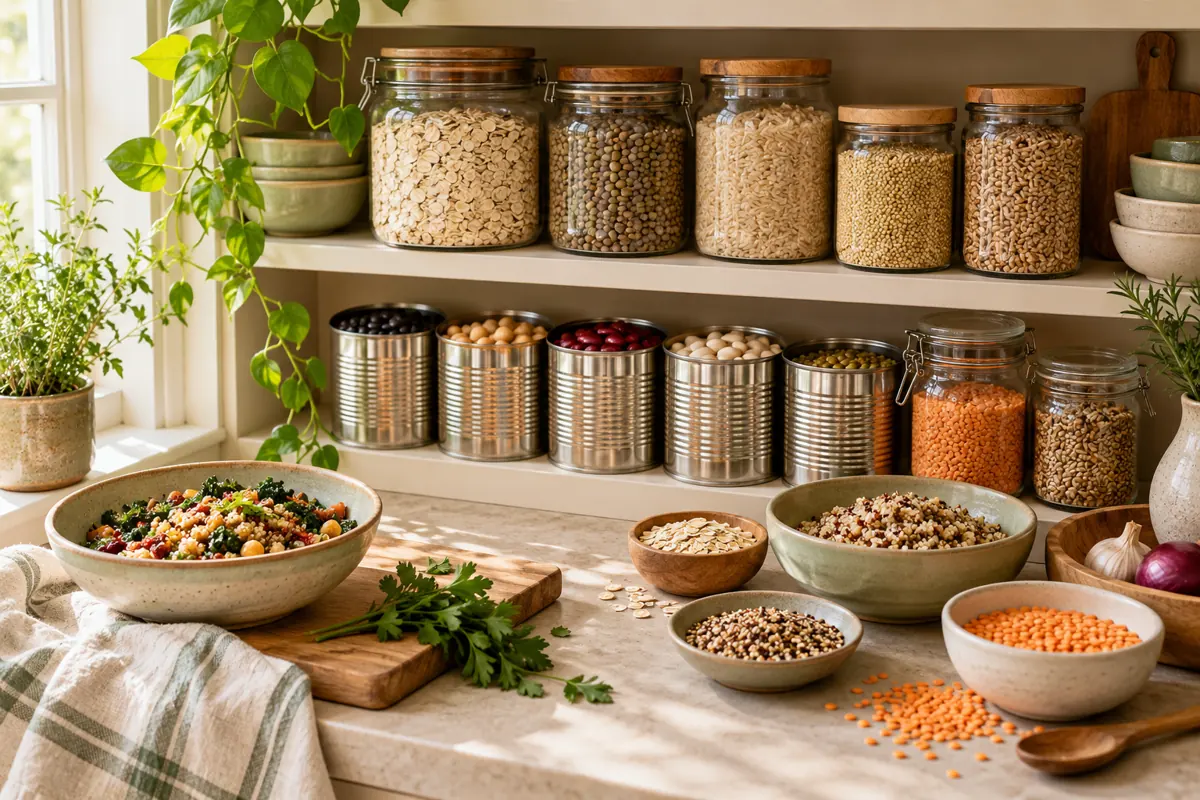
Nutritious food does not have to be exotic, expensive or sold as a “superfood.” Everyday staples can bring fibre, protein and other nutrients to a meal. The World Health Organization recommends a varied pattern that includes vegetables, fruit, pulses, whole grains and other foods that suit your culture and needs.
1. Canned beans and lentils
Beans and lentils bring fibre and plant protein to soups, salads and tacos. If you buy canned versions, compare sodium on labels and look for no-added-salt or lower-sodium options. Rinsing and draining canned beans can remove some added sodium. Source: American Heart Association. Try white beans mashed with lemon on toast.
2. Frozen vegetables
Frozen vegetables make it easier to add variety when fresh produce is scarce or spoils before you use it. WHO includes frozen and canned produce as good choices, provided they do not contain excess sodium or added sugars. Toss frozen peas into pasta, or roast frozen broccoli and finish with lemon. Source: WHO.
3. Oats
Plain oats are a whole grain and can be used for sweet or savoury meals. Make porridge with milk or a fortified plant alternative and add fruit, or cook oats with mushrooms and an egg. Check flavoured packets for added sugar if that matters to you; plain oats let you choose your own toppings. WHO lists oats among whole-grain foods. Source: WHO.
4. Unsalted nuts and seeds
A small handful of nuts or seeds brings texture and unsaturated fat. Add walnuts to yogurt or pumpkin seeds to soup. They are energy-dense, which can be useful to know when choosing a portion, but that is not a reason to avoid them. Skip them when there is an allergy. Source: AHA on fats in foods.
5. Plain yogurt
Plain yogurt can be breakfast, a dip or the base of a sauce. Compare brands for sugar and saturated fat, and choose one that suits your preferences. Mix with chopped cucumber and herbs or add fruit and oats. The NHS suggests plain or lower-sugar yogurt as a practical alternative to some sweetened options.
Make it work for your life
Pick one ingredient you already enjoy and give it a second use. A tin of beans might become a lunch salad today and tomorrow’s soup. The point is variety over time—not a claim that any one food cures disease or that you must eat every item on this list.
Why everyday foods can be surprisingly useful
Social media often makes good nutrition sound like a search for rare powders, supplements or expensive speciality foods. A useful pantry can look much simpler: a tin of beans, oats, frozen vegetables, plain yogurt, nuts and a few foods you already like. They are not miracle products. They earn their place because they are versatile, provide different nutrients and can make varied meals more convenient.
The World Health Organization describes a healthy diet as a pattern of variety, balance and moderation. Food availability, culture, allergies and individual needs all affect the choices that make sense. Use the ideas below as a starting point, not a shopping list you must complete.
Beans and lentils: an easy second role
A can of beans can be more than an emergency soup ingredient. Drain and rinse them, then add to a salad, crush with lemon for toast, or stir into tomato sauce. Lentils can extend a pasta sauce or form the base of a quick warm salad with chopped vegetables. Cook dried beans according to the package instructions; some varieties need specific preparation and should not simply be eaten after soaking.
Beans and lentils provide plant protein and fibre. The American Heart Association suggests no-salt-added or lower-sodium canned options and rinsing as a way to reduce added sodium. Compare actual labels, since products differ. If fibre-rich foods are new to you, increase them gradually and drink adequate fluid as appropriate to your needs.
Frozen produce: a convenience, not a compromise
A bag of frozen peas can become part of pasta, rice, soup or a quick omelette. Frozen broccoli can go into a tray bake; spinach can be stirred into a stew. Freezing makes it possible to use a small amount at a time, which may suit a household where fresh produce sometimes spoils before it is eaten.
Fresh, frozen and canned forms can all fit a nutritious diet. WHO notes that frozen and canned vegetables and fruit are good choices when they do not contain excess sodium or added sugars. The best choice may be the one you can get and will actually use. Check the package: frozen vegetables are not necessarily ready to eat, so follow their cooking instructions.
Oats: breakfast and beyond
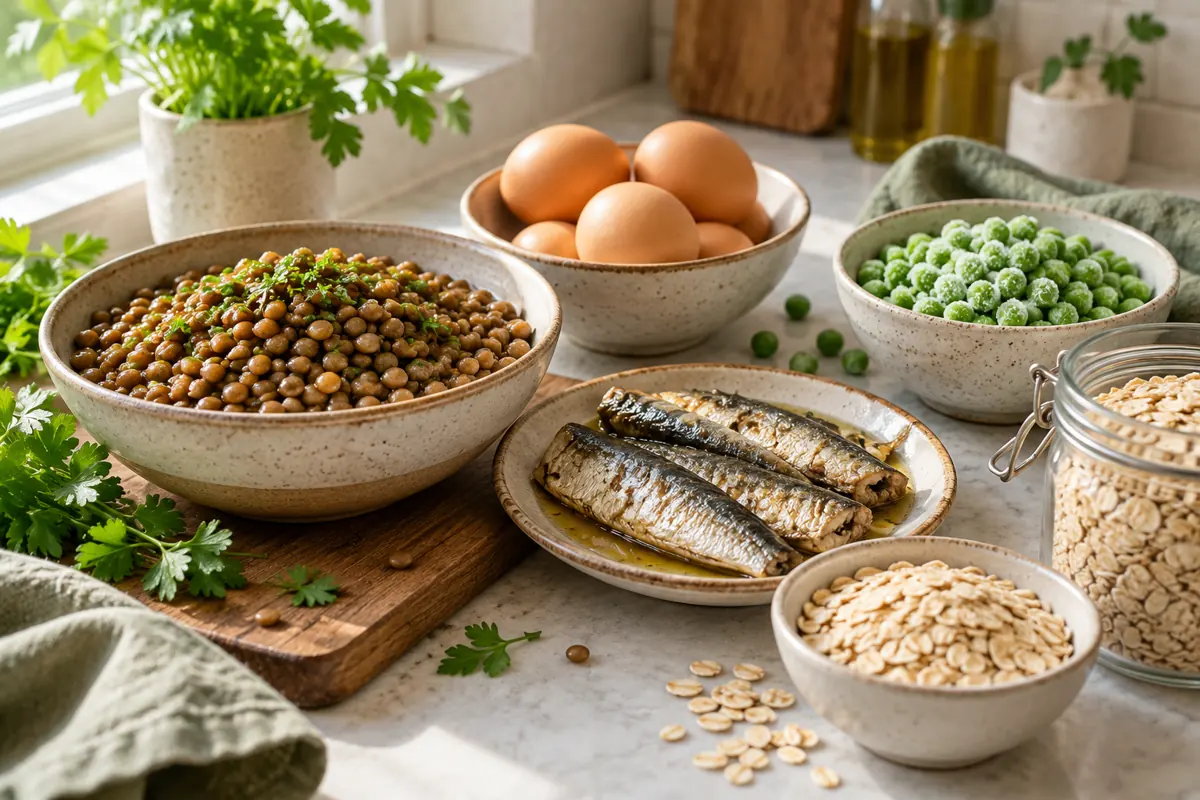
Oats are a whole grain that can be cooked into porridge, mixed into yogurt, or added to a savoury bowl. For an easy breakfast, cook plain oats with milk or an appropriate fortified alternative, then add fruit and cinnamon. For a savoury version, prepare with water or stock and top with sautéed mushrooms and an egg or beans.
If convenience packets work better for you, compare labels for ingredients and sugar rather than assuming all flavoured products are equivalent. You can also mix a favourite sweetened version with plain oats. Whole grains, including oats, are part of the varied pattern described by WHO.
Nuts and seeds: flavour in a small package
Chopped walnuts can add crunch to yogurt, pumpkin seeds can finish soup, and unsalted mixed nuts are a portable snack. They contain unsaturated fats and can contribute to a varied diet. Because nuts are energy-dense, a portion can provide substantial energy; that can be useful or simply relevant context, depending on your needs. It is not a reason to label them unhealthy. AHA: fats in foods.
Choose a texture and portion appropriate for the person eating them, and avoid any nut or seed that causes an allergy. Nut butters vary: compare added salt and sugar when useful and select one that tastes good to you. A spoonful can be stirred into porridge or used in a sauce where safe.
Plain yogurt: breakfast, dip or sauce
Plain yogurt can be topped with berries and oats, combined with cucumber and herbs, or mixed with garlic and lemon for a quick dressing. Different products vary in protein, fat and texture. Plain dairy yogurt contains naturally occurring milk sugar, so a total-sugar number does not necessarily mean sugar was added. Check the ingredients and nutrition panel, especially when comparing flavoured products.
For a dairy allergy or a plant-based diet, choose an alternative that suits your needs and read the label; products are not nutritionally identical. Refrigerate perishable products according to their labels. NHS guidance gives plain or lower-sugar yogurt as one practical swap among many. NHS: healthier food swaps.
Three easy combinations from this list
- Breakfast: oats and plain yogurt with fruit, plus a small amount of nuts or seeds if appropriate. Use a flavour you enjoy so the meal is worth repeating.
- Lunch: beans, frozen vegetables cooked according to the packet, leftover grain and a yogurt-lemon dressing. Add herbs or spices you already have.
- Dinner: pasta with tomato sauce, lentils and spinach. Finish with a little cheese or toasted seeds if you like, and serve with whatever vegetables are available.
Compare value beyond the price tag
A food is useful if it fits your schedule and gets eaten. A large fresh bunch that spoils may be less practical for one person than a smaller frozen bag. A plain staple can often be used in more than one recipe, while a pre-seasoned product may save time. Compare unit prices where available, but also consider storage space, cooking time and taste.
When you want to understand a finished meal, Caloza can estimate calories and nutrients from a photo. Review detected foods and adjust portions; add notes if a sauce or cooking ingredient is hidden. A photo does not verify a product’s label or exact recipe, so consult the package when that distinction matters.
Two more inexpensive ideas
Potatoes: a plain potato can be baked, boiled or roasted, then served with beans, vegetables, yogurt or another topping you enjoy. Its final nutrition depends on the preparation and additions. A potato with a little olive oil and herbs is a different meal from one covered in a rich sauce; neither comparison requires labelling the potato itself a “bad” food. The NHS guide to starchy foods discusses potatoes and cooking choices.
Canned fish: where it fits your preferences and needs, canned fish can be a convenient protein source for toast, rice or salads. Products differ in salt and added oils, so look at the label and choose an option you like. Follow relevant local advice for children, pregnancy, allergies and types of fish. NHS: fish and shellfish guidance.
How to make a new staple stick
Pick one item and give it two uses before buying more. Try beans mashed on toast and later in soup; use oats for breakfast and as an ingredient in a savoury dish; add frozen peas to both pasta and rice. Keep a short list of combinations that worked for your household, including any substitutions for allergies or dietary preferences.
You do not need every food on this list, and you do not need to consume them in a prescribed order. The benefit of a pantry staple is that it makes food you enjoy easier to put together. Price, storage, cooking skills and cultural preferences all matter alongside nutrient content.
Choose what fits the meal
None of these ingredients needs to replace a food you love. Add beans to a familiar tomato sauce, sprinkle a few seeds on soup, or keep frozen vegetables for a night when fresh produce is unavailable. A useful comparison considers flavour, cost, storage and allergies as well as nutrition. If a suggested ingredient is not suitable for you, choose another food that fulfils a similar role and fits your circumstances.
Shopping when storage is limited
If freezer space is scarce, choose shelf-stable beans or oats; if pantry space is tight, a small bag of frozen vegetables can be useful. Compare the price per unit where the shop provides it, and consider whether you can use the quantity before it spoils. A staple that fits your space and routine is often more valuable than a bulk purchase you cannot store. Opened and cooked foods need appropriate storage: follow package instructions and the Food Standards Agency’s guidance for leftovers.