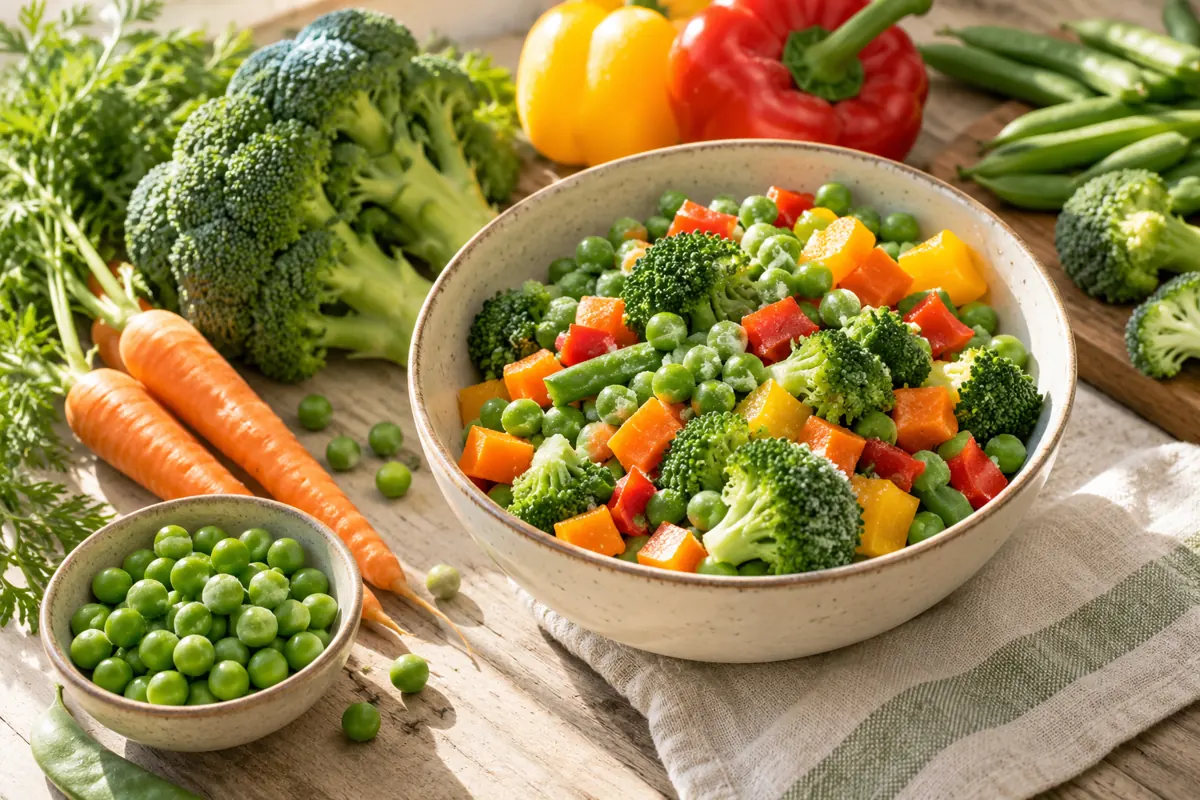
Yes. Plain frozen vegetables are a practical, nutritious choice, and they can make it easier to put vegetables on the table when fresh produce is expensive, out of season or about to go to waste. Fresh and frozen are not identical, though: the answer changes with the vegetable, nutrient, storage time and cooking method.
What the research actually compared
In a 2015 study of eight fruits and vegetables, researchers measured four vitamins after refrigerated or frozen storage. Most vitamin results were comparable, and some frozen samples had more of a measured vitamin than the refrigerated comparison. Beta-carotene was lower in certain frozen vegetables. That is useful evidence against the idea that freezing always ruins nutrition, not proof that every frozen product is superior.
Vegetables can lose nutrients during preparation and storage, whether you start with fresh or frozen. In a study of fresh and frozen brassicas, losses varied by vegetable and cooking method; boiling reduced several measured compounds. A fresh vegetable cooked gently can be an excellent choice too.
Choose a bag that works for your meal
- Start plain. Broccoli, peas, spinach and mixed vegetables with no sauce let you decide what to add. Compare the sodium and ingredients when buying seasoned or sauced versions.
- Use what you enjoy. Fresh tomatoes may be lovely in a salad; frozen peas can be more convenient in a quick pasta. Convenience is a real advantage if it helps you eat the food.
- Follow the package cooking instructions. Frozen vegetables are not necessarily ready to eat. Heat and handle them as the label directs, including before adding them to cold dishes.
Three easy, tasty uses
Stir frozen peas into hot pasta near the end of cooking, then finish with lemon zest and a little grated cheese. Heat frozen spinach according to its label and fold into beans, tomatoes and spices. Roast frozen cauliflower following the bag directions, then serve with a yogurt-and-herb sauce. Season for flavor rather than treating vegetables as a punishment.
What about the rest of the plate?
Fresh, frozen and canned produce can all contribute to a varied eating pattern. The World Health Organization notes that frozen and canned fruit and vegetables are good options, provided they do not contain added sugars or excess sodium. If you photograph a mixed dish in Caloza, check the estimated ingredients and portions: a picture may not show butter, oil or sauce mixed in.
From field to freezer: what changes?
Many vegetables are blanched before commercial freezing: briefly heated, then cooled. Blanching helps preserve quality by slowing enzyme activity, but some heat-sensitive or water-soluble compounds can be lost in the process. Fresh produce also changes after harvest. It may spend time in transport, at the shop and in your refrigerator before you eat it. “Fresh” therefore describes a form of food, not a guarantee about the precise nutrient content on the day it reaches your plate.
The comparisons in the cited vitamin study measured particular samples at particular times. Different cultivars, harvesting, transport and household storage can produce different results. It is reasonable to say that either form can be nutritious; it would be misleading to turn the results into a universal ranking of all fresh and frozen vegetables.
Does freezing destroy fibre or protein?
Freezing changes texture, but texture alone does not tell you how much fibre or protein is present. The USDA freezer guidance explains that freezing itself does not destroy nutrients. Fibre, vitamins and minerals vary by vegetable and preparation, so compare packages or food composition information when a specific value matters instead of assuming that all green vegetables provide the same amounts.
If fibre is your aim, remember that vegetables are only one possible source. Beans, lentils and whole grains can contribute too. A mixed meal of peas, pasta and white beans provides different foods and textures; it need not depend on a single ingredient to do all the nutritional work. The WHO healthy-diet guidance includes whole grains, vegetables and pulses among foods providing naturally occurring fibre.
Choosing plain, seasoned or sauced vegetables
Plain vegetables are flexible: use a handful in soup today and the rest in a curry later. A seasoned mix can be more convenient when you have little time. A bag with a cheese or butter sauce can also be useful, but the sauce changes what is in the dish. Compare ingredients and nutrition labels if sodium, saturated fat or allergens matter to you. The amount per serving is meaningful only when you know the serving size and how much you plan to eat.
For example, a bag of plain broccoli and a bag of broccoli in a creamy sauce are not interchangeable in a meal estimate. The latter has additional ingredients, even if the picture on the front makes the vegetables look similar. Check the package for the particular product; there is no reliable number that describes every sauce.
Make frozen vegetables taste good
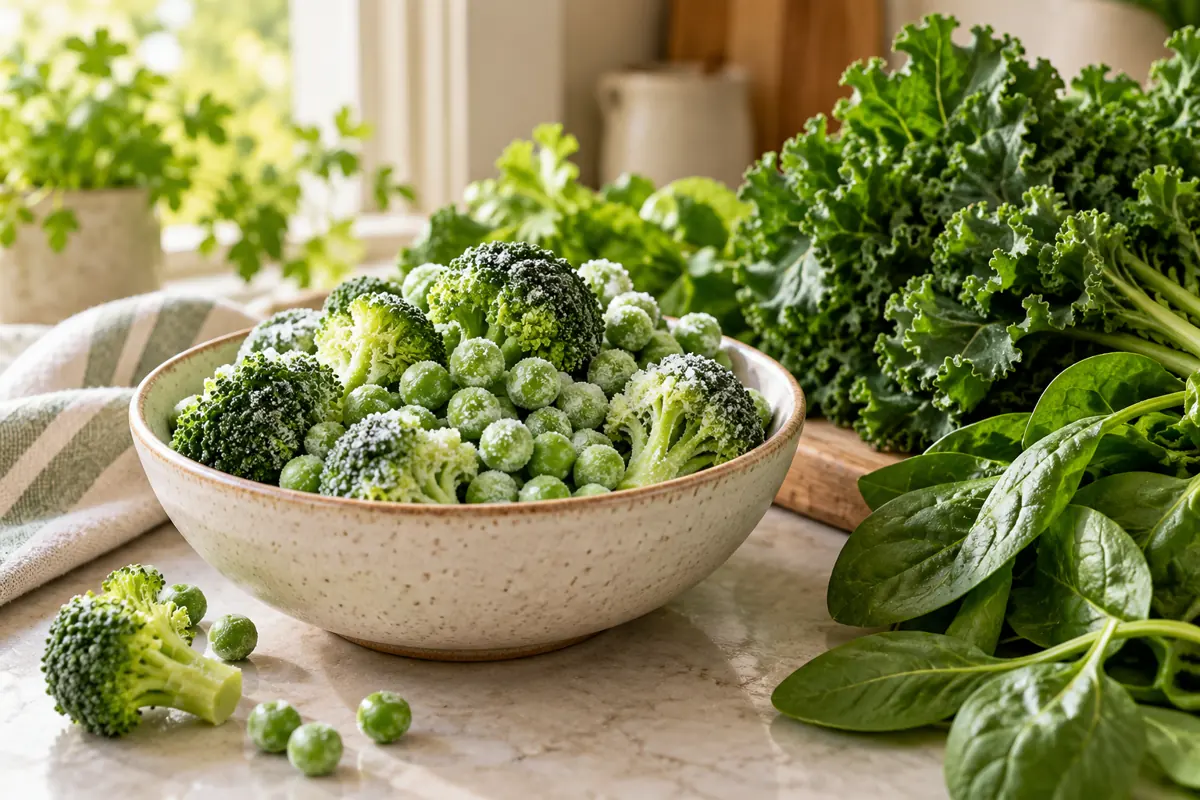
Texture is often the sticking point, not nutrition. Frozen peas tend to work well in soups, rice and pasta; frozen spinach can disappear into sauces; cauliflower and broccoli can take on flavor from spices and browned edges. Follow the package cooking directions first, then finish with one or two additions that suit the dish. Try lemon and black pepper with peas, garlic and chilli with broccoli, or cumin with cauliflower.
For better texture, avoid overcrowding a roasting tray and allow a pan to heat before adding ingredients, while following the product's cooking instructions. A larger batch may need more room or additional time. If vegetables release water, cook it off before adding a sauce. These are kitchen techniques, not promises that a particular method preserves every nutrient.
For a quick vegetable-and-bean bowl, cook a frozen vegetable mix as directed. Warm drained beans separately or according to their label, combine with a cooked grain and add a sauce you enjoy. For pasta, heat peas as directed and fold through with tomato sauce and a protein source such as beans, fish or cheese. In both cases, add oil or butter for taste if you like; note it separately when it matters to your estimate.
Storage and safety: freezing is not sterilizing
Keep frozen vegetables frozen until preparation and follow the packaging instructions. USDA guidance explains that freezing stops bacterial growth but does not kill most bacteria. A frozen product is therefore not necessarily ready to eat straight from the bag. If you want it in a cold salad, cook it according to the instructions and then cool it safely before combining.
Return the unused portion to the freezer promptly and close the bag well. Ice crystals and freezer burn can affect quality, but appearance alone is not a reliable safety test. If the freezer has warmed or food has thawed unexpectedly, use official guidance and the conditions of storage to make the decision rather than relying on a taste test. Keep raw meat juices away from vegetables and use clean utensils.
Fresh versus frozen: a practical decision
Choose fresh when you want a crisp salad, enjoy a seasonal vegetable, or expect to use it soon. Choose frozen when a small portion at a time, a long storage window or a convenient chopped mix would help. Choose both when that is easiest: fresh tomatoes and frozen spinach can share a pan, and a bag of peas can rescue a fridge that is nearly empty.
Price comparisons also need context. Compare the price of the amount you will actually use, not just the ticket price of a bag versus a bunch. Fresh produce may need trimming and can spoil; a frozen bag can be portioned across several meals. On the other hand, a local seasonal vegetable may be inexpensive and especially appealing. Neither choice makes a meal automatically more virtuous.
Questions people often ask
Are frozen vegetables “processed”? Yes, washing, cutting, blanching and freezing are forms of processing. That fact alone does not make a plain vegetable nutritionally equivalent to a salty packaged snack. Look at what is actually in the product.
Should I avoid a frozen mix with sauce? Not automatically. Check the ingredients and the per-serving figures, especially if you manage a medical dietary restriction. A sauce can make vegetables enjoyable; the practical choice is the combination and portion that works for you.
Will Caloza know whether the vegetables were fresh or frozen? A photo may not reveal their storage history or a hidden sauce. Review the detected items and portions, and use the package as the better source for brand-specific information. The app offers an estimate, not a laboratory measurement.
Cooking methods: choosing for the dish
Steaming or microwaving: follow the bag's directions for quantity, time and any added water. Stir and allow the recommended standing time so the food heats as instructed. This approach is convenient for vegetables destined for a bowl or side dish.
Pan cooking: start with the product's recommended preparation. Once cooked, finish with garlic, ginger, herbs or a spoonful of sauce. If excess water collects, allow it to evaporate before adding a thick sauce. Use a large enough pan to avoid steaming the vegetables unintentionally.
Soup or stew: add frozen vegetables with enough time for them to cook fully according to their instructions. Peas, spinach and chopped mixed vegetables suit different cooking times, so check each bag rather than assuming that a brief simmer is always sufficient.
Cold dishes: do not assume a thawed frozen vegetable is ready to eat. Cook it as directed first, then cool and refrigerate promptly before using it in a salad. If a bag specifically says it is ready to eat, follow that product's instructions.
Seasoning can be simple: lemon and pepper, a modest spoon of pesto, garlic and olive oil, or a yogurt sauce. Taste and adjust rather than feeling obliged to use the same plain preparation every day. For a complete meal, serve alongside beans, eggs, fish or another protein food and a grain or potato if you enjoy one.
A short shopping checklist
Pick a vegetable you are likely to use; look for a practical pack size; compare ingredient lists if you want to avoid a sauce or allergen; and check the label's preparation instructions before you need dinner quickly. Keep a pen or clip near the freezer to reseal open bags. These steps can save both time and food without requiring fresh and frozen produce to compete for a permanent place in your kitchen.
When comparing two options in the freezer aisle, look for vegetables your household will actually cook. A familiar bag used in several meals can be more helpful than a large purchase that stays unopened.
Choose a package size that fits your freezer and your usual meals.