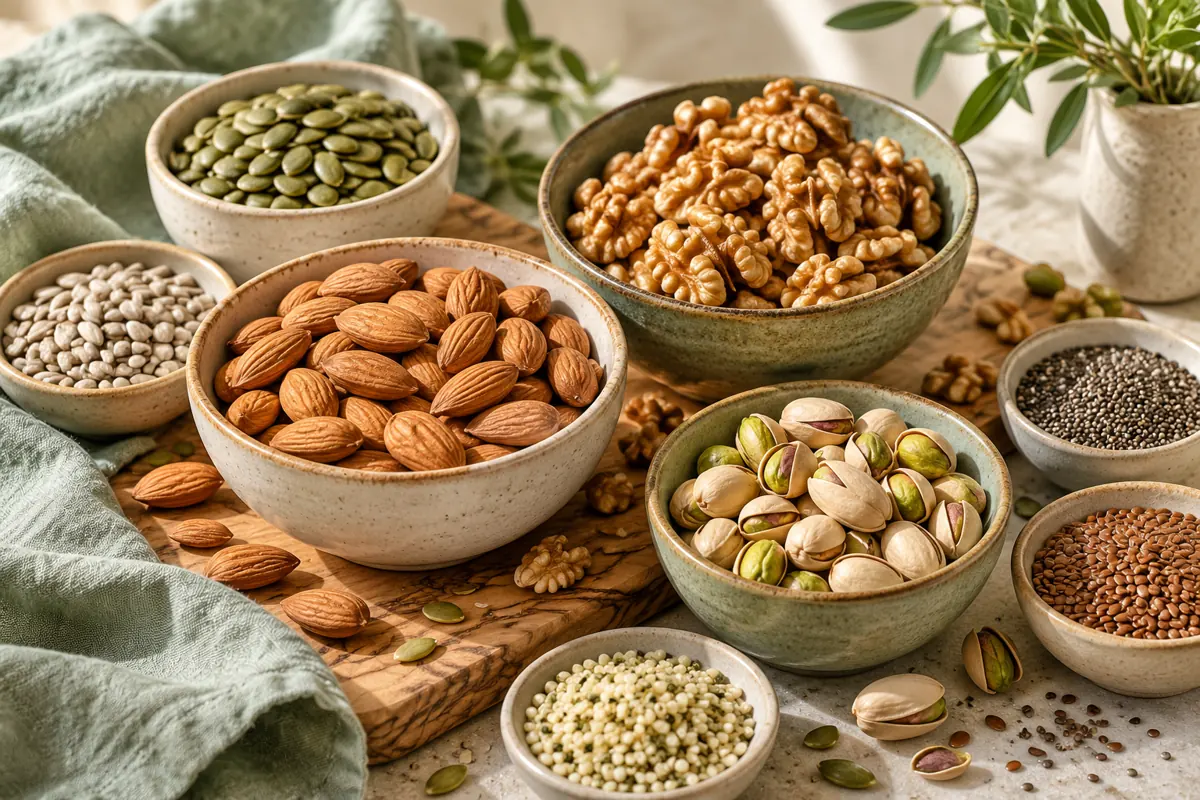
For most people who can safely eat them, nuts can be a nutritious part of a varied diet. They provide unsaturated fats, protein, fibre and a range of vitamins and minerals. They are also energy-dense, which means a small amount can contribute a meaningful number of calories. Both things can be true.
What does the evidence say?
The American Heart Association includes nuts in a heart-healthy eating pattern and suggests unsalted options. In the PREDIMED study, older adults at high cardiovascular risk who were assigned a Mediterranean diet supplemented with nuts had fewer major cardiovascular events than a group advised to reduce dietary fat. The intervention involved the whole dietary pattern and advice, not nuts alone; the report was corrected and republished after randomization problems were identified. It does not prove that a handful of nuts by itself will prevent disease.
Calories and portions, without the panic
Calories are one part of the picture, not a reason to automatically exclude a food. If you are interested in portion sizes, the American Heart Association gives a small handful, roughly one ounce of whole nuts, as an example serving. It is a reference point, not a limit or a prescription. Your needs, appetite and the rest of the meal matter.
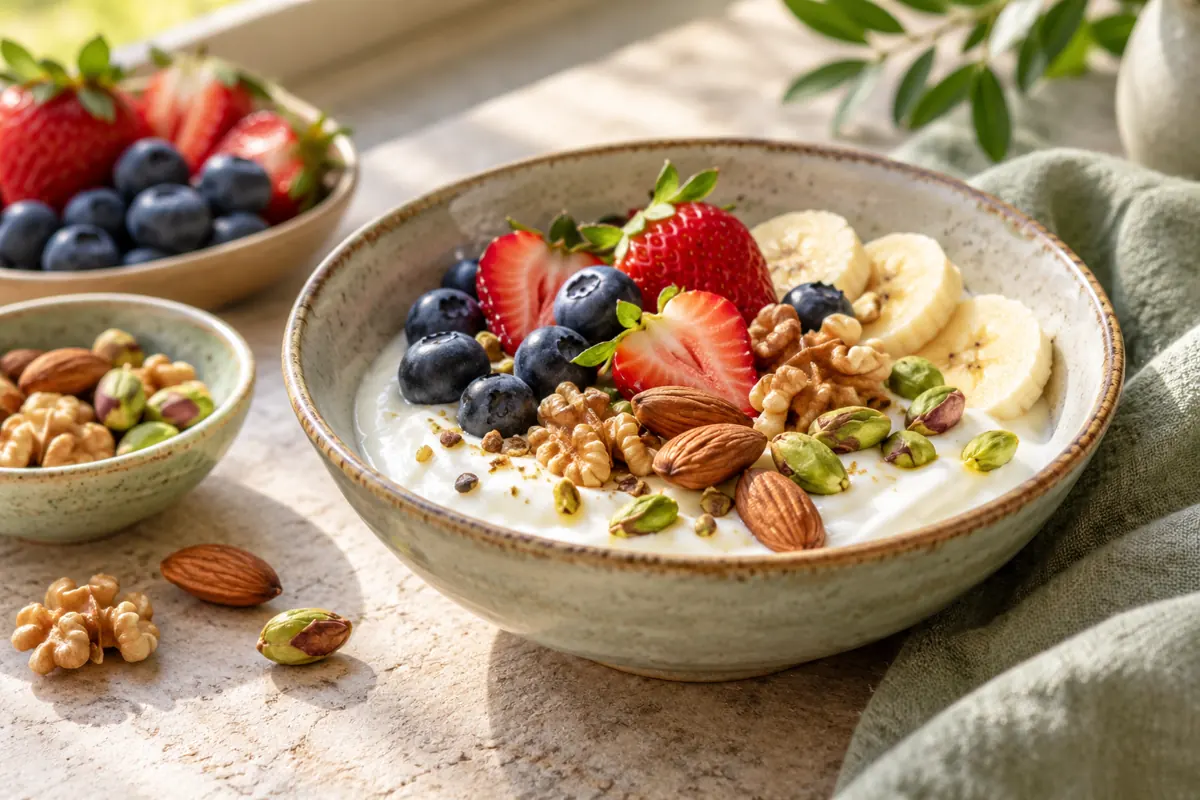
A practical way to enjoy nuts is to add the amount that tastes right to a bowl of yogurt, oatmeal or salad. If you want an estimate in Caloza, check the amount identified: a photograph cannot reliably show the weight of a handful, especially if nuts are mixed into a dish.
How to choose
- Choose nuts you enjoy. Almonds, walnuts, pistachios, peanuts and other options have different flavours and nutrient profiles.
- Compare the label. Unsalted or lower-sodium varieties and nut butters without added sugars are useful everyday options. Sweetened or salted nuts can still be enjoyed; the label shows what is in your particular choice.
- Store for freshness. Nuts and nut butters can turn rancid; follow storage guidance and discard products with an unpleasant rancid smell or taste.
What if you have a nut allergy?
Do not eat an allergen to obtain these benefits. Nut and peanut allergies can be serious, and people with allergies should follow their clinician’s advice and product allergen labels. Other foods, including seeds, beans or olive oil, may provide useful nutrients if they are safe for you.
What is in a nut?
Nuts differ from one another, but many supply a combination of unsaturated fat, plant protein, fibre and minerals. Almonds, pistachios and walnuts do not have identical nutrient profiles; peanuts are botanically legumes but are often grouped with nuts in everyday cooking. If you are comparing specific products for sodium, protein or another nutrient, use their labels and the portion you actually eat.
The American Heart Association recommends incorporating nuts as part of an overall eating pattern and gives unsalted nuts as an option. The WHO similarly includes nuts alongside vegetables, pulses and whole grains. Neither source suggests that nuts need to be the only source of fat or protein in a meal.
Energy density versus nutritional value
Calories describe energy. Foods that contain fat tend to be energy-dense, and nuts are no exception. That is one useful fact if you want to understand a meal; it does not tell you everything about a food's fibre, fat type or place in your overall diet. A small amount of nuts can add richness and crunch to yogurt, a vegetable dish or a snack. Someone with a larger appetite or greater energy needs may choose more.
If you want to see what a familiar portion looks like, put the amount you usually eat into a bowl once. A kitchen scale can offer more precision than a handful; there is no requirement to weigh food every day. Hand sizes vary, chopped nuts settle differently from whole nuts, and mixed products vary by brand. A serving on a package is a reference for the listed nutrition information, not an instruction about exactly how much you must eat.
For example, if a package gives nutrition information for 30 grams and you use 15 grams, half of its listed values are a reasonable arithmetic starting point. If you use 45 grams, multiply by one and a half. These are examples, not universal recommendations. Include oil, chocolate or other additions shown on the product label when comparing products.
Do nuts cause weight gain?
It is tempting to answer this question from calorie density alone, but a food's relationship with body weight depends on the overall diet, portions, what it replaces and individual circumstances. The PREDIMED trial mentioned above was designed around cardiovascular outcomes and a whole dietary pattern. It cannot tell an individual what will happen if they add a particular amount of nuts without making any other change. Avoid both extremes: neither “calories do not matter” nor “nuts are always fattening” is an adequate description.
If a person enjoys nuts and finds them satisfying, adding some to a meal or replacing a snack they like less may be practical. Another person may prefer fruit, yogurt, seeds or a savory snack. Consider enjoyment, access, allergies and health needs rather than trying to win a debate about one ingredient. Discuss individualized weight or nutrition goals with a qualified professional when needed.
Which nuts should you buy?
- Plain or lightly seasoned: unsalted varieties let you add your own seasoning. If you buy salted nuts, compare sodium using the same portion size rather than assuming all brands are alike.
- Raw or roasted: both can work. Flavor and texture are different, and processing or added oil can vary. Check the ingredient list if you want a particular preparation.
- Whole or chopped: chopped nuts are easy to scatter on food; whole nuts can be convenient to snack on. Either can contribute to a meal when safe for you.
- Nut butters: products range from ground nuts alone to blends with added sweeteners, oils or salt. Stir natural nut butter if oil has separated and follow its storage instructions.
- Mixed nuts: check the full ingredient list. A mix can contain nuts, peanuts, seeds, dried fruit or confectionery; the label is the best guide to that package.
Price matters too. A store-brand bag, a bulk purchase you can safely store, or a smaller container that you will finish before it goes stale may be the most practical choice. If nuts are unaffordable or unavailable, other foods can contribute useful fats and protein. There is no need to buy an expensive specialty variety for a healthy pattern.
Six ways to enjoy a little crunch
Breakfast: add chopped walnuts or almonds to oats with fruit. Lunch: scatter toasted nuts on a salad with beans and a dressing. Dinner: finish roasted vegetables or a grain bowl with chopped pistachios and herbs. Snack: pair an apple with a nut butter you like. Sauce: blend a small amount of nut butter with lemon, water and spices for a savory dressing. Dessert: add chopped nuts to yogurt or fruit.
Each combination changes the complete meal. A photo may show a garnish but not the oil in a pan or the amount of nut butter blended into a sauce. If you use Caloza, check the detected ingredients, edit portions when needed and add notes about preparation. Its estimates are useful context; the package and a measured portion are better references when precision matters.
Food allergies deserve a separate decision
Peanut and tree-nut allergies can be serious. Do not experiment with a known allergen in pursuit of a general nutrition benefit. Check ingredient and allergen statements, ask about cross-contact when eating out, and follow the individual management plan given by your clinician. A photo cannot identify an allergen reliably, so do not use Caloza to determine whether a meal is safe for someone with an allergy. See Food Allergy Research & Education: Food labels for background on US labeling.
If you avoid a particular nut, it does not follow that every seed, bean or alternative is safe for you. Allergies and cross-contact risks vary; choose alternatives that are individually appropriate. Young children also have choking considerations for whole nuts, so follow local pediatric feeding guidance for age-appropriate textures.
Storage, freshness and waste
Because nuts contain oils, quality can change during storage. Keep them sealed, protect them from heat and follow the package instructions. Refrigeration or freezing can be useful for longer storage where recommended by the manufacturer. Avoid eating food that is visibly moldy, damaged or clearly spoiled. A rancid smell or flavor is a quality warning, but smell alone does not establish that food is safe.
If you do not use nuts often, a smaller bag may be more useful than a large bulk package. If you do, divide a larger purchase into smaller containers and label the date. Use nut butter in a dressing, porridge or sauce to finish an open jar without needing to eat the same snack every day.
Questions worth asking
Are peanuts “real” nuts? Botanically, peanuts are legumes; for shopping and cooking, they are often considered alongside tree nuts. Allergy considerations remain individual.
Is roasted always worse than raw? There is no universal answer based on that word alone. Compare added ingredients and enjoy the flavor and texture you prefer.
Should I avoid nuts because they contain fat? Not necessarily. The type of fat and the rest of the eating pattern matter. If you have a prescribed diet or allergy, follow personal clinical guidance.
Nut butter: a useful label example
One jar may list only peanuts; another may include added oil, salt or sugar. If you compare two jars, use the same amount for both and consider taste, sodium, added sugar and cost. Some natural products separate, so stir them as directed. Separation alone is not proof of spoilage; follow the manufacturer's storage instructions.
Nut butter can turn into a quick sauce: combine a spoonful with water, lime or lemon and a pinch of spice, then adjust until it coats noodles or vegetables. Check the allergen information of every ingredient. If you use Caloza for the dish, note that a blended sauce can hide its ingredients from the camera and review the resulting estimate carefully.
What if the serving on the label is smaller than mine?
Scale the figures to the amount you use. For example, if a label's values describe one tablespoon and you use two, double the values for that product. If you use half, halve them. The arithmetic gives a more useful comparison; it does not declare one amount morally right or wrong. When precision matters, follow the package and use a measuring utensil or scale rather than assuming a photo can see the quantity.