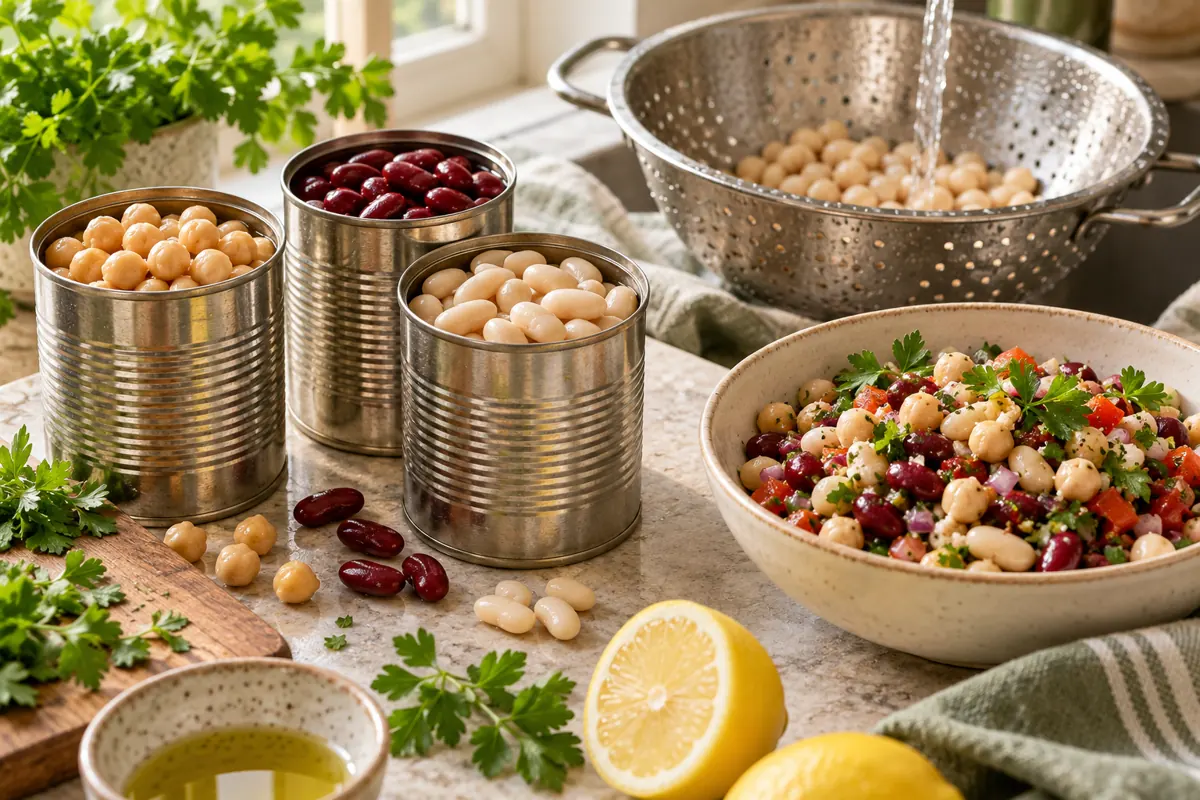
Yes. Canned beans are a convenient way to add legumes to meals. They supply protein and fibre and can go into soups, salads, tacos and pasta without soaking or a long cooking time. The best can is often the one you like enough to use.
Why beans deserve pantry space
Beans, chickpeas and lentils are pulses. The World Health Organization includes pulses among foods that contribute to a varied diet, and lists them as sources of naturally occurring dietary fibre. Nutrition varies by bean and brand, so use the package label for the food you buy rather than assuming every can has the same protein, fibre or sodium.
How to choose a can
- Look at sodium or salt. No-salt-added and lower-sodium versions are useful options, especially if the rest of the meal already includes salty cheese, stock or sauce. Compare products using the same serving size or the per-100-gram figures where available.
- Check what else is in the can. Plain beans in water differ from baked beans in a sweet sauce or beans packed with meat. Both can be useful; compare their labels if sugar, sodium or saturated fat matters to you.
- Pay attention to the portion. The label applies to the stated amount, not automatically to the entire can. Check whether it describes drained beans.
Draining and rinsing is an easy way to reduce sodium in many canned beans; American Heart Association suggests it as a practical option. If the liquid is important to the dish, choose no-salt-added beans when available or adjust the other salty ingredients instead.
Turn one can into dinner
- Smoky beans on toast: warm drained beans with tomato, smoked paprika and a little olive oil; spoon onto toast and add herbs.
- Fast chickpea salad: combine drained chickpeas, cucumber, tomatoes, lemon juice and a spoonful of yogurt or tahini.
- Bean and vegetable soup: simmer beans with vegetables and lower-sodium stock, then finish with lemon or vinegar.
If beans are new to you, try a small amount and increase gradually according to your comfort. They do not need to replace every other protein food to be useful.
Keep it safe
Do not use cans that are leaking, bulging or otherwise suspect. The CDC advises discarding food showing signs of contamination without tasting it; you cannot reliably detect botulinum toxin by taste, smell or appearance. Follow the package storage instructions after opening.
What does a can contribute?
Beans provide several useful things at once: plant protein, dietary fibre and other nutrients. They also add substance and texture to a meal without requiring you to start with dried beans. Exact amounts depend on the type, preparation and brand. If you compare chickpeas, kidney beans and lentils, use the figures on each package rather than assuming that one can always supplies a particular number.
The American Heart Association includes legumes as a source of plant protein and fibre. The WHO also includes pulses in a varied diet. These recommendations concern an overall eating pattern. Beans are a helpful option, not a guarantee that any single meal prevents disease.
A one-minute label comparison
- Start with the serving description. If one label is per half cup and another is per 100 grams, convert to a comparable amount before drawing a conclusion. See whether a figure is for drained beans or includes liquid.
- Check sodium or salt using the unit printed on the label. Some countries list sodium, others salt. Do not assume the two numbers are interchangeable. The label on your own can is more useful than a generic app estimate.
- Look for added ingredients. A plain bean, a baked bean in tomato sauce and a seasoned bean filling can have very different seasoning. Check allergens and any ingredients relevant to you.
- Compare price alongside convenience. A larger can may appear cheaper per weight, but an opened portion needs safe storage and a plan for using it.
“No added salt” is useful wording when you want control over seasoning, but it is not the same claim as “sodium-free.” Rinsing can reduce sodium in many canned beans; the reduction is not identical for every product and depends on what is drained away. The American Heart Association suggests draining and rinsing as one way to lower sodium. If the can contains a flavorful sauce you want to keep, check its label and consider how the rest of the meal is seasoned.
Do you need to cook canned beans?
Commercially canned beans are generally prepared during canning, but follow the instructions on your specific package, especially if the product is a prepared meal or contains other ingredients. Canned beans can be warmed in a sauce or added to a cooked dish as directed. Do not confuse them with dried beans: dried beans need appropriate soaking and thorough cooking. Certain dried kidney beans require particular care; consult the instructions on the packet or a reliable food-safety authority.
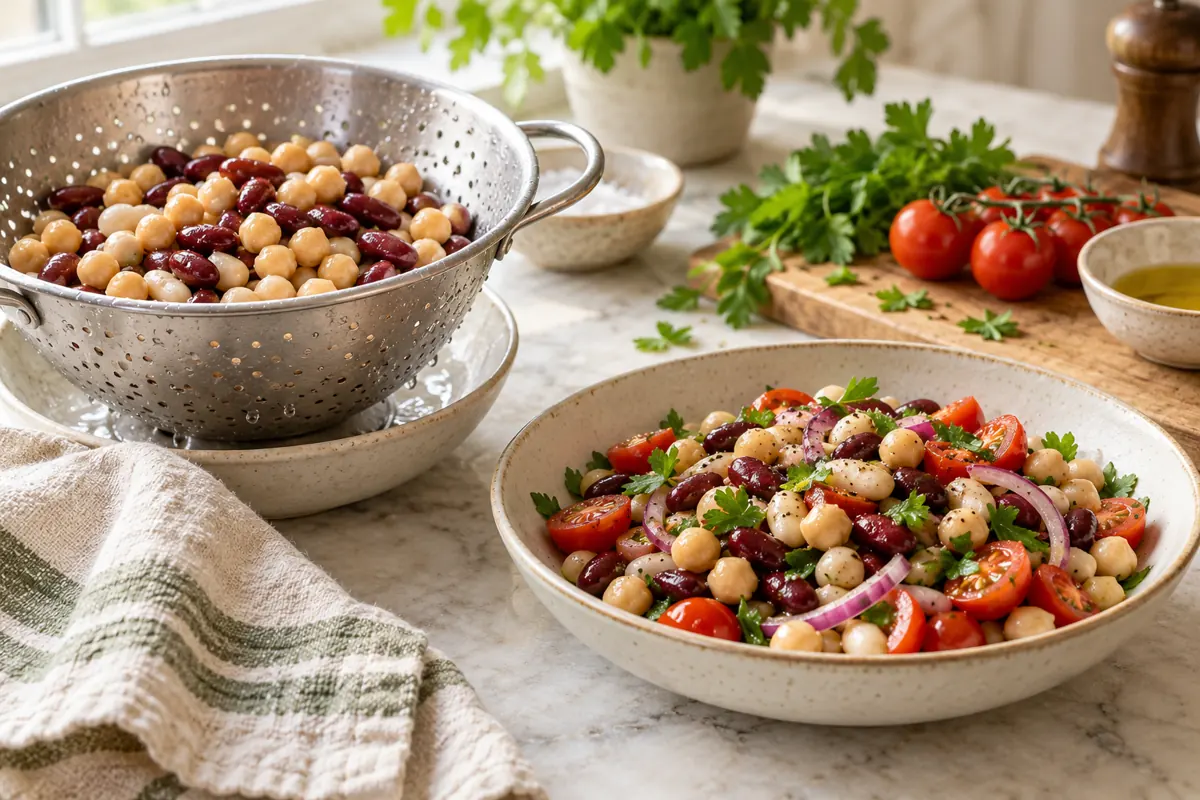
For a salad, drain and rinse beans if you wish, then combine with washed vegetables and a dressing. Keep perishable prepared food chilled and follow local food-safety advice. For a hot dish, add beans toward the end of cooking if you want them to retain their shape, or simmer longer and mash some against the side of the pan for a thicker sauce.
Five ways to make beans taste better
- Give them a warm base. Gently cook garlic or onion in a little oil, add beans and smoked paprika, then finish with lemon. Use garlic powder if that is what you have.
- Add acid near the end. Lemon, lime or vinegar can make a bean salad taste brighter. Start with a little and adjust; flavor is the goal, not a magic nutrition trick.
- Mix textures. Pair soft beans with crunchy cucumber, toasted seeds if safe for you, or crisp toast. The contrast makes simple ingredients feel like a complete dish.
- Build a creamy dip. Mash chickpeas or white beans with yogurt or tahini, lemon and herbs. Add water a little at a time until the texture is right; check sesame and dairy allergens.
- Use a familiar meal. Add black beans to tacos, white beans to tomato pasta, or lentils to a soup. Small additions let you see what you enjoy without replacing the entire recipe.
If beans make you uncomfortable
Some people notice gas or bloating, particularly if they are not used to fibre-rich foods. Try a modest serving and increase gradually if comfortable, and see whether draining and rinsing helps your particular experience. Drink according to your needs. Responses vary, and the right approach for someone with digestive disease or a prescribed diet may be different. A registered dietitian or clinician can help with persistent symptoms rather than requiring you to guess.
Beans are not compulsory. If a particular variety does not suit you, try another tolerated protein food or ask for individual guidance. People who must restrict potassium, fibre or other nutrients for a medical reason should follow their own care plan rather than a general blog guide.
After opening: keep the rest useful
Transfer leftovers to a clean, covered food-safe container and refrigerate promptly, following the package's storage directions. Plan a second use: a few beans can go into an omelette, a grain bowl or a pot of soup. If you cook a mixed dish, handle and store the finished meal according to its most perishable ingredients. The UK Food Standards Agency recommends cooling and refrigerating leftovers within one to two hours, eating refrigerated leftovers within 48 hours, or freezing them; follow applicable local guidance and the label.
Before opening, inspect the can. Leaking, bulging, punctured or severely damaged containers are not worth sampling. The CDC describes warning signs of can damage and advises against tasting suspicious food. Botulinum toxin cannot reliably be detected by smell or taste.
Using a photo log with canned ingredients
Caloza can estimate the components of a photographed bean dish, but it cannot know the exact brand, whether you rinsed the beans, or how much salt was in a sauce just by looking. Check the identified portion and add preparation notes. If the amount of sodium is important, use the package label and your actual portion as the more specific reference. Treat the app’s results as estimates and avoid using them to make allergy-safety decisions.
Quick answers
Are dried beans always healthier? Not automatically. Dried and canned beans can both fit a varied diet. Compare added ingredients and consider time, price, food safety and the form you will actually use.
Are beans in sauce forbidden? No. A sauce changes the meal's flavor and nutrition; the label helps you compare options. You can enjoy the sauce, use a smaller amount, or choose plain beans when that better suits your needs.
Do I need a full can for the benefits? No specific amount is prescribed by this article. Add an amount you enjoy and can tolerate alongside the rest of your meal; needs differ.
Use the liquid or drain it?
The liquid in a can is not automatically something you must throw away. In some dishes it can help thicken a stew or add body. Whether to retain it depends on the product, the recipe and your sodium preferences. If you prefer to keep it, consider a no-salt-added version and taste before adding more salt. If you rinse, drain through a clean colander and run water over the beans; this can remove some sodium, although the amount varies.
Chickpea liquid, often called aquafaba, is also used in some recipes. Its properties vary between cans, so follow a tested recipe if using it as an ingredient rather than assuming any quantity works identically. Check the can for seasonings and allergens. Rinsing is not required to make every bean nutritious; it is one option for changing the finished dish.
A practical two-meal plan
Open a can of chickpeas for a lunch salad with cucumber, tomato and lemon. Transfer the rest to a covered container and refrigerate promptly, following the label and local guidance. For the next meal, warm the remaining chickpeas in a tomato-and-spinach sauce and serve over rice or toast. The same staple can taste quite different with herbs, spices and a change in texture.
If you are cooking for one, a smaller can or a planned leftover recipe may reduce waste. If you cook for several people, use multiple cans and adjust seasonings after tasting. A prepared meal's safe storage period depends on all of its ingredients, so consider the most perishable component and follow its guidance.