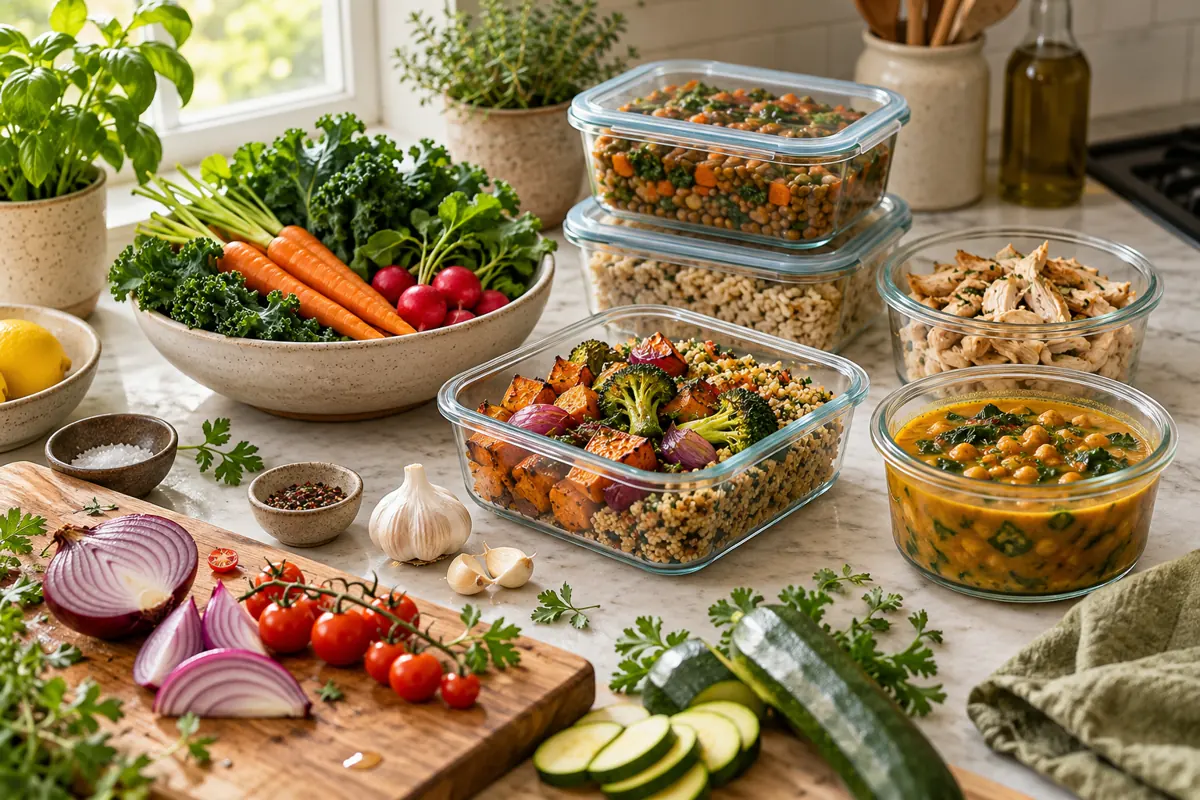
A little leftover rice, half a pepper and a tin of beans can become dinner. Think in flexible parts rather than an exact recipe: a base, something substantial, vegetables or fruit, and a flavourful finish. Use what you enjoy and what needs using first.
Start with four building blocks
- Base: leftover rice, potatoes, pasta, bread or another grain. A whole-grain choice can add fibre where available.
- Protein source: beans, lentils, tofu, eggs, fish, chicken or yogurt, depending on your preferences.
- Colour and crunch: add leftover cooked vegetables, salad leaves or frozen peas.
- Finish: lemon, herbs, a favourite sauce, or a spoonful of yogurt can pull everything together.
This is a flexible cooking idea, not a rule that each meal must contain exact amounts. WHO recommends variety across a healthy eating pattern and includes pulses, vegetables and whole grains among useful foods. Source: WHO.
Three meals from leftovers
- Rice and bean bowl: heat safely stored cooked rice and beans until steaming hot; add vegetables and finish with lime and yogurt or salsa.
- Fridge frittata: cook chopped leftover vegetables in a pan, add beaten eggs, and cook until the eggs are set. Serve with toast or potatoes.
- Quick tomato pasta: warm a tomato sauce with cooked lentils and any vegetables you have, then toss with pasta. Finish with herbs or cheese.
Make flavour without needing a long shopping list
Acid adds brightness, herbs add freshness and a little oil carries flavour. Taste first, then season. Soy sauce, stock and some prepared sauces can contain substantial salt; check the label and use the amount that works for the dish. WHO suggests herbs and spices as alternatives to relying entirely on salt. Source: WHO.
Leftovers need safe handling
Use leftovers only if they were stored safely: refrigerate promptly, follow storage guidance, and reheat thoroughly. Rice requires particular care because spores can survive cooking; cool it within one hour, refrigerate it, eat it within 24 hours and reheat only once according to NHS rice-storage guidance. When in doubt about storage or spoilage, discard it. Specific advice can differ by food and location.
If you are tracking a meal, a quick note describing the sauce and leftovers may make a photo-based estimate more informative. The portion and hidden ingredients still need your review; the goal is a useful record, not a perfect one.
First, take a quick inventory
Open the fridge and identify what needs using soon. Look for cooked grains or potatoes, vegetables, a protein source such as beans or eggs, and a flavourful finish. Check that refrigerated leftovers were stored safely before using them. Then look in the freezer and cupboard: frozen peas, canned tomatoes, rice or lentils can fill a gap without a special shopping trip.
You do not need all the components in every meal. A simple egg on toast with fruit can be lunch; soup and bread can be dinner. Across meals, aim for the variety that works for you. The WHO describes diverse eating patterns that include vegetables, fruit, pulses and grains, with many possible cultural variations.
The flexible four-part formula
- Choose a base: rice, potatoes, pasta, bread, noodles or another grain. Whole-grain options can contribute fibre, but use what is available and enjoyable.
- Add something substantial: beans, lentils, tofu, eggs, fish, chicken, cheese or yogurt are possibilities. Check any allergies and cook animal foods thoroughly according to local guidance.
- Add vegetables or fruit: raw cucumber, leftover cooked carrots, a frozen vegetable cooked as directed, or fruit on the side can add colour and texture.
- Finish for flavour: herbs, lemon, vinegar, a sauce or a little oil can bring the parts together. Taste and adjust instead of assuming there is one correct combination.
Seven adaptable meals from familiar leftovers
- Warm grain bowl: combine safely stored rice, beans and cooked vegetables. Add lemon, herbs and yogurt or a sauce you enjoy.
- Bean toast: mash drained beans with lemon and pepper. Spread on toast and add chopped tomatoes or leftover greens.
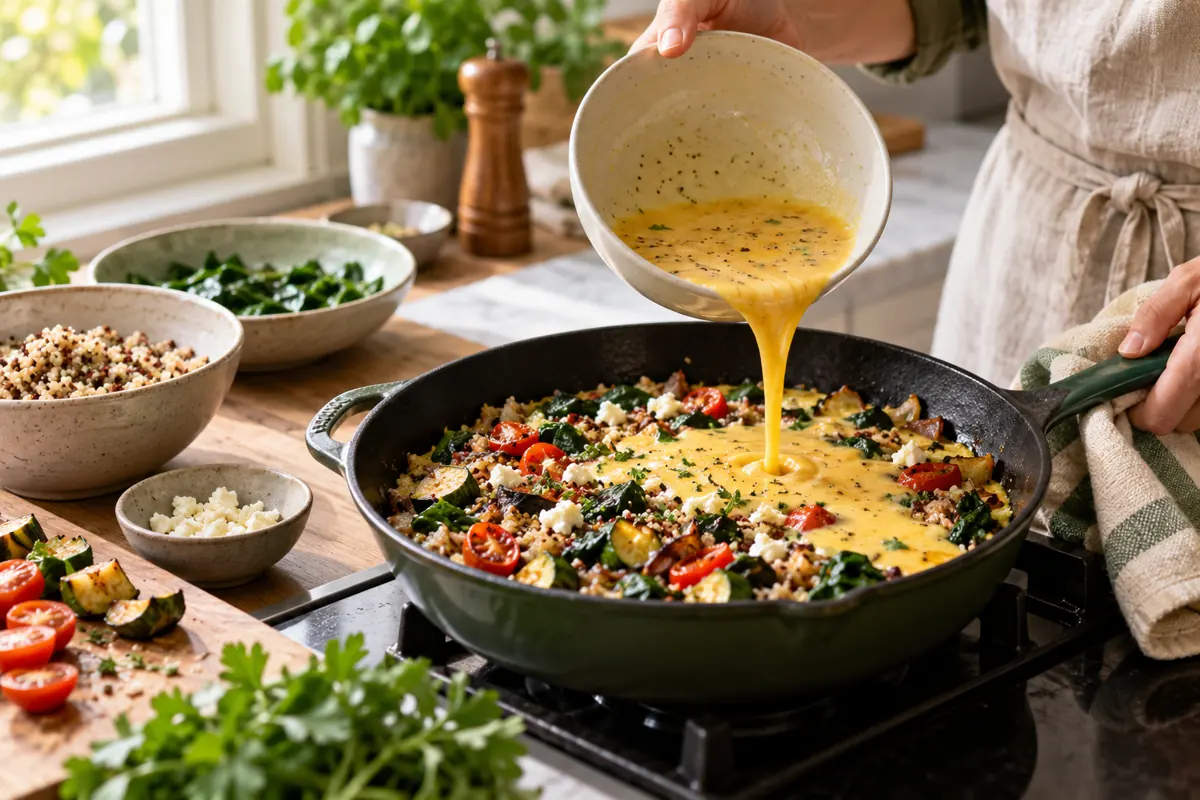
- Frittata: warm cooked vegetables in a pan, add beaten eggs and cook until set. Serve with bread or potatoes. Use a dairy-free filling if needed.
- Soup: simmer beans, vegetables and a lower-sodium stock or tomato base. Add leftover pasta or grains toward the end and reheat thoroughly.
- Quick pasta: stir cooked lentils and vegetables into tomato sauce. Finish with herbs or cheese if you enjoy it.
- Filled wrap: use beans or cooked chicken, crunchy cabbage and a little yogurt or salsa. Keep cold ingredients refrigerated until use.
- Tray of potatoes and vegetables: reheat or cook as appropriate, add beans or tofu, and finish with a lemon-herb sauce. Do not use leftovers that have been stored unsafely.
Mix and match rather than treating these as strict recipes. If you lack one ingredient, substitute something with a similar role: potatoes for rice, lentils for beans, or a squeeze of lemon for a prepared dressing.
Build flavour without starting from scratch
Use an aromatic base such as onion, garlic or ginger; add a spice you like; and finish with something bright such as lemon or vinegar. A small amount of oil can carry flavours and help food cook, but it is not the only way to make a meal satisfying. Texture matters too: try cucumber, toasted seeds or crisp cabbage if appropriate for your household.
Prepared sauces and stocks can save time. Check their salt or sodium if that matters to you, especially when several prepared ingredients are combined. You can dilute a strong sauce, use a little as a finishing accent, or add herbs and citrus. WHO suggests herbs and spices as ways to add flavour while reducing reliance on salt. WHO: sodium reduction.
Store and reheat leftovers safely
Before saving food, divide large portions into smaller, shallow containers so they cool more quickly. The UK Food Standards Agency recommends cooling and covering leftovers and placing them in a fridge or freezer within one to two hours; leftovers kept in the fridge should generally be eaten within 48 hours. Follow product-specific instructions and any stricter local guidance.
Cooked rice needs special care because bacterial spores can survive cooking. The NHS recommends cooling rice quickly, ideally within one hour, keeping it refrigerated for no more than one day before reheating, and reheating it only once. When reheating, make it steaming hot throughout. NHS: rice guidance. A dish can look or smell normal and still be unsafe, so uncertain storage is a reason to discard it rather than taste-test it.
If leftovers were cooled and stored correctly, they can sometimes be eaten cold; when you choose to reheat them, the Food Standards Agency advises heating them until steaming hot throughout. Use clean utensils and prevent cross-contamination between raw and ready-to-eat foods. For infants, pregnancy, older adults or other higher-risk circumstances, consult specific food-safety guidance.
A gentle way to plan the next day
When you make a meal, consider whether an extra portion of vegetables or grains would make tomorrow easier. Label and date the container, cool it promptly and refrigerate or freeze it as appropriate. Keep a short mental list of ingredients that need using soon. A flexible plan helps prevent waste without requiring you to prepare identical meals for the whole week.
If you want a record of a mixed leftover meal, Caloza can estimate its ingredients and nutrients from a photograph. Add a note for the dressing, cooking oil or ingredients hidden under the top layer and review the assumptions. It cannot determine whether food was stored safely or whether an allergen is present; use storage records and ingredient labels for those decisions.
Three questions when you feel stuck
What can I use first? Start with an ingredient that is safely stored and approaching its recommended use-by point.
What would make this taste good? Add contrast: something bright, crunchy, savoury or creamy, according to your preference.
What is the easiest safe option? A tin of beans, frozen vegetables cooked as directed and toast may be more useful than an ambitious recipe. Convenience is part of a sustainable cooking routine.
Plan around different diets and budgets
A flexible meal can use the food your household already eats. For a plant-based option, pair rice or bread with lentils, tofu or beans and vegetables; use a plant-based sauce that suits your dietary needs. For an omnivorous meal, use cooked eggs, fish or chicken with potatoes or grains and a vegetable. Check allergens and do not assume that a dairy-free or vegetarian product is suitable for every allergy.
Canned and frozen foods can be useful when time, budget or access to fresh ingredients is limited. Compare labels for salt or sugar when relevant and follow package instructions. A convenient ingredient is not a failure to cook: a tin of beans and frozen vegetables can make a meal possible on a busy day.
One ingredient, three dinners
Start with a can of beans. First, make a warm bowl with rice, cooked vegetables and a lemon dressing. Next, mash some beans with garlic for a toast topping and serve with tomatoes. Finally, simmer the remaining beans in a tomato soup. If saving opened beans, move them to a suitable covered container and follow the manufacturer’s storage advice. Cool any cooked leftovers promptly and check the Food Standards Agency guidance.
The same idea works for cooked vegetables: add them to a frittata, toss with pasta, or serve alongside a sandwich. You can change the seasonings so each meal tastes different without buying a long list of extra ingredients. The objective is to use food safely and enjoy it, not to make leftovers look like a prescribed plate.
Keep a low-effort backup
If the refrigerator is nearly empty, a shelf-stable staple and a freezer ingredient can still make a meal. Try toast with beans and cooked frozen vegetables, or pasta with canned tomatoes and lentils. Follow the preparation instructions for each ingredient and use the seasonings you already like. A backup meal is valuable because it works on days when you have little time or energy.