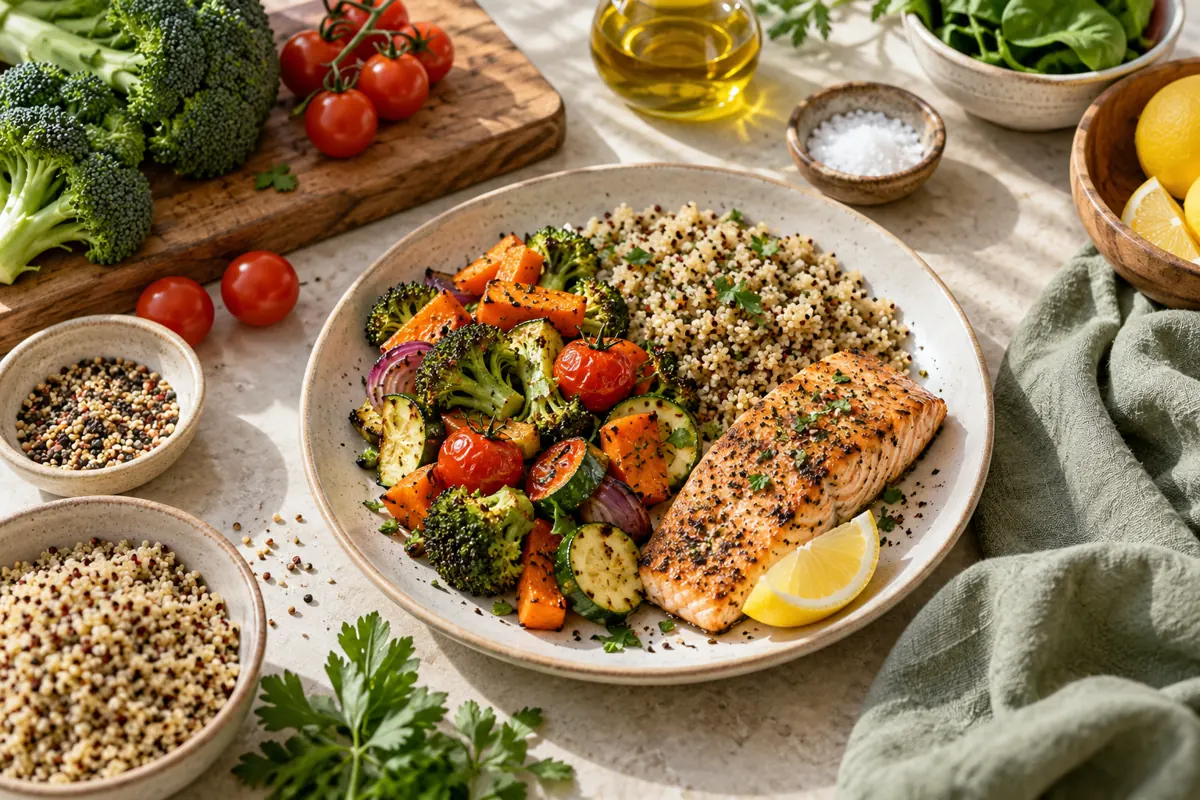
A balanced meal does not require a perfect ratio, a list of forbidden foods or a separate dinner from everyone else. Start with food you enjoy, then consider what would make it more satisfying and varied: perhaps a source of protein, something with fibre, some vegetables or fruit, and a flavour you love.
The World Health Organization describes healthy diets in terms of adequacy, balance, moderation and diversity. It also recognises that what a healthy diet looks like depends on culture, availability and individual needs. One meal does not have to contain every nutrient.
A flexible way to build dinner
- Choose a familiar base. Rice, potatoes, pasta, bread, tortillas or another staple can make a meal feel like a meal. Whole grains are one option; choose what works for your tastes and circumstances.
- Add a protein food. Try beans, lentils, tofu, fish, eggs, poultry, yogurt or another food you enjoy. This is a menu of possibilities, not a requirement to use them all.
- Add produce where it makes sense. A handful of frozen peas, sliced tomatoes, roasted vegetables or fruit on the side all count as practical ways to add variety.
- Finish with flavour. Herbs, spices, lemon, a sauce, a drizzle of oil or a favourite topping can make the meal worth eating. Compare labels if you want to reduce sodium or added sugar, but a sauce need not be banned.
Make the portions fit your hunger and needs. The right amount depends on the person and the day; a diagram cannot tell you exactly what you need.
Three starting points
- Rice bowl: rice, chickpeas, cucumber and tomatoes, with yogurt, lemon and cumin.
- Quick pasta: pasta with tomato, beans or tuna, spinach and a little olive oil; finish with herbs or cheese.
- Comforting toast: toast with eggs or hummus, tomatoes and fruit on the side.
These are ideas, not rules. Use frozen or canned produce when helpful; WHO notes that both can be good options when they do not contain excess sodium or added sugars. If time or appetite is limited, a simpler meal is still worth eating.
Use a food log as information
If you enjoy tracking, Caloza can help you review estimated ingredients, portions and headline nutrients in a photographed meal. Check the estimate and add context when oil, sauces or ingredients are not visible. Its numbers are estimates, not a grade for your food or a substitute for individual medical advice. If logging increases anxiety or you have a history of disordered eating, consider whether it is helpful for you and seek support from a qualified professional.
Why a flexible approach works better than a perfect plate
A meal is part of a day, and a day is part of a longer eating pattern. Breakfast may be simple because you have an early train; dinner may include more vegetables because you have time to cook. Some meals are celebratory, some are leftovers and some are assembled from what is available. The WHO recognizes that a healthy dietary pattern can take many forms depending on culture, personal needs and available foods.
Rather than asking whether every plate is perfect, try asking what would make the next meal more useful or enjoyable. That might mean adding a source of protein, choosing a food with fibre, putting fruit on the table, or simply eating enough when you have been busy. A food does not become a failure because it comes from a packet, contains a sauce or is eaten on a rushed day.
Start with a food you actually like
Begin with the familiar meal: pasta, a rice dish, soup, a sandwich, noodles or a family recipe. Consider what is already there before adding anything. A bean-and-vegetable stew may already contain both plant protein and produce; a chicken sandwich may need nothing except a side you enjoy. There is no requirement to disguise foods you dislike or change a culturally meaningful dish beyond recognition.
Next, make one adjustment if it would help. Add beans and spinach to a tomato pasta; put cucumber and a spoonful of yogurt beside a rice dish; serve a soup with bread and fruit. If you prefer the meal as it is, keep it. Small changes that fit your routine are easier to repeat than an ambitious plan that makes every meal harder.
Build a satisfying combination
- A carbohydrate food: grains, bread, rice, noodles, potatoes or another staple can provide energy and the texture that makes a meal familiar. Whole-grain options add variety; there is room for the foods you enjoy.
- A protein food: beans, lentils, tofu, eggs, fish, poultry, dairy or another suitable food can help make the meal more substantial. Different foods bring different nutrients; use variety across meals when practical.
- Produce: fresh, frozen or canned vegetables and fruit can all be useful. Pick a form and preparation that you like, and check added salt or sugar when relevant.
- Flavor and texture: herbs, spices, citrus, a sauce, oil, nuts or a crunchy topping can turn a collection of ingredients into something you want to eat. Account for allergies and personal dietary needs.
This is a menu of ideas, not a formula requiring four separate containers. A lentil soup, vegetable omelette, tofu stir-fry or bowl of chili can combine several of these elements in one dish. Portions depend on the person, appetite, activity and context; no photograph or plate graphic can prescribe the right amount for everyone.
Five real-life meals and easy adaptations
Rice and beans: warm beans with tomato and cumin, serve over rice, then add cucumber, salsa or another vegetable. Use lower-sodium beans when convenient, or rinse regular canned beans if that suits the recipe. For extra flavor, add lime, a little cheese or a sauce you enjoy.
Fast pasta: toss pasta with tomato sauce, spinach and canned beans or fish. Finish with olive oil, herbs or cheese. If whole-grain pasta is unfamiliar, mix it with a familiar pasta and see which texture you prefer; you do not need to commit to a complete swap overnight.
Eggs on toast: prepare eggs safely, serve with toast and tomatoes, and add fruit if you want it. For an egg-free option, try hummus or another protein food that fits your needs. The amount and components can change with your hunger.
Soup and a sandwich: a prepared soup can save time. Compare sodium between products if you buy it often, and choose a sandwich filling you enjoy. Add fruit or vegetables on the side if convenient. A ready-made soup is not automatically a nutritional failure.
A family-style meal: serve a shared curry, stew or stir-fry with rice or bread. Put optional yogurt, herbs, vegetables or chili at the table so people can adapt the flavor. This approach supports different preferences without making a separate “diet meal.”
Build flavor without banning sauce
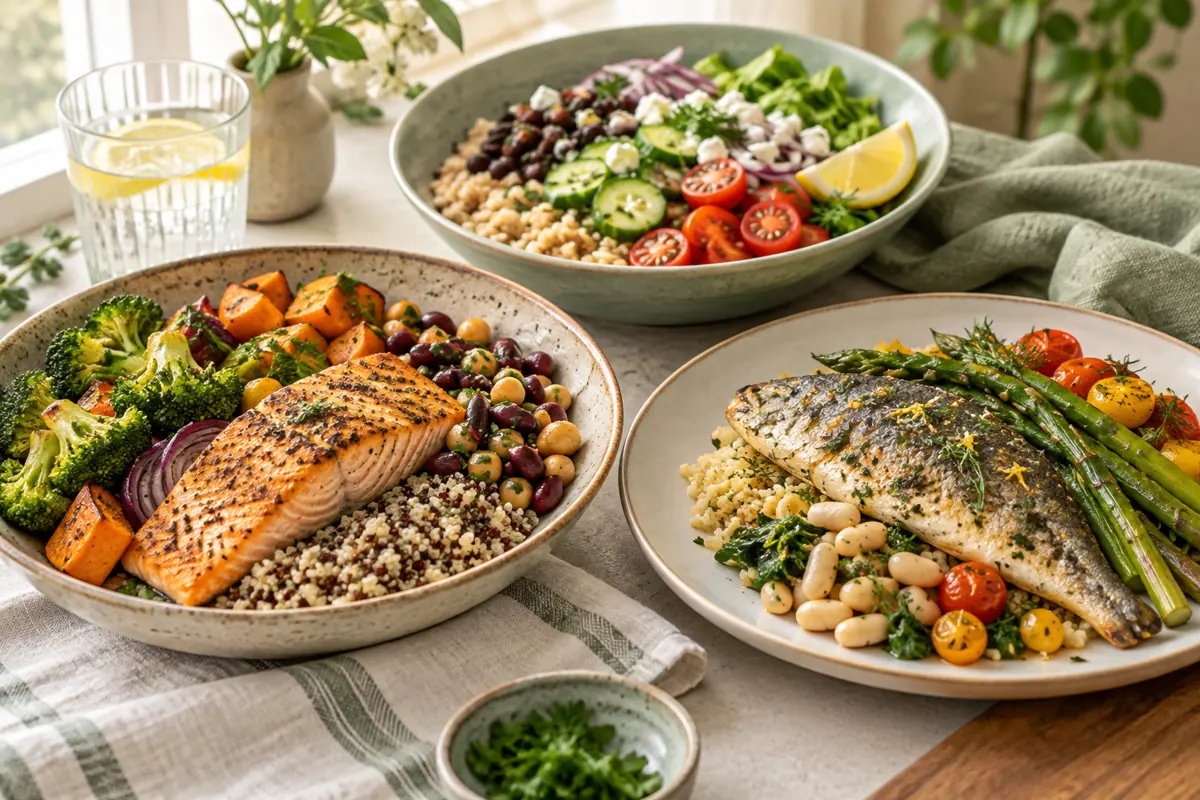
Flavor is part of making a meal satisfying. Lemon, vinegar, garlic, ginger, herbs and spices can add contrast, while oil carries flavor and affects texture. Sauces can also make vegetables, beans or fish more enjoyable. A dressing's nutrition depends on its ingredients and the amount used; a small amount of a favorite dressing may be more satisfying than a large amount of one you dislike.
For a quick sauce, stir plain yogurt with lemon and herbs, or mix tahini with water and lemon until pourable. Check dairy or sesame allergies. For a pantry option, warm tomatoes with garlic and dried herbs. If using a bottled sauce, compare labels for sodium and sugar where relevant and choose the one that works for your meal.
When time, money or appetite is limited
Convenience can be a feature of a healthy routine. Keep a few shelf-stable or frozen ingredients that work together: canned beans, frozen vegetables, a grain, canned fish, a sauce or spices. A few combinations are more useful than a long shopping list of ingredients that never get used. Check price per usable amount and adapt to local availability.
On a low-energy day, a bowl of cereal and milk, a ready meal with fruit, or toast with a filling can be a useful meal. If appetite is low for a prolonged period, or eating feels difficult, seek individual support. General advice to “eat more fibre” or make a large salad may not suit someone with a medical condition or a temporary digestive problem.
What about tracking?
A log can help you notice patterns, especially ingredients that are easy to forget, such as oil mixed into a pan or a sauce added after cooking. It is not necessary for everyone. If you choose to use Caloza, photograph the meal, review the estimated components and adjust portions or add notes when the image does not tell the full story. Packaged foods are best checked against their labels, and a photo cannot confirm allergen safety.
Look at patterns with curiosity rather than using a single meal as a verdict. If tracking leads to anxiety, rigid rules or skipping food, consider stopping and seeking help from a qualified professional, particularly if you have a history of an eating disorder. Caloza is a general wellness tool, not a substitute for medical care.
Frequently asked questions
Must every meal contain vegetables? No single meal needs to contain every food group. Look for realistic opportunities to add variety across meals and days.
Can frozen and canned produce count? Yes. The WHO notes that they can be good options, with attention to added sugar or excess sodium. Follow cooking instructions where required.
Can I eat a meal simply because it tastes good? Enjoyment is a valid part of eating. A balanced pattern has room for pleasure, shared meals and foods that are not chosen solely for their nutrient profile.
A week of small variations
On Monday, add frozen vegetables to a familiar pasta. On Tuesday, make a soup more substantial with beans and bread. On Wednesday, enjoy a shared meal as it is. On Thursday, use leftovers with a quick yogurt sauce. On Friday, choose a convenient ready meal and add fruit if you want it. These are illustrative options, not a schedule or a target: the point is that variety can emerge from ordinary decisions over time.
If you are feeding a household, invite people to choose a topping or side rather than trying to make everyone like the same meal. A bowl of rice and a pot of beans can be served with different vegetables, sauces or protein foods. Keep allergen-containing toppings separate and use clean utensils where cross-contact is a concern.
When general guidance needs adjusting
Needs can differ during pregnancy, childhood, illness, recovery, intense athletic training or when a clinician has prescribed a particular diet. Some people need to limit a nutrient, adjust texture or prioritize eating enough. A blog's flexible template cannot account for these circumstances. Ask a registered dietitian or other qualified clinician for advice tailored to you.
For most everyday decisions, start with what is available, consider whether you would like to add variety, and keep the meal pleasurable. A balanced pattern can include a mix of homemade meals, leftovers, convenient products and food prepared by someone else.
Keep a few adaptable options on hand for unexpected schedule changes. For example, frozen vegetables and canned beans can be combined with bread or rice to make a quick meal without a special shopping trip.