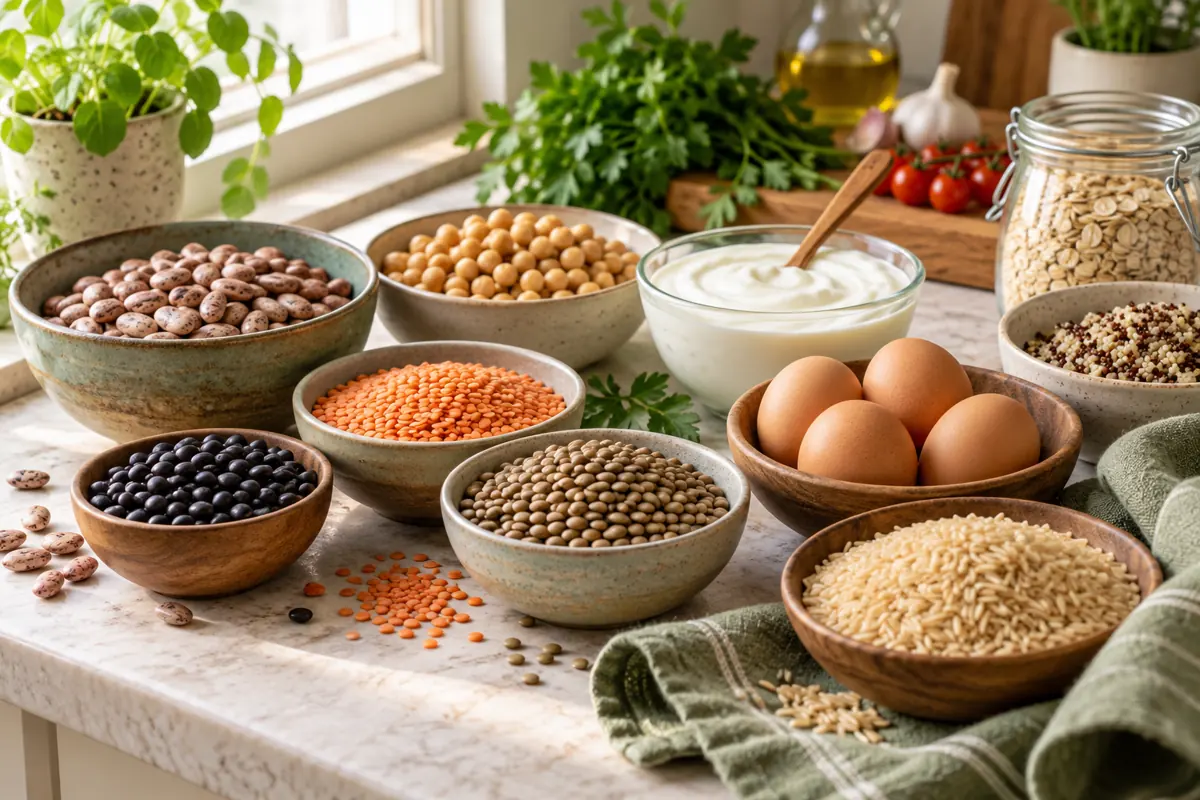
You do not need a new meal plan to add protein and fibre. Start with a meal you already like, then add an ingredient or change one part of it. Beans in chilli, yoghurt with breakfast, or a handful of lentils in a pasta sauce are all easy places to begin.
Protein helps the body grow and repair itself; fibre supports digestion. Beans, peas and lentils provide both. Whole grains, vegetables, fruit, nuts and seeds also contribute fibre, while foods such as fish, eggs, tofu and dairy can contribute protein. [1] [2]
Five familiar meals, five small changes
- Breakfast: top porridge with plain yoghurt and berries, or add a spoonful of nuts or seeds if you enjoy them. Oats and berries add fibre; yoghurt contributes protein. Check plant-based yoghurt labels, as protein varies.
- Pasta: add lentils or white beans to tomato sauce. Try wholewheat pasta, or mix it with your usual pasta while you find a combination you like.
- Rice bowls: add edamame, tofu, chicken or fish for protein, plus vegetables and beans for variety. Brown rice is another fibre-containing option.
- Soup: stir in cooked chickpeas or beans and a handful of frozen vegetables. A squeeze of lemon and some herbs can brighten the flavour.
- Sandwiches: use wholegrain bread and add hummus, eggs, tofu or another filling you enjoy, plus crunchy vegetables.
How much do you need?
Needs vary with age, health and circumstances. WHO recommends that people older than 10 aim for at least 25 g of naturally occurring dietary fibre a day; UK guidance recommends 30 g for adults. These are population guidelines, not personalised targets. [3] [2]
You do not have to get every nutrient into every meal. Look at the variety of foods you eat over time and make changes that suit your appetite and budget.
Go gradually
If you are not used to eating much fibre, increase it slowly and drink enough fluid; a sudden change can be uncomfortable. [4] If you have a digestive condition, kidney disease, or have been given a specific diet, ask your clinician or dietitian before making major changes.
Use your meal log as a learning tool
Caloza estimates protein and fibre from a meal photo and lets you review detected foods and portions. For a mixed dish, add notes about ingredients the camera cannot see, such as beans blended into a sauce. These numbers are estimates: they can help you notice patterns but cannot verify exact intake.
What protein and fibre do
Protein supplies amino acids used by the body for growth and repair. Fibre is found in plant foods and contributes to digestive health. Different foods supply different combinations of nutrients, which is why variety can be more helpful than searching for one perfect ingredient. The NHS fibre guide suggests grains, pulses, fruit and vegetables as ways to increase fibre.
A food can contribute one, both or neither in a meaningful amount. Fish, eggs, dairy and tofu can contribute protein; beans, lentils and some other plant foods contribute protein and fibre; fruit, vegetables and whole grains contribute fibre to varying degrees. Exact amounts depend on the food and portion. If a precise amount matters, check a label or a reliable food composition source instead of relying on appearance.
Build on the meals you already eat
The easiest change is often the one that leaves the meal recognisable. If you enjoy a tomato pasta, add a spoonful of lentils to the sauce. If you like a breakfast bowl, add plain yoghurt and berries or nuts if suitable for you. If you prefer a sandwich, try a protein-containing filling and a wholegrain bread you enjoy. You can make one change, see whether it works, and keep it only if it makes the meal appealing.
There is no need to make every meal a high-protein meal or to reach a fibre target at each sitting. A bowl of soup, a piece of fruit and a later meal can all contribute to the day's pattern. People differ in appetite, allergies, access and medical needs. Population recommendations describe groups; they do not replace personalised advice.
Breakfast ideas that are easy to repeat
- Oats and yoghurt: cook oats as you prefer and top with plain yoghurt and fruit. Add seeds or nuts if suitable, or use a nut-free topping when needed.
- Toast and eggs or beans: choose a bread you like, add eggs or beans, and include tomato or another vegetable for flavour. Wholegrain breads can contribute fibre; compare labels where useful.
- Yoghurt bowl: add berries and an unsweetened wholegrain cereal. If using plant yoghurt, check its label: protein content differs considerably between products.
- Savoury leftovers: heat leftover beans and vegetables safely and serve with bread or rice. Breakfast need not be restricted to foods marketed as breakfast.
When comparing cereals, check serving size as well as fibre and sugar. A serving printed on a package may not be the quantity in your bowl. The MedlinePlus food-label guide explains serving information and how to compare it with what you eat.
Lunch and dinner upgrades
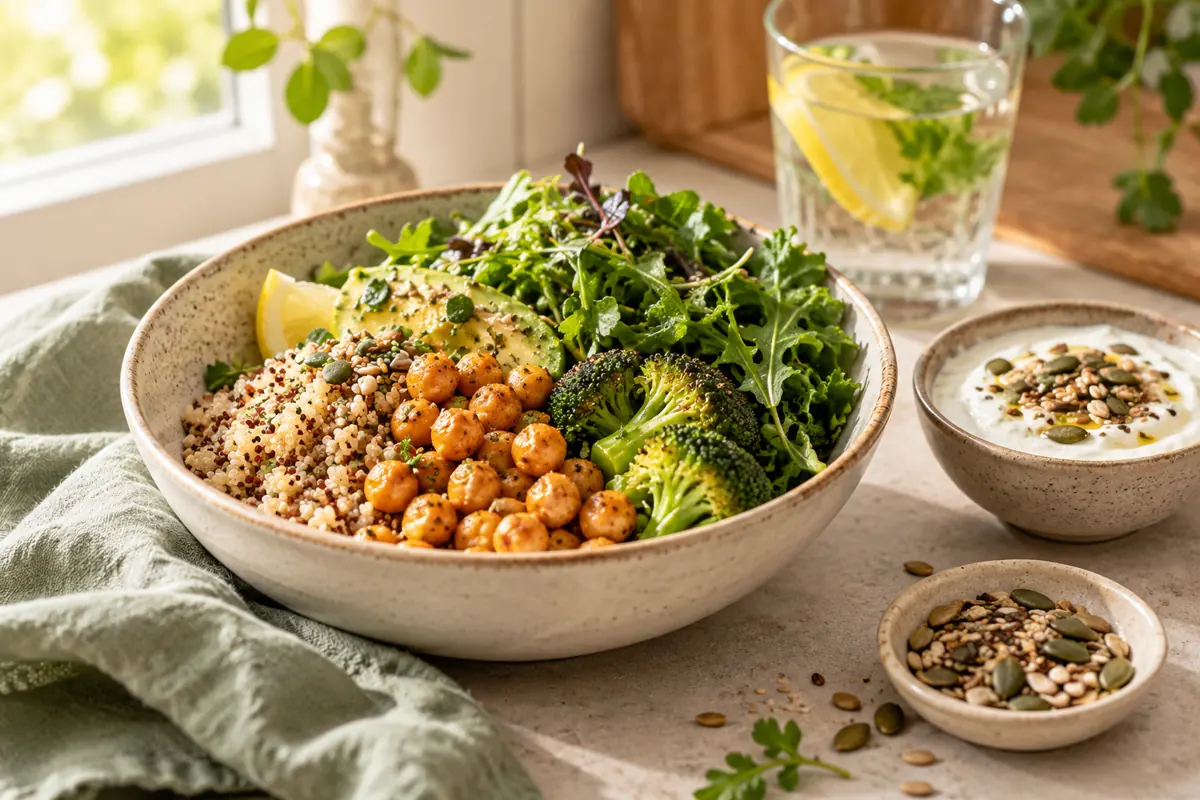
- Soup: stir in canned beans or cooked lentils, plus frozen vegetables. Rinse canned beans and choose a lower-sodium version if helpful. A squeeze of lemon and herbs can add flavour.
- Rice or noodles: add tofu, fish, chicken or edamame if you enjoy them; include vegetables and consider a higher-fibre grain when it suits the dish.
- Wraps: spread hummus, add beans or another filling, then vegetables for crunch. The sauce and wrap also contribute to the meal, so choose the combination you like.
- Chilli: add extra beans or replace part of the meat with beans. Start with a small change and adjust the seasoning as the batch gets larger.
- Roasted potatoes: keep the skins on when appropriate, add a bean or yoghurt topping and serve with vegetables. Wash potatoes and cook them safely.
If a recipe serves several people, divide the batch into portions that match your appetite. You do not have to estimate the exact protein and fibre in the entire pan to decide whether you enjoy a meal. For detailed dietary needs, a registered dietitian can help translate the foods you like into an individual plan.
Fibre: why a gradual change can feel better
Adding a lot of fibre suddenly can cause discomfort for some people. Increase amounts gradually and drink enough fluid according to your needs. UK guidance recommends a variety of fibre-containing foods, and the NHS explains that fibre supports normal digestion. NHS: getting more fibre.
If beans are unfamiliar, try a small serving in a familiar dish before increasing it. If wholegrain pasta is new to you, mix some with your usual pasta and adjust the proportion to taste. You do not have to use a particular ingredient if you dislike it or cannot tolerate it; other foods can contribute variety.
People with a digestive condition, swallowing difficulties, kidney disease or another condition may have different needs. Some people are advised to limit certain foods, fibre or fluids temporarily. Follow your clinician's advice rather than applying a general recommendation to a medical diet. If symptoms persist or concern you, seek professional advice.
Protein: compare the food, not the marketing
A package labelled “protein” can be convenient, but a familiar food may contribute protein too. Compare a product's nutrition panel and serving size with the quantity you would actually eat. Also consider taste, price, allergies and other nutrients instead of choosing based on one marketing word. There is no need to buy a supplement or expensive specialised product merely to make a normal meal more balanced.
Plant and animal foods can both contribute to a varied diet. Beans and lentils are useful pantry staples; tofu, dairy, fish, eggs and poultry are other options for people who eat them. The WHO healthy-diet guidance discusses a variety of protein sources and the role of pulses and whole grains.
Use Caloza to notice patterns, not chase perfection
Photograph a meal and review Caloza's estimated protein and fibre alongside the detected ingredients. Add notes if a dish includes hidden beans, seeds or a sauce the photo does not reveal. When you eat a repeated meal, compare a version with an ingredient added only as an estimate; changes in lighting, assumed portion and the ingredients detected can affect the result.
The app cannot measure exact nutrient intake from a picture or determine whether someone has met an individual target. If a package label gives more reliable information for a specific product, use that; if you need precise guidance for a medical condition, consult an appropriate professional. The useful question is often “What could I add that I would enjoy?” rather than “Was this meal perfect?”
A simple, flexible shopping list
Choose a few items you are likely to use: oats or wholegrain bread, a can of beans or lentils, frozen vegetables, fruit, and a protein food that fits your preferences such as eggs, yoghurt or tofu. A limited budget or a busy week may make canned and frozen foods especially useful. Look for products with lower sodium where that matters and check the labels for allergens.
Then pair ingredients with meals you already make. Add beans to a soup, fruit to breakfast or vegetables to a rice bowl. If a new ingredient causes discomfort or does not taste good to you, try a different food or a smaller amount. Sustainable changes can be small, and you can vary them over time rather than following a rigid daily checklist.
Try one change at a time
Pick one familiar meal and add an ingredient you already like. You might add a small spoonful of beans to soup, serve yoghurt with oats, or mix a little wholegrain pasta into your usual pasta. Taste matters, and making a small change helps you identify what works for your appetite and digestion.
At the next shop, compare the nutrition information and serving sizes of the products you actually use. Canned beans, cereals and plant yoghurts differ by recipe. If an added ingredient causes discomfort, reduce the amount or choose another fibre source, and seek individual advice when a medical diet or persistent symptoms are involved.
If you record the meal in Caloza, include a note for ingredients that are blended into a sauce or hidden underneath the visible food. Review the estimate as a useful starting point; a photograph does not establish precise nutrient quantities or personal dietary requirements.
A convenient meal still counts: canned pulses, frozen vegetables and a suitable grain can make a practical base when time is limited. Follow the cooking and storage directions, choose flavourings you like, and adjust the ingredients to the needs of the people sharing the meal.