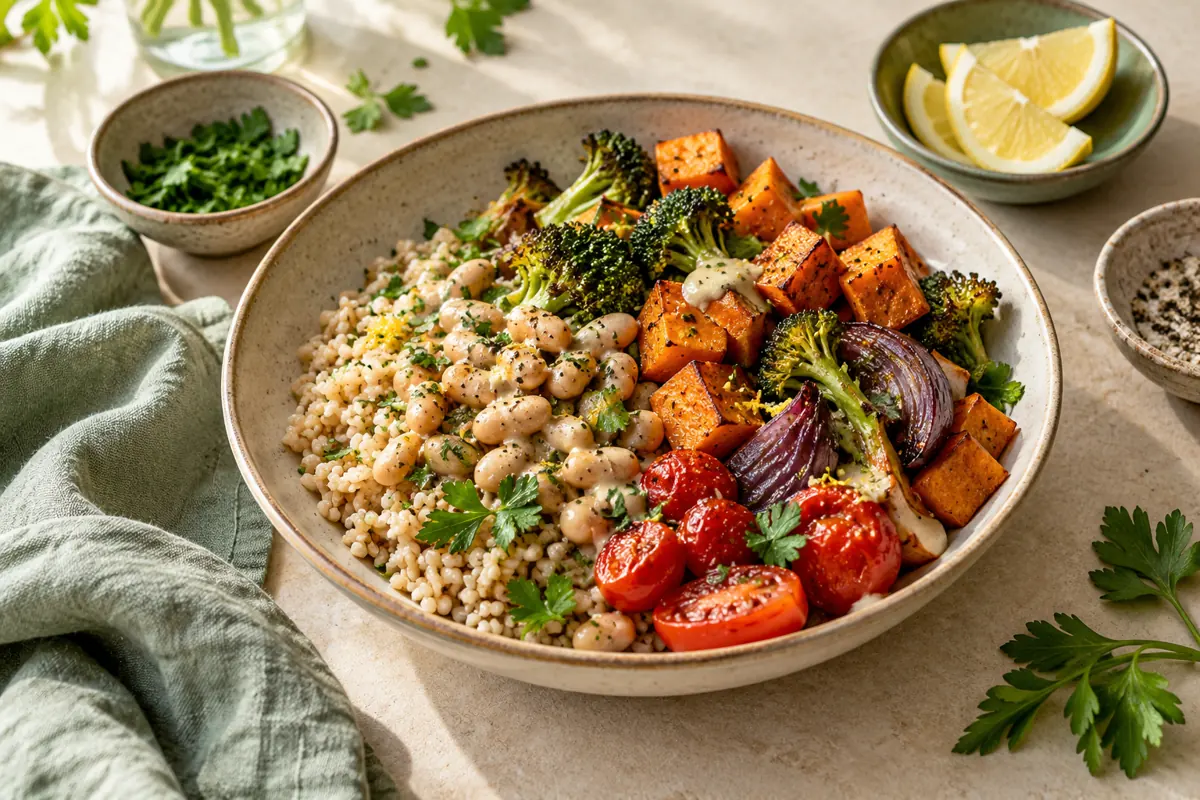
A satisfying meal does not need a perfect ingredient list. Start with foods you like, add a little variety, and use seasoning to make them worth eating again. The World Health Organization describes healthy diets in terms of balance, variety and moderation, with room for different cultures and preferences.
Build from a meal you already enjoy
Instead of replacing dinner with a dish you will never want again, change one part. Add a handful of spinach and white beans to pasta; serve tacos with beans, crunchy cabbage and a squeeze of lime; or put leftover roasted vegetables alongside eggs and toast. A varied pattern including vegetables, whole grains and pulses can help provide fibre and a range of nutrients. Source: WHO.
Use four flavour tools
- Acid: lemon, lime or vinegar can brighten a rich dish. Add a little at the end and taste.
- Aromatics: onion, garlic, ginger and herbs add depth. Cook them gently to avoid burning.
- Texture: toasted seeds, cucumber or roasted chickpeas add crunch to a soft bowl.
- Savoury accents: a little cheese, miso or soy sauce can add depth. Some are salty, so taste before adding more salt.
The WHO suggests herbs and spices as ways to flavour food while reducing reliance on salt. Source: WHO sodium guidance. The goal is a flavourful dish, not an unsalted one that you dislike.
Three adaptable dinner ideas
- Warm grain bowl: combine cooked rice or another grain, beans, roasted vegetables and a spoonful of yogurt mixed with lemon. Swap ingredients to suit your kitchen.
- Tomato and lentil pasta: simmer cooked lentils in tomato sauce, toss with pasta, and finish with herbs and cheese if you like.
- Easy tray bake: roast chicken or tofu with peppers and potatoes. Add a yogurt, garlic and lemon sauce at the table.
A relaxed way to notice patterns
Try one change at a time and keep the ones you enjoy. If a meal has plenty of sauce or cooking oil, include it when you reflect on the dish; a photo alone may not show how much was used. You do not need to make every meal identical or eliminate favourite foods to build a varied routine.
People with allergies, medical conditions or specific nutrition needs may need a different approach; a registered dietitian or other qualified clinician can help tailor it.
Start with satisfaction, not a list of restrictions
Think of a meal you already look forward to. It might be pasta with tomato sauce, a comforting curry, a sandwich, or rice and beans. Instead of asking how to make that meal “perfect,” ask which small addition or adjustment would make it taste better and give you more variety. A handful of spinach, lentils stirred into the sauce, or a crunchy vegetable on the side can change the meal without erasing what you like about it.
A balanced eating pattern can look different across cultures, budgets and households. WHO describes healthy diets around adequacy, balance, moderation and diversity rather than a single universal menu. The practical aim is to find combinations you will actually make again. WHO: healthy diet.
Think in layers: a simple flavour checklist
Start with aroma. Onion, garlic, ginger, cumin or smoked paprika can give a dish depth. Cook gently and stir; burnt garlic or spices can taste bitter. If fresh ingredients are not available, dried herbs and frozen aromatics can also make a useful pantry.
Add brightness. Lemon, lime, vinegar or a spoon of yogurt can lift a dish that tastes flat. Add a little at a time near the end, taste, and stop when the flavour suits you. Acid is especially useful with beans, roasted vegetables and rich sauces.
Build contrast. A soft grain bowl benefits from cucumber, toasted nuts or seeds, crisp cabbage or an apple on the side. If someone has an allergy, choose a safe alternative. Texture can make a familiar bowl feel like a new meal.
Finish with something savoury. A little cheese, miso, olives, soy sauce or a favourite condiment can add a lot of flavour. Some are salty; taste before adding more salt, and compare labels if you use them frequently. WHO recommends using herbs and spices as part of reducing sodium intake. WHO: sodium reduction.
Five useful changes to meals you already cook
- Pasta night: stir cooked lentils or white beans into tomato sauce. Add mushrooms, frozen spinach or peppers, then finish with herbs and a little cheese if you enjoy it. You can keep the pasta you like and adjust proportions to suit your appetite.
- Taco night: add beans and crunchy cabbage alongside your usual filling. Offer lime, salsa and yogurt at the table so everyone can season their own plate.
- A quick sandwich: layer a protein you enjoy with tomato, greens or cucumber. A mustard-yogurt spread or hummus adds moisture; choose bread you like, with whole grain if that suits you.
- A curry or stew: add chickpeas or lentils and a vegetable that holds up in the sauce. Finish with herbs or yogurt and serve with rice or flatbread.
- Breakfast: pair plain or less-sweet yogurt with fruit and oats, or add a spoon of nuts if appropriate. If you prefer a favourite sweet cereal, mix it with plain cereal rather than assuming you must abandon it.
These are flexible cooking ideas, not prescriptions for individual nutrient needs. Foods such as pulses, whole grains, fruit and vegetables contribute nutrients and fibre, and the WHO recommends a varied pattern that includes them. A registered dietitian can help if your medical circumstances call for a different approach.
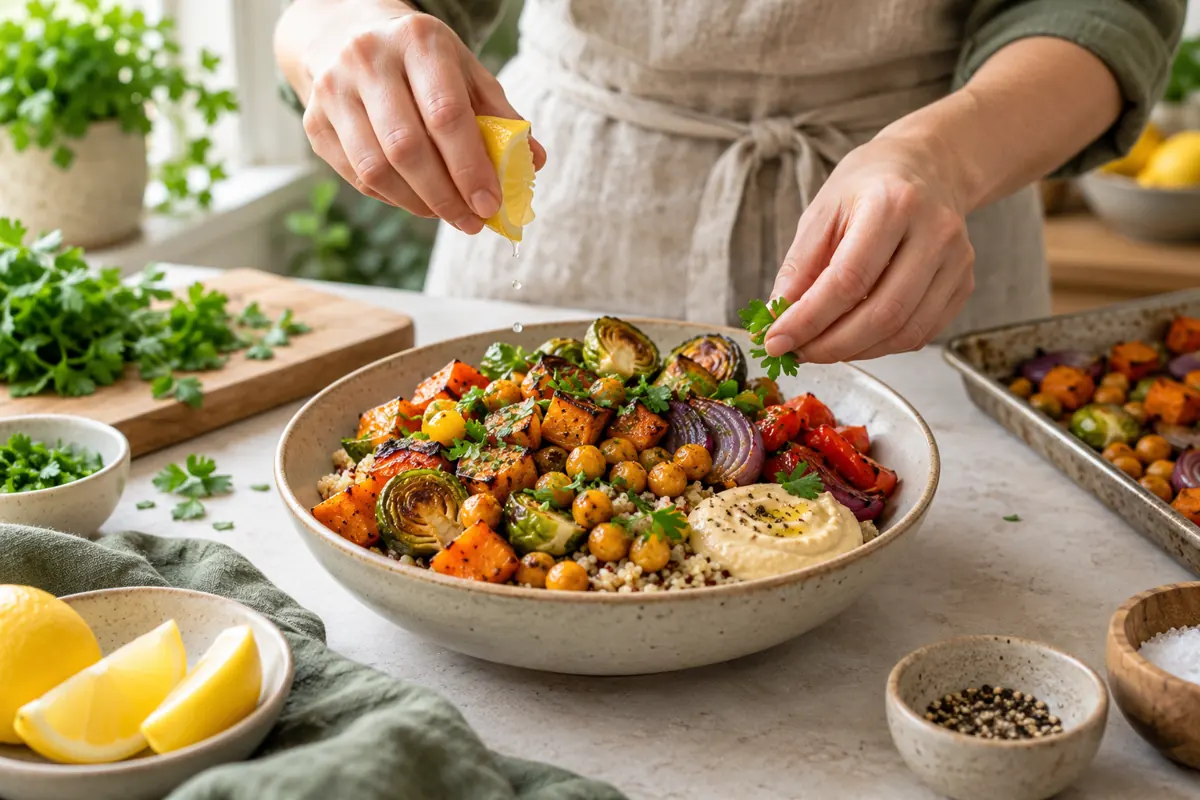
A four-part bowl you can adapt
Choose a base such as rice, potatoes, noodles or another grain. Add a protein source such as beans, eggs, tofu, fish or chicken. Add vegetables you enjoy, cooked or raw as appropriate. Finish with a sauce and something crunchy or fresh. The parts do not need to appear in equal quantities, and a meal does not need every component to count as worthwhile.
For example, use leftover rice, cooked chickpeas, roasted carrots and cucumber. Mix yogurt with lemon and garlic and spoon it over the bowl. If you prefer a different cuisine, swap in tofu, greens, ginger and a small amount of soy sauce. Keep the components that taste good and fit your kitchen. For safe leftovers, follow storage instructions and reheat thoroughly when reheating. UK Food Standards Agency: leftovers.
Get more flavour from a small pantry
A few ingredients can make several dinners: a tin of tomatoes, beans, a grain, frozen vegetables, one liquid cooking oil, a lemon or vinegar, and two spices you like. They do not have to be expensive or fresh every time. Frozen and canned produce can be useful choices; check labels for added salt or sugar where relevant. WHO includes appropriately selected frozen and canned produce in its guidance.
Try roasting vegetables until tender, then add lemon and herbs; simmer beans with tomatoes and smoked paprika; or mix yogurt, garlic and herbs for a sauce. If a meal tastes dull, identify what is missing before adding more of everything: perhaps acidity, crunch, herbs or a little salt would do the job.
Avoid the all-or-nothing trap
Not every ingredient needs a nutrition calculation. A delicious sauce can make vegetables appealing, and a favourite meal can fit within a varied routine. You can compare labels or notice portions without assuming that one dinner defines your health. The NHS’s food-swap ideas illustrate how small changes can be practical; use them selectively rather than treating them as a checklist.
If you want to understand what is in a meal, Caloza can create an editable estimate from a photo. Add notes about a sauce or cooking oil that the camera cannot see and correct the ingredients or portions when needed. The result is a starting point for reflection, not an instruction to eat less or a measurement of your health.
A simple experiment for next week
Choose one dinner you enjoy and add one ingredient you already have. Add lemon and herbs if the flavour needs a lift. Keep the change if it is convenient and tasty; if it is not, try a different one. Over time, that process can make varied cooking easier without requiring a new diet or a cupboard full of specialist products.
Make the easy choice the tasty choice
Prepare one component that can work in several meals. A tray of roasted vegetables can go into pasta, a wrap or a grain bowl; a pot of beans can become soup, toast topping or taco filling. Use a different finish each time: lemon and herbs for one meal, a little yogurt sauce for another, or smoked paprika and tomato for a third. Store leftovers promptly and follow the Food Standards Agency’s guidance for cooling and refrigeration.
Keep a shortcut for days when cooking feels difficult. Frozen vegetables, canned beans, microwaveable rice or a ready-made sauce can help a meal happen. Look at the labels if you want to compare salt or sugar, but do not let an imperfect ingredient stop you from eating. A convenient meal that you enjoy can be a useful part of a varied routine.
Three ways to rescue a disappointing dinner
- Tastes flat: add a small squeeze of lemon or a little vinegar, then taste again.
- Feels soft throughout: add cucumber, crunchy cabbage or toasted seeds if safe for the people eating it.
- Needs depth: try herbs, a spice, a little cheese or a savoury condiment. Check salt levels if using several salty ingredients.
Make one adjustment at a time. This makes it easier to learn which flavours you like and reduces the chance of masking the original dish. A meal does not have to meet a visual ideal or a numerical target to be enjoyable and nourishing.
Try keeping one dependable sauce in the fridge and one flavourful ingredient in the cupboard, such as lemon juice or dried herbs. On a busy day, they can make a simple meal more satisfying with very little preparation. Check storage instructions and use perishable sauces promptly.