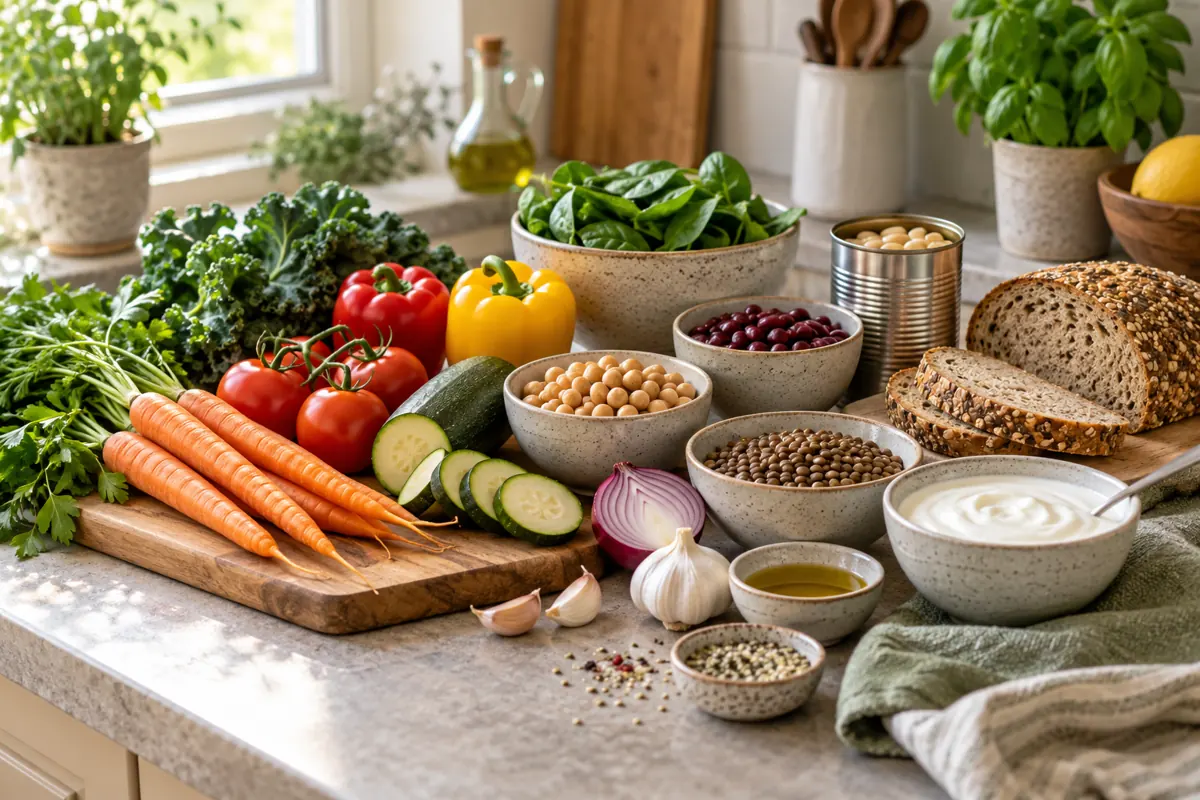
No. Processing can mean washing, freezing, canning, fermenting, baking or making a complex packaged product. Some processing makes food safer, more convenient or available for longer. Frozen vegetables, plain yogurt and canned beans can all contribute to a nutritious diet. The more useful questions are what the food contains, how it fits into your meals and what you are comparing it with.
What does “ultra-processed” mean?
Researchers sometimes group foods using the NOVA classification, which considers the nature and purpose of processing. Many packaged snacks, sweetened drinks and ready-to-eat products fall in its ultra-processed category. This is a broad group, and classification can be difficult for some products. Being packaged is not enough on its own to tell you a food’s nutritional quality.
The World Health Organization recommends a varied diet based largely on unprocessed and minimally processed foods, and notes that diets containing significant amounts of highly processed foods are associated with adverse outcomes. An association alone, however, cannot tell us exactly which product or processing step caused an outcome.
What can a controlled trial tell us?
In a small 2019 controlled trial, 20 adults spent two weeks on an ultra-processed diet and two weeks on an unprocessed diet, with meals designed to match several nutritional characteristics. Participants ate more calories and gained weight on the ultra-processed diet. This is useful experimental evidence about those two offered menus over a short period; it does not demonstrate that every individual ultra-processed product causes the same effect or identify a single cause.
A practical shop-by-shop approach
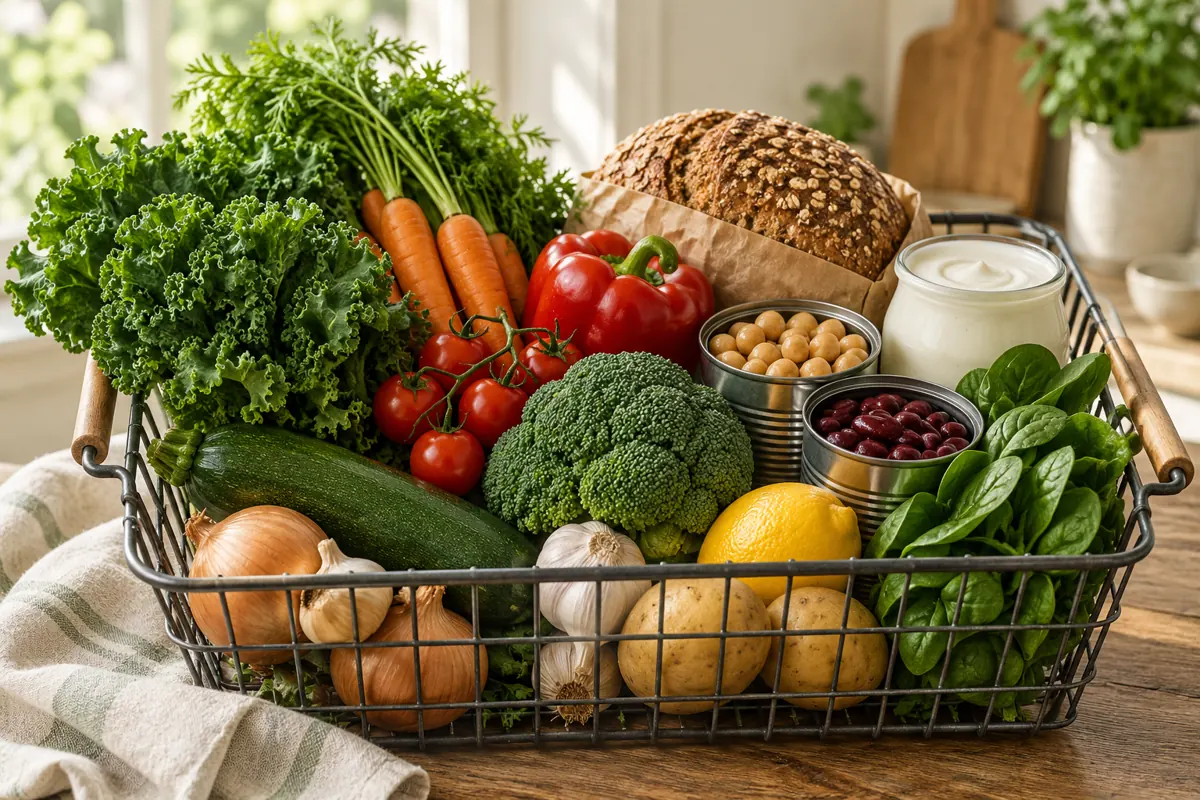
- Keep useful shortcuts. Plain frozen vegetables, canned beans, wholegrain bread and plain yogurt can help a quick meal come together.
- Compare like with like. Use similar serving sizes or per-100-gram labels. Consider fibre, protein, sodium, saturated fat and sugars alongside price and taste.
- Change one thing if it helps. Add beans or vegetables to a ready meal, choose lower-sodium soup, or pair a favorite snack with fruit or yogurt. You do not need an entirely new pantry.
- Use the ingredients list as a clue, not a diagnosis. An unfamiliar ingredient or long list is not sufficient proof of harm; check the full label and the role of the food in your overall pattern.
The MedlinePlus food-label guide explains how serving size changes the meaning of the listed values. Food labelling varies by country, so use the version on the package in front of you.
Where does a photo estimate fit?
Caloza can show an estimated ingredient breakdown for a photographed meal, but a photo cannot reliably determine a product’s exact recipe or processing classification. Review the estimate and use the package label when you need product-specific information. A food-quality signal is context, not a medical assessment or a reason to fear a meal.
Processing is a broad word
Washing lettuce, grinding oats, pasteurizing milk and freezing vegetables all change food in some way. These processes can make food easier to store, prepare or eat, and some improve safety. At the same time, certain manufacturing methods are used to make foods that are convenient, shelf-stable and easy to eat quickly. The word “processed” alone does not explain which process occurred or what the finished food contributes.
Consider a few examples. Plain frozen peas are processed but remain peas. Canned beans can contain added salt, which can vary between brands. A loaf of bread can contain several ingredients and may contribute whole grains, depending on its recipe. A sweetened drink or packaged snack may be high in added sugar, sodium or saturated fat. Each deserves its own description rather than a single verdict based on packaging.
How the NOVA framework works—and where it gets difficult
The NOVA framework groups foods according to the extent and purpose of processing. Its ultra-processed category includes many industrial formulations, but the category covers a wide range of products. Classification can be difficult when an ingredient list is incomplete or a product sits near a boundary. Two products in the same broad category can have different nutrient profiles and play different roles in meals.
Research based on such groups is valuable because it lets investigators study patterns across large populations. It does not mean that a photograph can reliably classify each ingredient or that the same conclusion applies equally to every food in a category. In everyday shopping, the ingredients list, nutrition label and the food's role in the meal add useful detail.
What observational studies can—and cannot—show
Many observational studies compare people who report eating different amounts of ultra-processed food, then look for associations with health outcomes. Researchers use statistical methods to account for factors they can measure, but people differ in many ways: income, access, schedules, health, activity and other aspects of diet may all matter. Even a well-conducted study cannot eliminate every possible explanation.
That does not make observational research worthless. Consistent associations across studies can help identify questions and inform public-health advice. But an association is not proof that one ingredient caused an outcome, and it cannot tell you exactly what would happen if you changed one packaged product for another. The WHO discusses highly processed foods in the context of broader eating patterns, including sodium, free sugars and types of fat.
Controlled trials add evidence, with their own limits
The 2019 trial above offered participants two different menus in a controlled setting. The menus were designed to match several nutritional characteristics, but the meals still differed in many ways. Its findings are a reason to take the question seriously, not proof that every ultra-processed food has the same effect. The study involved a small group and short intervention periods, so longer-term individual outcomes remain uncertain.
A systematic review of randomized trials found that results for energy intake varied across analytic models and that differences in energy density could help explain findings; the authors rated certainty low. This is an evolving field. A careful conclusion is that some eating patterns high in ultra-processed foods are associated with poorer outcomes and some controlled menus have increased intake, while the effects of processing independent of composition are still being investigated.
A practical label-reading routine
- Decide what the food is for. Is it a quick lunch, a sauce used by the spoonful, or a snack? Compare products that serve a similar purpose.
- Check serving size. Compare the same weight or the amount you actually use. The MedlinePlus food-label guide explains how US serving information relates to the listed values.
- Choose relevant nutrients. Depending on the product and your needs, compare sodium or salt, saturated fat, fibre, protein and sugars. Label conventions differ by country.
- Read ingredients and allergens. Check for foods you must avoid and for the ingredients that explain the flavor. An unfamiliar word alone does not establish harm.
- Consider the whole meal. A ready-made sauce with beans and vegetables is a different eating occasion from a sauce on its own. Flavor, budget and preparation time matter too.
Four comparisons that are more useful than a blacklist
Frozen vegetables: plain frozen vegetables are processed, but are a convenient way to add produce. Compare a plain bag with a heavily seasoned or sauced version if sodium or saturated fat is relevant. Follow cooking instructions; frozen vegetables are not automatically ready to eat.
Canned beans: compare plain beans, no-salt-added beans and beans in sauce. Each can be useful; labels and your intended portion help you understand the difference. Draining and rinsing can reduce sodium in many products.
Yogurt: plain and flavored yogurts can differ in sugar and protein, while plant-based alternatives vary by base and fortification. Compare the actual package rather than treating every yogurt as equivalent.
Ready meals: convenience may make a regular meal possible. Compare labels for what matters to you, and add vegetables, beans or fruit if that improves the meal for your taste and situation. One addition is a choice, not an obligation.
Do ingredients you cannot pronounce mean a food is harmful?
No. A name may sound unfamiliar because it is a technical name for a familiar substance, or because it describes an ingredient used for a specific function. The ingredient list is still useful: it can reveal allergens, sweeteners or ingredients you prefer to avoid. But familiarity and word length are not reliable measures of safety. Different countries also use different ingredient names and labeling rules.
People with allergies should follow ingredient and allergen statements and their medical plan. A general nutrition score or a photograph cannot establish that a food is safe for an allergy. If a product's ingredient list is unclear, ask the manufacturer or avoid it until you have the information you need.
A sensible first step if you want to make a change
Look at one food you eat often and ask what you enjoy about it: price, crunch, speed, sweetness or familiarity. Compare a few alternatives without assuming that the most expensive or least packaged choice is automatically best. Maybe a lower-sodium soup tastes just as good, or mixing a favorite cereal with plain oats gives you the texture you want. Maybe the existing product fits your routine and you choose to change something else.
Make the change practical. Keep a convenient protein source and vegetables you actually like on hand; prepare a second portion when you have time; or pair a ready-made component with something fresh or frozen. Avoid replacing useful shelf-stable foods with a plan that leads to missed meals or excessive food waste. Cost, disability, work and access affect what choices are realistic.
Where Caloza helps—and where it cannot
Photographing a meal in Caloza can help you review estimated ingredients and portions and see headline nutrients. You can add context or adjust an estimate when a sauce or component was missed. But the app cannot reliably infer a manufacturer's recipe or a food's NOVA classification from a picture, and its estimate cannot replace a product label or a dietary consultation.
If tracking helps, use it to notice patterns and ask better questions. If it makes eating stressful, it is reasonable to stop. A food-quality signal is context, not a diagnosis, a rule, or proof that a food caused a health outcome.
What about food additives?
Additives serve different functions, such as preserving food, maintaining texture or adding flavor. Whether a particular substance is permitted and how it is evaluated depends on the regulatory system and intended use. The presence of an additive does not, by itself, tell you the overall nutritional quality of a product or prove a health outcome. If you have a specific sensitivity or allergy, follow your clinician's advice and read labels carefully.
It is equally reasonable to prefer a simpler ingredient list because of taste or cooking preference. Just avoid treating that preference as a universal safety test. Compare the whole product with a realistic alternative, paying attention to nutrients, the amount eaten and your budget.
Convenience does not have to mean the same thing every day
Imagine a person who relies on a ready-made lunch because they have little time. One practical experiment is to compare two lunches with similar prices and choose one with more fibre or less sodium if they enjoy it. Another is to keep a piece of fruit, a bag of prepared vegetables or a can of beans nearby. Neither approach requires cooking every component from scratch.
For a quick dinner, heat a packaged soup as directed and add canned beans or frozen vegetables prepared according to the label. Serve with bread or another staple if desired. For breakfast, pair a convenient yogurt or cereal with fruit. These combinations use processed foods as tools in a meal; their usefulness depends on the ingredients and context, not just the category.
If you want to compare two products, use the same quantity rather than comparing a small stated serving of one with a large serving of another. Check local label conventions and any medical dietary restrictions. The most useful choice is one that fits your needs, is affordable and you will actually enjoy.
Remember that the package date, storage conditions and cooking directions are separate from nutritional claims. Follow the product instructions and local food-safety guidance even when a food is marketed as natural or minimally processed.