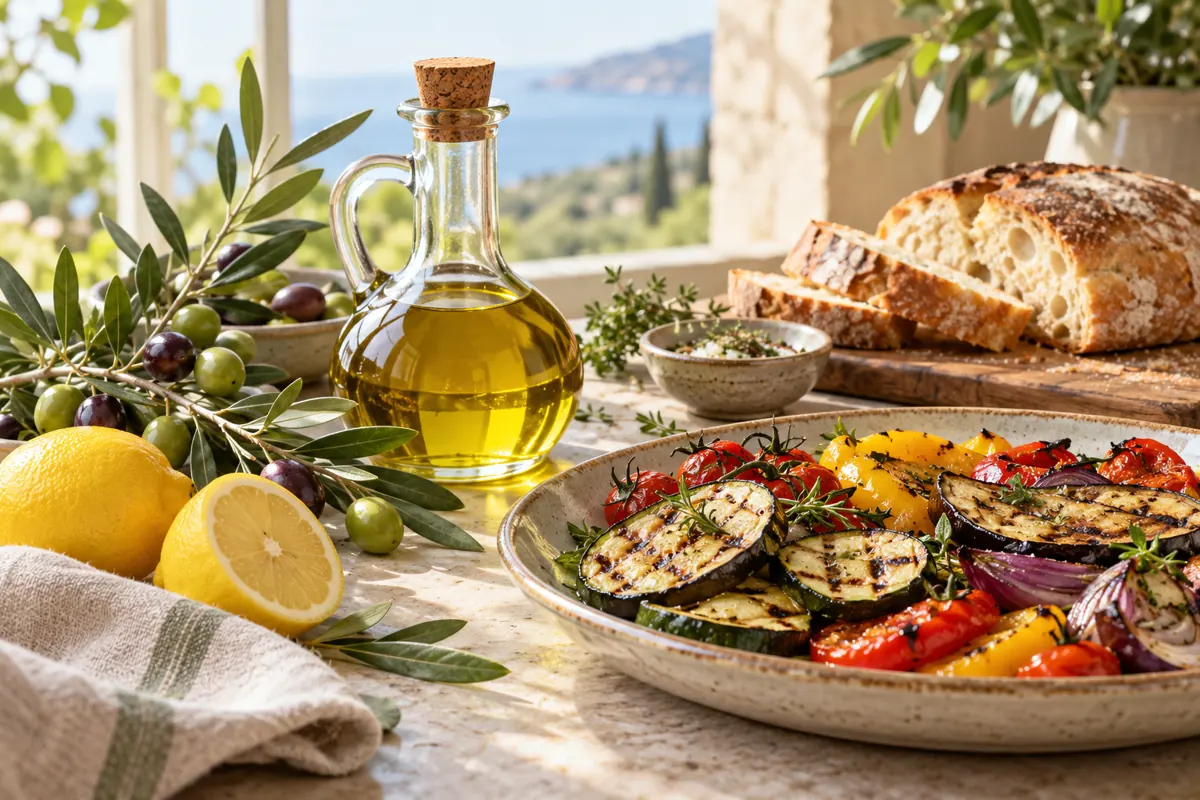
Olive oil can be a useful everyday cooking fat. It is rich in unsaturated fats, and health organisations recommend replacing some saturated fat with unsaturated fats as part of an overall healthy eating pattern. It also adds flavour: a little peppery extra-virgin oil can make a plate of beans or vegetables more enjoyable. [1]
What does the evidence say?
In the PREDIMED trial, people at high cardiovascular risk were assigned dietary advice including a Mediterranean-style diet supplemented with extra-virgin olive oil, a Mediterranean diet supplemented with nuts, or advice to reduce dietary fat. The Mediterranean-diet groups had fewer major cardiovascular events. This tests a dietary pattern, not olive oil in isolation, and its findings should not be treated as a guarantee for an individual. [2]
There is no reason to treat olive oil as a cure or to pour it onto food you do not enjoy. Other unsaturated oils, nuts, seeds and fish can also fit into a balanced diet. The comparison that matters is often what the oil replaces, not whether one ingredient is labelled a superfood. [3]
What about calories?
Oil is concentrated fat, so a generous pour contributes more energy than a small drizzle. The exact amount depends on the product and serving; check the label. If you are curious, pour a teaspoon or tablespoon once into your usual pan or salad bowl to learn what your typical amount looks like. You do not have to measure forever.
A meal photo cannot show precisely how much oil went into a pan or sauce. If you use Caloza to log a meal, add a note about oil when you know it and review the estimate. The result is an estimate, not a lab measurement.
Can you cook with extra-virgin olive oil?
Yes. The American Heart Association includes olive oil among oils suitable for cooking, including higher-temperature cooking, and advises against using oil once it smokes or becomes rancid. [1] Use moderate heat for a quick sauté, roast vegetables until tender and browned, or use the oil uncooked in a dressing. If a pan starts smoking, reduce the heat and start again with fresh oil.
Extra-virgin oil has a stronger flavour that works well in dressings and as a finishing drizzle. A milder olive oil or another liquid plant oil may suit dishes where you do not want that flavour. Store oil in a cool, dark place and use it while it smells and tastes fresh.
Three easy ways to use it
- Beans: toss warm white beans with a little oil, lemon, garlic and parsley.
- Vegetables: coat broccoli or carrots lightly before roasting and finish with vinegar.
- Dressing: whisk olive oil with lemon juice, mustard and pepper; adjust to taste.
For most people the goal is a varied diet, not a quota of olive oil. If you have a medical condition that affects your diet, ask a qualified professional for individual advice.
What is in olive oil?
Olive oil is mostly fat, with monounsaturated fat making up a large share. It also contains smaller amounts of other fats and naturally occurring compounds that vary with the olives and how the oil is made. The nutrition value of an eating pattern depends on more than one number on a bottle: what the oil replaces and the foods served with it both matter. WHO recommends shifting away from saturated and trans fats toward unsaturated fats within a varied diet. WHO: healthy diet.
That distinction explains why the question is not simply “Is oil good or bad?” For example, using olive oil instead of some butter in a vegetable-and-bean dish changes the types of fat in that dish. Adding a large amount of oil to an otherwise unchanged plate is a different comparison. Both are individual cooking choices; the effect of a whole diet cannot be inferred from one meal.
Extra-virgin, virgin and refined: what is the difference?
Extra-virgin olive oil is an olive oil grade with specific production and quality standards; it often has a more noticeable fruity, peppery or bitter character. A bottle labelled olive oil without “extra-virgin” may contain refined olive oil and a proportion of virgin oil; check the label in your market. The International Olive Council publishes official standards and definitions, but labels and regulatory requirements can vary by country.
For a bright dressing or finishing drizzle, choose a flavour you enjoy. If a strongly flavoured oil overwhelms a delicate dish, a milder one may be a better culinary choice. Extra-virgin oil often costs more, so it is reasonable to reserve a favourite bottle for uncooked uses and use a less expensive cooking oil elsewhere. Price alone does not establish that a particular bottle is fresh or superior.
How much should I use?
There is no single amount everyone should use. Start with what a recipe needs for flavour or to coat the pan, then adjust based on your appetite, preferences and the other ingredients. When comparing labels, use the same serving unit. A package might show values per tablespoon, per teaspoon or per 100 millilitres; the units are not interchangeable without a conversion.
If your usual approach is to pour directly from a bottle, try measuring once into the spoon you normally use. Pour that amount into the pan and notice how it looks. This can make later estimates less surprising without turning cooking into constant arithmetic. If you prepare a pan for several people, the oil in the recipe is shared across portions, but the exact amount on each plate is difficult to know. Some oil can remain in a pan or dressing bowl. Treat the calculation as an approximation rather than claiming precise absorbed quantities.
A closer look at PREDIMED
The corrected and republished PREDIMED paper followed participants at higher cardiovascular risk who were assigned to dietary interventions. The extra-virgin olive oil group was advised to follow a Mediterranean-style eating pattern and received oil; another intervention included nuts. The comparison group received advice to reduce dietary fat. The study therefore cannot isolate the effect of a single spoonful of oil or prove what will happen to someone with different health characteristics.
The original report was retracted and republished after researchers identified problems with randomisation procedures at some sites and reanalysed the data. The revised analysis continued to support an association between the Mediterranean-style interventions and fewer major cardiovascular events in that trial. That history is a reason to describe the intervention and its limits carefully, not to ignore the corrected report. A Cochrane review also discusses challenges in the Mediterranean-diet trial evidence.
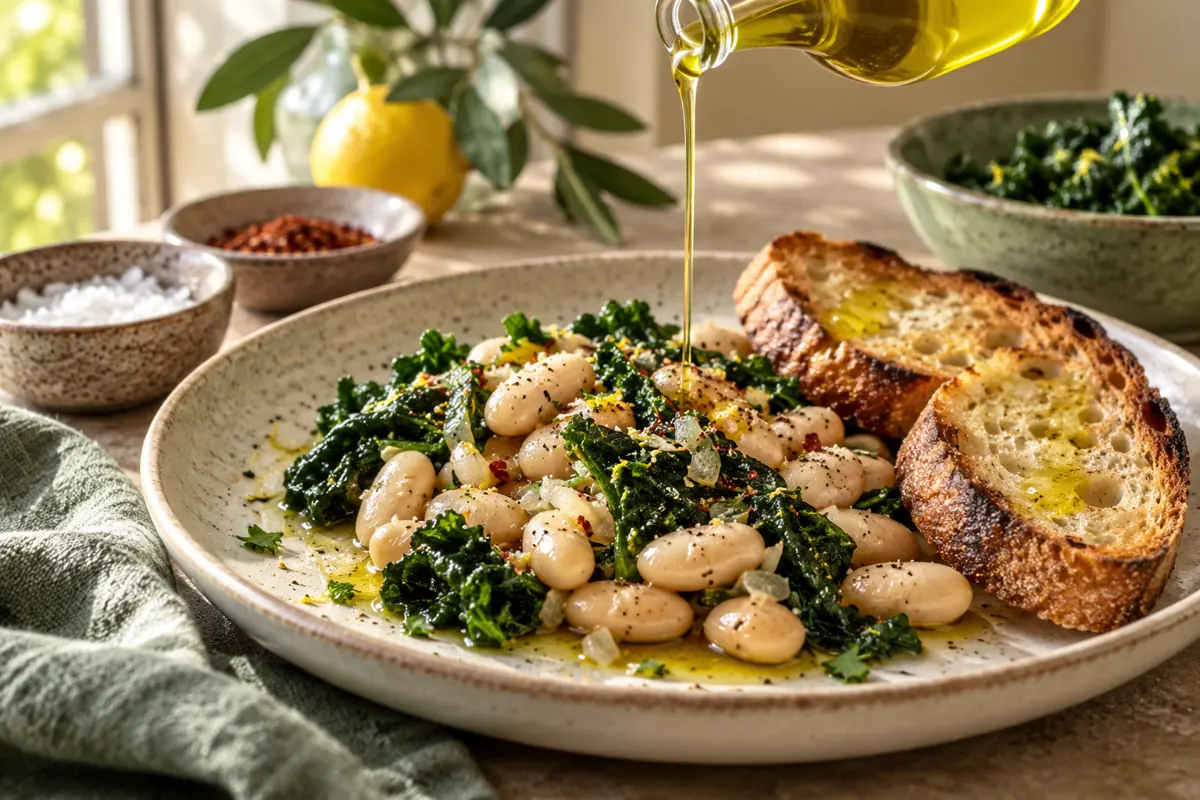
Will cooking destroy everything useful?
Heat changes foods and oils, but that is not a reason to assume that ordinary sautéing makes olive oil unsafe or nutritionally worthless. Different oils and dishes behave differently depending on temperature, time and the condition of the oil. Use a heat level that cooks the food without leaving the pan smoking; the AHA recommends discarding oil that has begun to smoke or become rancid and advises against reusing cooking oil. AHA: healthy cooking oils.
To sauté vegetables, preheat the pan gently, add enough oil for your cooking method and keep the food moving as needed. For roasting, distribute a small amount across the vegetables so they cook evenly. For a salad, use a dressing that you like rather than assuming more oil is automatically better. When deep-frying, oil temperature and repeated heating are separate concerns; the AHA does not recommend deep-fat frying as a healthy cooking method.
Buy and store oil for flavour
Choose a container size you will use while the oil tastes fresh. Keep it sealed in a cool, dark place rather than next to a hot stove or in a sunny window. Follow the bottle's storage and best-before information. If the oil smells rancid or stale, discard it. A peppery or bitter note in a fresh extra-virgin oil can be part of its character; that is not the same thing as a stale smell.
You do not need a specialist collection. One olive oil you enjoy and another neutral oil for dishes where you prefer a different flavour can be enough. Canola, sunflower and other non-tropical liquid oils are also options; choose based on taste, cost, dietary needs and availability. AHA cooking-oil guide.
Questions people often ask
Is olive oil a medicine? No. It is a food that can fit a balanced eating pattern. It should not replace prescribed treatment or individual dietary advice.
Does “extra-virgin” mean unlimited? No. All oils provide concentrated energy, and the amount that suits one person may differ from another. Enjoyment and the overall meal matter as well as the label.
Can I use it every day? It can be an everyday choice for many people, but there is no need to force a food you dislike. Ask a clinician or registered dietitian if you have a medical reason to follow a particular eating plan.
A simple weeknight meal
Warm a pan of rinsed canned beans with tomato and garlic; serve over toast or cooked grains with greens and a modest drizzle of olive oil. Add lemon, black pepper or herbs for contrast. Choose no-added-salt beans if that suits you. This is one way to combine oil with foods that bring other nutrients; you can use another suitable oil or omit it according to taste.
For leftovers, cool and refrigerate promptly and follow local guidance. The UK Food Standards Agency advises refrigerating or freezing leftovers within one to two hours and eating refrigerated leftovers within 48 hours; cooked rice has additional precautions.
How to choose between bottles at the shop
Start with the purpose. For an uncooked dressing, choose a flavour you like enough to taste on its own: some extra-virgin oils are mild and fruity, others more bitter or peppery. For a sauce where olive flavour would dominate, a milder oil may be preferable. If you are buying for a household, think about the recipes people actually cook rather than chasing a single supposedly ideal oil.
Next consider quantity and storage. A smaller bottle can be a useful choice if you use oil slowly, while a larger container may suit a household that cooks with it often. Check the packaging for the best-before date and storage instructions. At home, reseal the cap and keep the bottle in a cool, dark place. A premium price is not a substitute for proper storage, nor does it prove that a particular oil will taste better to you.
Labels can also include claims about origin or production. Those details may matter to you for taste, cost or provenance, but they do not by themselves tell you how much oil you will use. Compare nutrition panels in the same unit and remember that a “per 100 ml” figure describes a much larger amount than a teaspoon. For everyday decisions, both the product and your actual serving are relevant.
Five ways to use a little oil for flavour
- Whisk olive oil with lemon, mustard and pepper for a quick dressing; adjust the acidity to taste.
- Warm beans with garlic and herbs, then finish with a small drizzle rather than adding all the flavour at the beginning.
- Lightly coat vegetables for roasting and add a splash of vinegar or fresh herbs after cooking.
- Serve bread with olive oil and chopped tomato as one option among the spreads you enjoy.
- Make a grain bowl with vegetables and a protein food, then use oil as one component of the dressing rather than the only source of flavour.
These are examples rather than a prescribed daily amount. What tastes right will depend on the size of the dish, the ingredients and who is eating. Keep allergen requirements and medical dietary advice in mind, and use the nutrition information for the particular foods you buy.
When the label and photo tell different stories
A photo-based food log can make it easier to review a meal, but oil is often invisible after it has coated vegetables or been mixed into a sauce. A note about the oil type, the approximate amount used in the recipe and the number of servings gives useful context. If the finished dish is shared or oil remains in the pan, the amount eaten by any one person is still uncertain.
Caloza allows the meal estimate to be reviewed and adjusted. It cannot identify the precise grade of an oil or measure how much was absorbed from an image. When a product-specific figure is needed, use the label, and when a dietary decision is medical, ask an appropriate clinician or dietitian. The point is to understand the meal better, not to claim an accuracy the photo cannot provide.