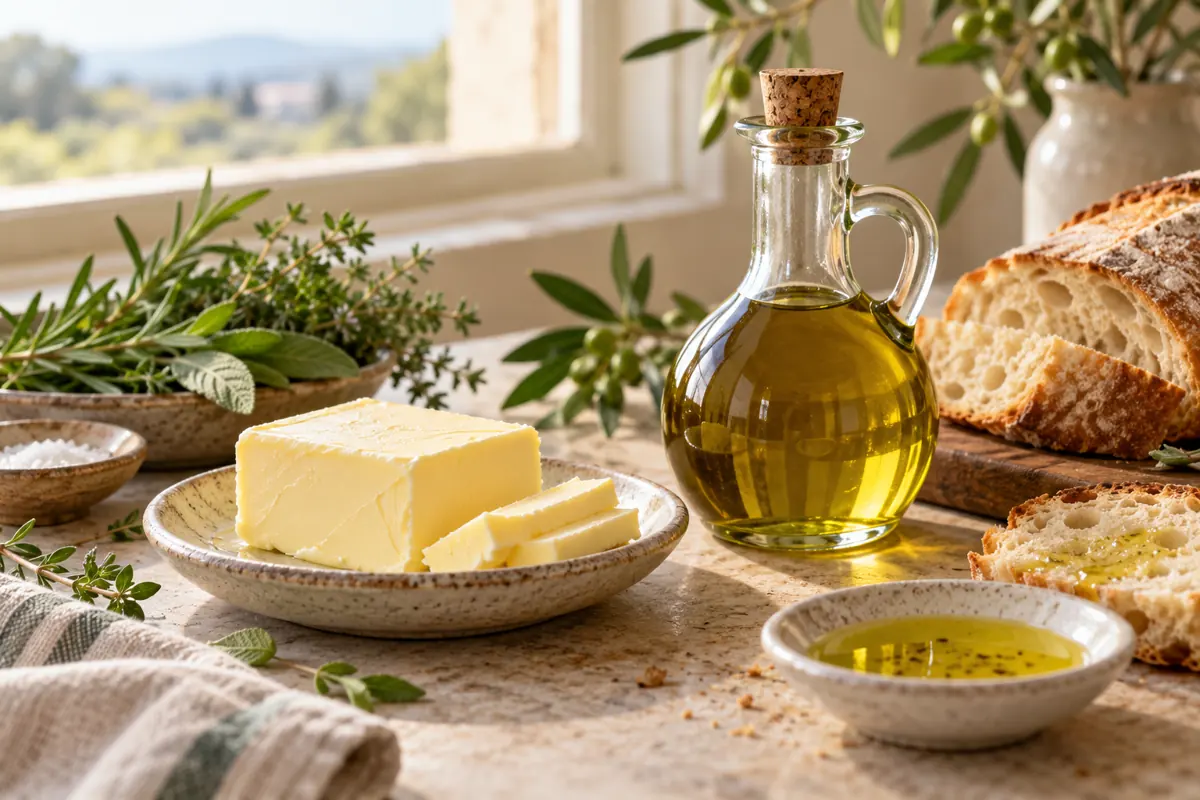
Butter and olive oil can both add flavour, but their fats are different. Butter contains more saturated fat; olive oil is predominantly unsaturated fat. The World Health Organization and American Heart Association recommend replacing some saturated fats with unsaturated fats as part of a healthy diet. [1] [2]
That does not mean a little butter makes a meal a failure. The useful question is what you eat regularly, what you enjoy, and which changes are easy to maintain.
The practical difference
For everyday sautéing: olive oil works well with vegetables, beans and fish. Other non-tropical liquid oils, such as canola, are options too.
For a buttery finish: if you love the flavour, try cooking with olive oil and finishing the dish with a small amount of butter. It keeps the flavour you want while changing the balance of fats.
For baking: butter contributes flavour and texture. An oil substitution changes the result, so use a recipe designed for oil rather than assuming a direct swap will work in every cake or pastry.
What about heart health?
The type of fat used in place of saturated fat matters. A Cochrane review of trials found that reducing saturated fat probably reduces combined cardiovascular events, and its findings support replacing saturated fat with polyunsaturated fats. This evidence concerns overall diet over time; it cannot predict what one meal will do to an individual. [3]
Olive oil is one useful unsaturated option, not the only one. A balanced diet can include varied sources of unsaturated fat alongside vegetables, fruit, whole grains and legumes. [1]
Is one lower in calories?
Both are energy-dense. A teaspoon of one is not nutritionally identical to a teaspoon of the other, and package values vary, so check your own label if you want a precise comparison. Choosing an oil for its fat profile does not make the amount irrelevant; equally, there is no need to fear a drizzle that makes your vegetables enjoyable.
Three swaps worth trying
- Roast potatoes with a little olive oil, rosemary and pepper; add a small pat of butter at the end if you like.
- Make toast with olive oil and tomato, or use the spread you enjoy and pay attention to how much tastes right.
- Cook mushrooms in olive oil, then finish with garlic and a little butter for flavour.
When reviewing a meal estimate in Caloza, add a note about cooking fat if the photo does not show it. Photos cannot determine the exact amount, so check portions and treat the figures as estimates.
What is actually different?
Both ingredients make food taste richer and help carry flavour, but they have different compositions and cooking properties. Butter contains a higher proportion of saturated fat, while olive oil is largely unsaturated fat. The World Health Organization recommends replacing saturated fat with unsaturated fats as part of a varied eating pattern; it lists both olive and several other plant oils among sources of unsaturated fat. WHO: healthy diet.
Butter also contains water and milk solids, whereas olive oil is an oil. That distinction is one reason a cake made with one may behave differently from a cake made with the other. Salted butter can add sodium as well as flavour; unsalted butter gives more control when seasoning a recipe. Different olive oils also taste different, from mild to fruity or peppery. Choose the flavour that fits the dish.
How to compare a real serving
Compare like with like. If the butter label gives values per 10 g and the oil label gives values per tablespoon, convert them to the same unit before deciding what the numbers mean. A teaspoon is a volume measure, and butter and oil need not weigh exactly the same in that spoon. Check the package rather than assuming that one spoonful of each has identical calories or fat.
Consider the amount that ends up on your plate. A recipe for four people might start with a tablespoon of oil or a knob of butter, but dividing the total by four is only an estimate: the food may not absorb it evenly, and some may remain in the pan. If you want a more informative comparison, make a note of the total used, the number of portions and any sauce left behind. It is fine to use these observations as a rough guide rather than a precise measurement.
What the research does—and does not—say
The Cochrane review looked at trials that reduced saturated fat and assessed cardiovascular outcomes. Its conclusion supports a reduction in combined cardiovascular events, with the type of replacement fat relevant to interpreting the findings. It does not test the effect of every possible butter-to-olive-oil swap, and a dietary change is usually made in the context of other foods and habits.
Another useful point is that olive oil is not the only unsaturated choice. The AHA lists canola, sunflower, soybean and other non-tropical liquid plant oils as options for cooking. A neutral oil may work better for a dish where olive flavour is unwelcome, while olive oil can be particularly enjoyable with tomatoes, beans or bread. AHA: healthy cooking oils.
Choose the right fat for the job
- Vegetables in a pan: try olive oil for most of the cooking and, if desired, add a small piece of butter at the end for its flavour. Watch the heat so the fat does not smoke.
- Roast potatoes: coat potatoes in the amount of oil your recipe needs, roast until cooked, and finish with herbs or lemon. Butter can be added at serving if you prefer its taste.
- Eggs or mushrooms: either fat can work. Start with moderate heat; use a non-stick or well-maintained pan if that helps you cook with the amount you want.
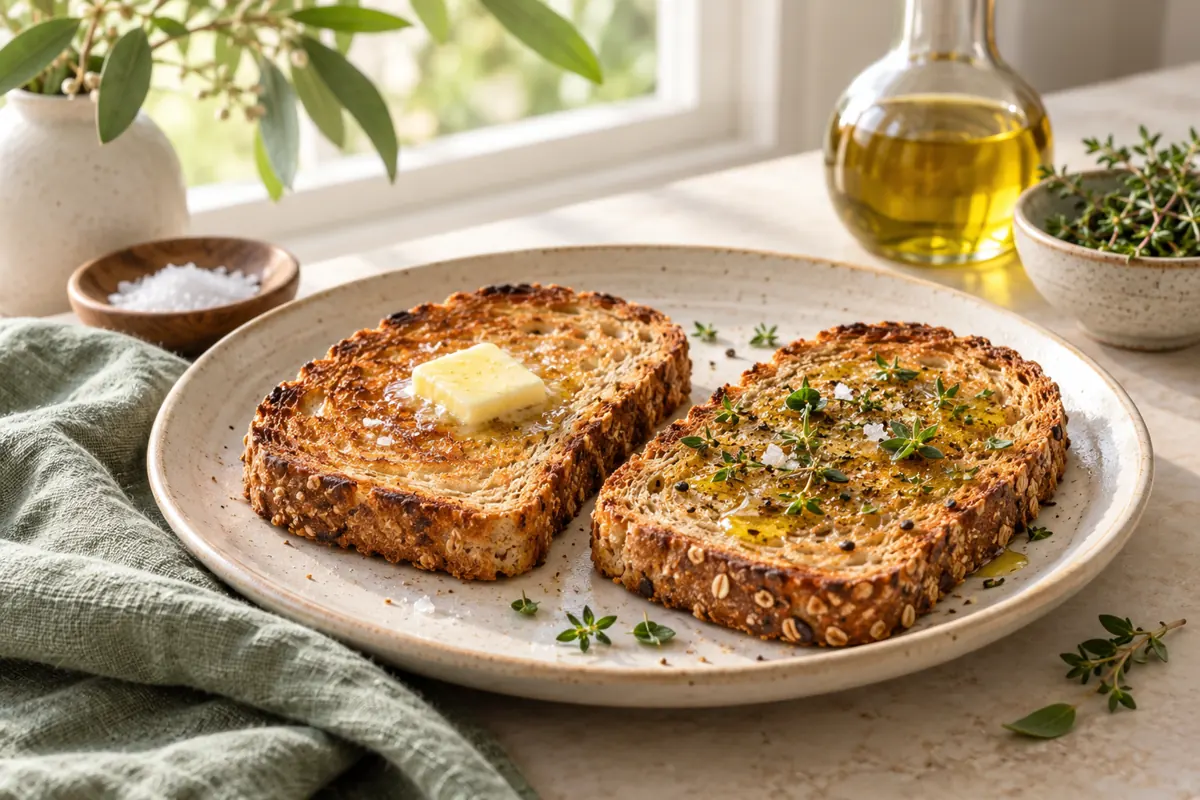
- Toast: use a spread you enjoy, or try olive oil with tomato and pepper. Taste matters: a replacement you dislike is unlikely to become a comfortable habit.
- Baking: select a recipe developed for the fat you intend to use. Butter can contribute texture as well as taste, so exchanging equal volumes may change pastry or cake results.
- Sauces: use olive oil with lemon and mustard for a dressing, or blend a little butter into a warm sauce for a different finish. The entire sauce, including salt and other ingredients, contributes to its nutrition.
Do you have to give up butter?
No single ingredient determines a person's health. If butter is a food you enjoy, you may prefer to keep it in recipes where it makes the most difference and use unsaturated oils for some everyday cooking. For example, use olive oil to roast a tray of vegetables and save butter for a slice of bread you especially enjoy. That is a practical option, not a prescribed allowance.
Similarly, if you dislike the taste of olive oil, there is no need to force it into every meal. Try a milder olive oil or another suitable liquid plant oil. A change can be gradual: mix an oil into a favourite preparation, experiment with herbs or choose a different fat for only one dish at first. What matters is whether the pattern makes sense for you over time.
What about “natural” and “processed”?
Both butter and olive oil are produced from foods through processing. Words such as “natural” or “pure” on their own do not tell you their saturated-fat content or how much you use. The nutrition label and ingredient list provide more useful information for a specific product. The MedlinePlus food-label guide explains serving sizes and how to read listed nutrients.
Store the products according to their packaging and local food-safety recommendations. Keep olive oil away from heat and light, and discard oil that has gone rancid or has smoked. Follow butter's storage instructions, especially after opening. These steps are about handling food safely and maintaining flavour rather than ranking one ingredient as morally better.
When an estimate can help
Suppose you photograph mushrooms cooked with oil and finished with a little butter. The finished plate may not show either ingredient clearly. Add a note such as “olive oil for the pan, small butter finish, recipe shared by two” and review the result in Caloza. If you know the amounts, include them; if not, keep the estimate approximate. The app cannot recover exact pan losses or a product's fat profile from a photograph, and it does not replace package information or individual medical advice.
A comparison you can try at home
Make a small batch of sautéed mushrooms with olive oil and a second batch with the fat you normally use, keeping the mushrooms and cooking method similar. Taste them side by side. You might prefer one flavour, or you might find that a little butter added at the end gives the taste you want while most of the cooking uses oil. This is a taste experiment, not a test of health outcomes.
If you compare labels afterward, use the quantity actually used in each batch and the number of portions. Consider saturated fat if that is your goal, but remember that the mushrooms, any bread and the rest of your diet matter too. A food log can make assumptions visible; it cannot measure the exact oil remaining in the pan.
For anyone advised to follow a particular fat or energy target for a medical reason, an individual plan from a clinician or registered dietitian is more appropriate than applying this general comparison as a rule.
Three questions to ask before a swap
What role does the fat play? A cooking fat may stop sticking, carry flavour, provide texture or do all three. A mild oil can work for sautéing, while a butter-based pastry may need a recipe specifically designed for an alternative.
What am I comparing? Read the label for the product and the amount you actually use. A tablespoon of one product and a teaspoon of another do not make a fair nutritional comparison. If the food is shared, estimate each serving rather than assigning the whole pan to one plate.
Will I enjoy the result? A swap that tastes good is easier to use regularly. Try olive oil with a squeeze of lemon and herbs, or keep a small butter finish if that is the flavour you want. Other liquid plant oils are options when a neutral taste works better.
These questions make a routine decision more useful without turning every meal into a calculation. Dietary patterns develop over time and include a variety of foods; no one substitution is a prediction about a person's individual health.
For a quick comparison at the table, serve toast with a small amount of your usual spread on one slice and olive oil with tomato on another. Notice the taste and texture. Either can be part of a varied meal; the best everyday choice is one that suits your preferences and individual needs.