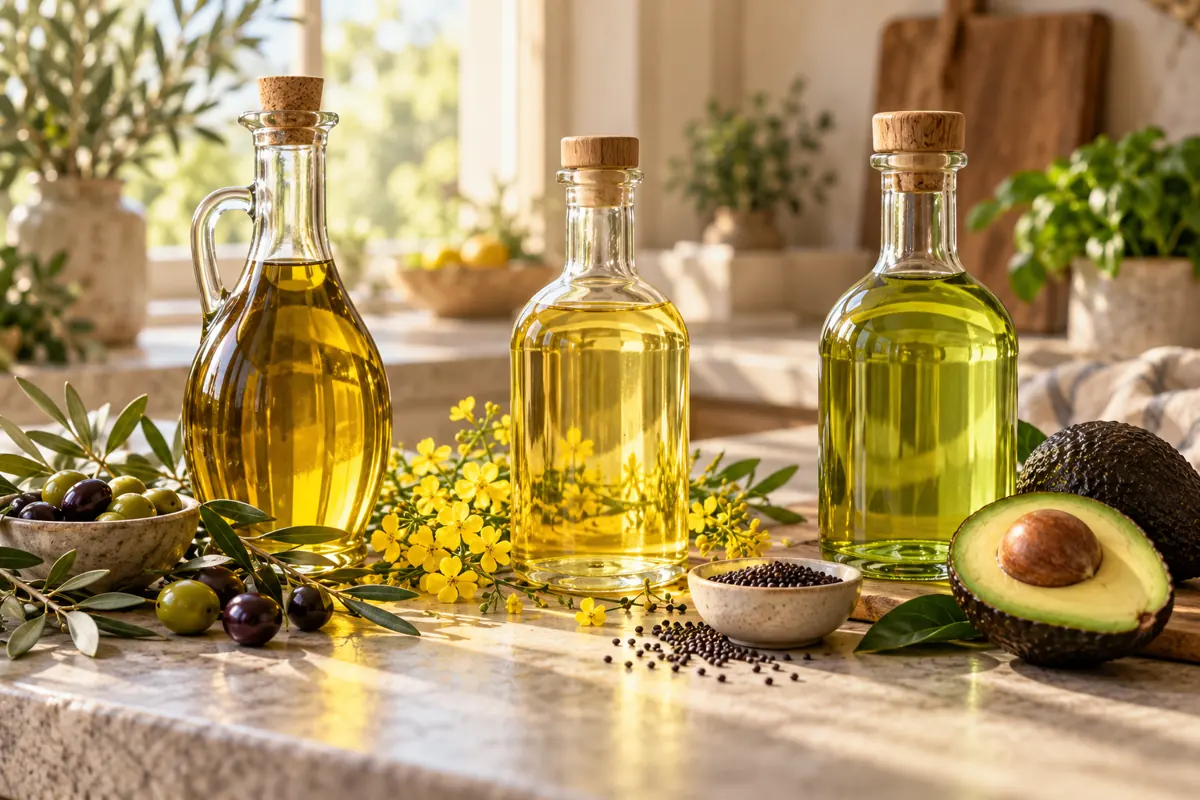
The best everyday oil is one you enjoy, can afford and will use appropriately. Olive, canola and many other liquid plant oils contain more unsaturated fat than butter or coconut oil. Choose an oil for the flavour and cooking method, then consider the rest of your meal. The American Heart Association lists several suitable choices.
A practical oil shelf
- Extra-virgin olive oil: a fruity or peppery flavour for dressings, vegetables and everyday sautéing. Choose a taste you like; you need not save it only for cold dishes.
- Canola (rapeseed) oil: a neutral-flavoured, often affordable option for roasting, baking and pan cooking.
- Avocado oil: mild in many refined versions and useful for cooking; price may be the deciding factor. Check the label because products differ.
- Sunflower or soybean oil: neutral options containing unsaturated fats; their fatty-acid mix can differ by product.
- Toasted sesame oil: a strong finishing flavour. A small drizzle over noodles or vegetables can go a long way.
What matters nutritionally?
Fat is needed in the diet, and the kind matters. WHO recommends replacing saturated fat with unsaturated fat from plant sources; its examples include olive, canola, sunflower and soybean oils. Read WHO guidance. All oils are concentrated sources of energy, even when their fat composition is favourable. An oil’s reputation does not make the amount irrelevant if you are trying to understand your intake.
Can you cook with olive oil?
Yes. The American Heart Association includes olive oil among oils for grilling, stir-frying, baking and roasting. Avoid letting an oil smoke: overheating degrades oil and makes it unpleasant to cook with. Smoke point depends on the oil and how it is processed, so an exact universal number is not useful for every bottle. Store oils in a cool, dark place, and discard rancid oil. Source: AHA cooking guidance.
Three easy combinations
- Roast vegetables: toss with olive or canola oil and smoked paprika; add lemon after cooking.
- Quick dressing: whisk olive oil, lemon juice and mustard; taste and adjust.
- Weeknight stir-fry: cook vegetables and tofu in a neutral oil, then finish with a small amount of toasted sesame oil.
If a family member has a seed or nut allergy, check the particular product and follow their clinician’s advice. For everyday cooking there is no requirement to buy the most expensive bottle.
Start with the job the oil needs to do
Before comparing bottles, decide whether you need a mild cooking oil, a finishing flavour, or both. A neutral oil can let ginger, chilli and vegetables stand out. Extra-virgin olive oil brings its own fruity or peppery notes to tomatoes and beans. Toasted sesame oil is intensely flavoured, so a little can finish noodles or a salad. None is mandatory: a useful oil is one you can afford, store properly and enjoy using.
There is also a difference between a versatile everyday bottle and an occasional specialty oil. If you use a specialty oil slowly, a smaller container may protect quality better than an economy-size bottle. The American Heart Association advises storing oils in a cool, dark place and discarding oil that smells rancid.
How to compare the options
- Extra-virgin olive oil: choose it when its flavour is welcome in dressings, cooked vegetables or bean dishes. Bitterness and pepperiness vary by bottle, so taste is a useful guide.
- Refined or lighter-tasting olive oil: an option when you want a subtler flavour. Labels and processing vary; “light” does not mean calorie-free.
- Canola or rapeseed: often mild and versatile for baking, roasting or sautéing. It can be an affordable everyday option.
- Sunflower or soybean: neutral choices in many kitchens. Some products are formulated differently, so check the actual nutrition label rather than assuming all are identical.
- Avocado oil: some versions are mild, but price and quality can differ. It is not necessary to buy it to eat well.
- Toasted sesame: aromatic and useful as a finishing ingredient. If the flavour becomes too strong, combine a little with a milder oil or sauce.
All of these are oils, so they provide fat and concentrated energy. The kind of fat differs: WHO recommends shifting from saturated to unsaturated fats. A label comparison per 100 ml or another consistent amount can help you compare saturated fat across products. Do not assume that the most expensive choice offers a meaningful advantage for every meal.
What about smoke point?
Smoke point describes when an oil begins to smoke under particular conditions. It is not a complete nutritional score, and a single number online may not describe the bottle in your cupboard: refinement, age and use can affect how an oil behaves. For ordinary home cooking, follow product guidance and avoid letting the oil smoke. The AHA lists liquid plant oils, including olive and canola, for common methods such as roasting, baking and stir-frying.
If oil begins to smoke, remove the pan from heat and allow it to cool safely. If it catches fire, do not add water. Follow local fire-safety guidance. Avoid repeatedly reheating the same oil; smell and storage matter as well as cooking temperature. The goal is food that tastes good and is cooked safely, not a contest to use the hottest pan possible.
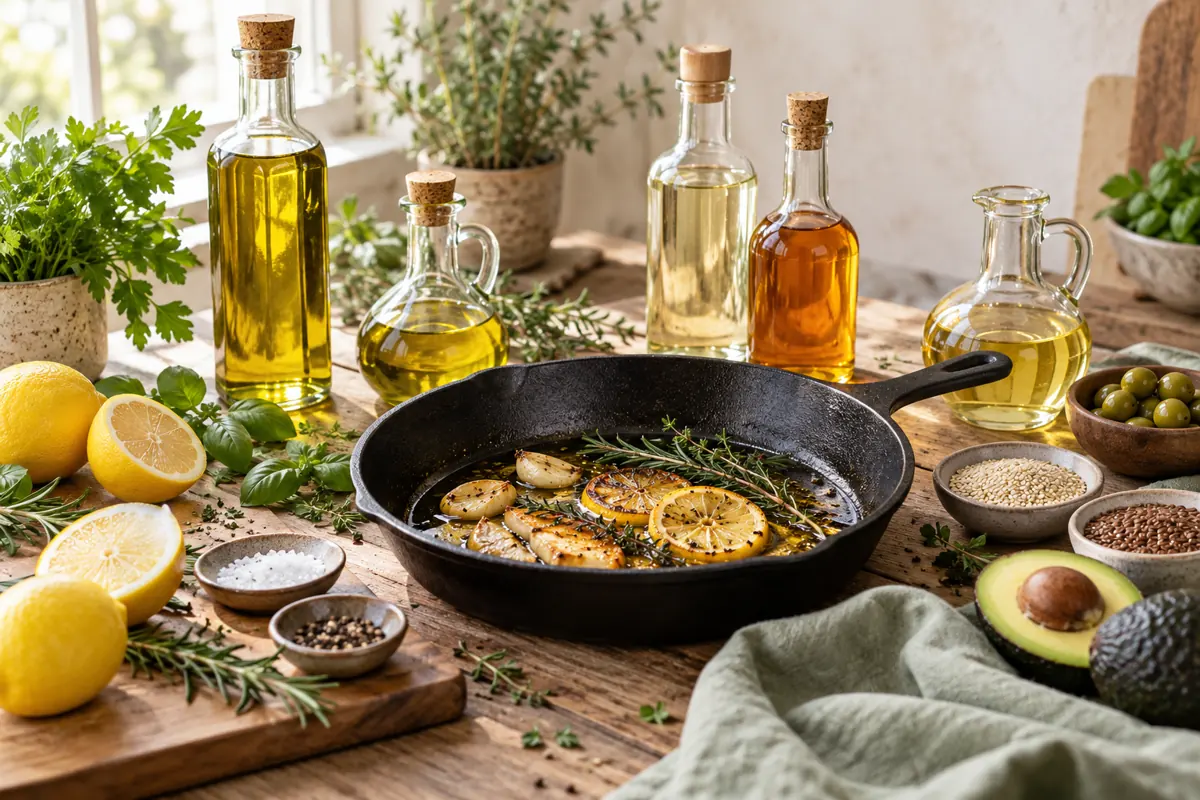
A quick decision guide for four meals
- Salad: combine an oil you like with lemon or vinegar. Start with a little, whisk, taste and add more if the dressing is too sharp.
- Roasted vegetables: toss pieces lightly and evenly with oil, then add paprika or herbs. Use a tray that gives the vegetables room rather than relying on extra oil to fix overcrowding.
- Stir-fry: use a neutral oil for cooking; add a small amount of toasted sesame oil at the end if you want that flavour. Cook proteins thoroughly according to their food-safety instructions.
- Baking: choose an oil with a flavour that works with the recipe. If substituting for butter, use a tested recipe because butter contains water and changing the fat can affect texture.
How much oil is in the finished serving?
A recipe may specify oil for a whole tray, not for one plate. Suppose you add two tablespoons to a four-serving pan. An even division would start at half a tablespoon per serving, but the true amount can vary if oil remains in the pan or servings are unequal. Use that calculation as a rough planning tool, not a precision measurement.
Oil is easy to miss in a photograph, especially when mixed into a sauce. If you use Caloza, include a note about the oil or dressing you know was used, inspect the detected ingredients and adjust the portion when it looks wrong. A photo estimate cannot verify the amount absorbed into food. The same principle applies when reading nutrition information for a homemade recipe: what you actually add matters more than the name of the oil alone.
Make flavour work harder
Oil can carry flavour, but it does not have to do all the work. Add citrus after roasting, toast spices briefly without burning them, or finish with chopped herbs. For a quick dressing, combine olive oil, lemon, a little mustard and water; adjust the proportions to your preference. For an Asian-inspired bowl, a few drops of toasted sesame oil, ginger and lime can create a distinct finish. Check allergy information before using sesame or nut oils.
Keep expectations practical. An oil can be a good choice within a balanced diet and still add calories; a meal can also need some fat to taste satisfying. You do not need a different expensive bottle for breakfast, lunch and dinner. One neutral liquid plant oil and one oil you especially enjoy for flavour are enough for many kitchens.
Frequently asked questions
Can I use olive oil for more than salads? Yes. The AHA includes it in its guidance for everyday cooking methods; choose a flavour you enjoy and avoid smoke.
Are seed oils a reason to avoid a dish? Not by themselves. Compare the entire dish and the types of fat, rather than treating the presence of a seed oil as a verdict.
Is coconut oil the same as olive oil? Their fat composition differs. WHO identifies coconut oil as a source of saturated fat and recommends favouring unsaturated fats in the overall diet.
Reading a bottle without getting lost in marketing
Look for the oil’s name, ingredients, storage instructions and nutrition information. If it is a blend, its flavour and fat profile may differ from a single-oil product. Claims such as “light taste” generally describe flavour or processing rather than a reduced calorie content. Compare the actual nutrition values on the label instead of interpreting a front-of-bottle adjective as a nutrient claim.
A practical shopping comparison might put two affordable oils side by side using the same reference amount. If your priority is reducing saturated fat, compare that line. If you are cooking for somebody with a food allergy, check the relevant ingredient and seek individual advice; processing and labelling can differ. Then consider what you will actually use: a familiar bottle you finish while fresh may be more useful than a specialty oil that sits open for months.
Keep cooking flexible
For one week, try a neutral oil when you want spices to stand out and an olive oil when its flavour complements the dish. For a salad, start with a small batch of dressing, taste, and adjust the acidity. For a pan of vegetables, distribute the oil evenly instead of adding it only to one spot. If the flavour you wanted is still missing, reach for garlic, herbs or citrus before assuming you need more oil.
There is no universal winner across every budget and recipe. The evidence about fat quality is useful, but flavour, storage and food safety are part of the decision too. Keep the bottle closed, follow its storage instructions and replace oil that smells rancid.