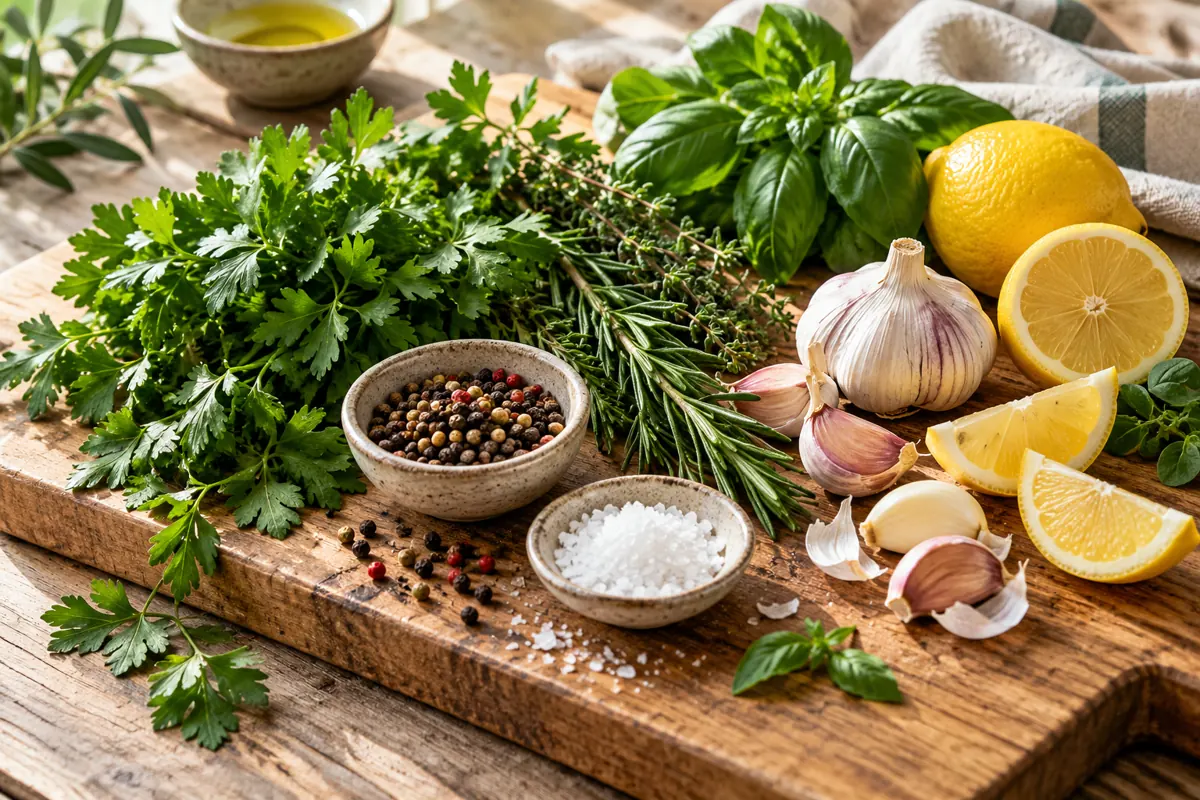
A good meal does not need an elaborate sauce or a long ingredient list. Start with one flavour, taste, and add another if the dish needs it. A squeeze of lemon can wake up beans; cumin can make a tray of carrots taste warmer and deeper; a handful of herbs can make leftovers feel like a new meal.
Herbs and spices can also add flavour when you want to use less salt. The NHS suggests them, along with lemon and garlic, as alternatives to extra seasoning salt. [1]
1. Finish with something bright
Try lemon or lime juice, a little zest, or a splash of vinegar just before serving. Add it gradually: a teaspoon of lemon juice on roasted vegetables or beans is easier to adjust than a large pour. If a soup tastes flat, a little acid may be more useful than adding more salt.
Try it: Toss warm chickpeas with diced cucumber, parsley, olive oil and lemon. Serve in a wrap or over greens.
2. Let dried spices warm up
Cumin, coriander, smoked paprika and chilli all work well in beans, stews and roasted vegetables. Start with about a quarter teaspoon per serving. Stir spices briefly into warm oil over moderate heat, then add the rest of the food before they scorch. If you are using a blend, check whether it already contains salt.
Try it: Roast carrots with cumin and paprika; finish with plain yoghurt and lemon.
3. Add fresh herbs at the end
Parsley, mint, basil, dill and coriander bring different flavours to the same simple ingredients. Chop a small handful and stir through cooked grains, a salad or a yoghurt sauce just before eating. Dried herbs are handy too: add them earlier to soups and sauces so their flavour has time to infuse. NHS hospital guidance offers more pairing ideas. [2]
4. Make a quick, sharp dressing
Whisk one tablespoon olive oil with one to two teaspoons vinegar or lemon juice, a little mustard and black pepper. Taste and adjust; add water if you want it thinner. This is enough to dress a salad for roughly two people, depending on preference. Mustard can contain salt, so check the label if sodium matters to you.
5. Build flavour in layers
Start with onion or garlic, add a spice during cooking, and finish with herbs or acid. For example, soften onion, add cumin and cooked lentils, then finish with lemon and coriander. You can change the direction of the same meal with oregano and parsley instead.
Keep it useful, not fussy
There is no need to abandon your favourite seasonings. Use smaller amounts of salty sauces alongside spices if that tastes better to you. Fresh and dried herbs are both useful; choose what is affordable and available. If a clinician has advised a specific diet, follow their guidance, especially when choosing salt substitutes.
Start with the flavour a dish is missing
Before reaching for another seasoning, taste a small bite and ask what you want to change. If the meal tastes flat, a little lemon or vinegar can bring contrast. If it feels one-dimensional, try toasted cumin, smoked paprika or a fresh herb. If it is too sharp, add some of the unsalted main ingredient, such as cooked beans or vegetables, rather than trying to cover the acidity with a large amount of sugar. These are cooking choices, not rules about what a meal should contain.
Work in small increments. Mix a pinch or a few drops into one spoonful first; that way you can decide whether you like the direction before changing the whole pot. Keep a clean tasting spoon by the stove and do not return a spoon that has touched your mouth to a shared dish. Foods can taste different at serving temperature, so taste a warm soup warm and a chilled dressing cold.
A simple pairing guide
- Parsley and lemon: good with lentils, potatoes, grilled fish and beans. Stir in chopped parsley at the end so its fresh flavour remains noticeable.
- Mint and yoghurt: works with cucumber, roasted aubergine, chickpeas or a wrap. A little lemon adds brightness; use unsweetened yoghurt if you prefer a savoury sauce.
- Dill and mustard: try with potatoes, salmon, beans or plain yoghurt. Mustard varies in sodium, so look at the label if you need a lower-salt choice.
- Cumin and coriander: add warmth to tomato sauce, lentils, carrots and squash. They need not make food hot; add chilli separately if you want heat.
- Smoked paprika and garlic: bring a smoky note to potatoes, chickpeas or a tomato-and-bean stew. Smoked paprika and chilli powder are different products; taste yours to understand its heat.
- Basil and oregano: suit tomato-based pasta, beans and grilled vegetables. Try basil fresh near the end and oregano earlier in a simmered sauce.
The American Heart Association's guide to common herbs and spices offers more examples and distinguishes fresh and dried additions. A pairing guide is a starting point: foods and seasonings differ in strength, and cuisines vary widely.
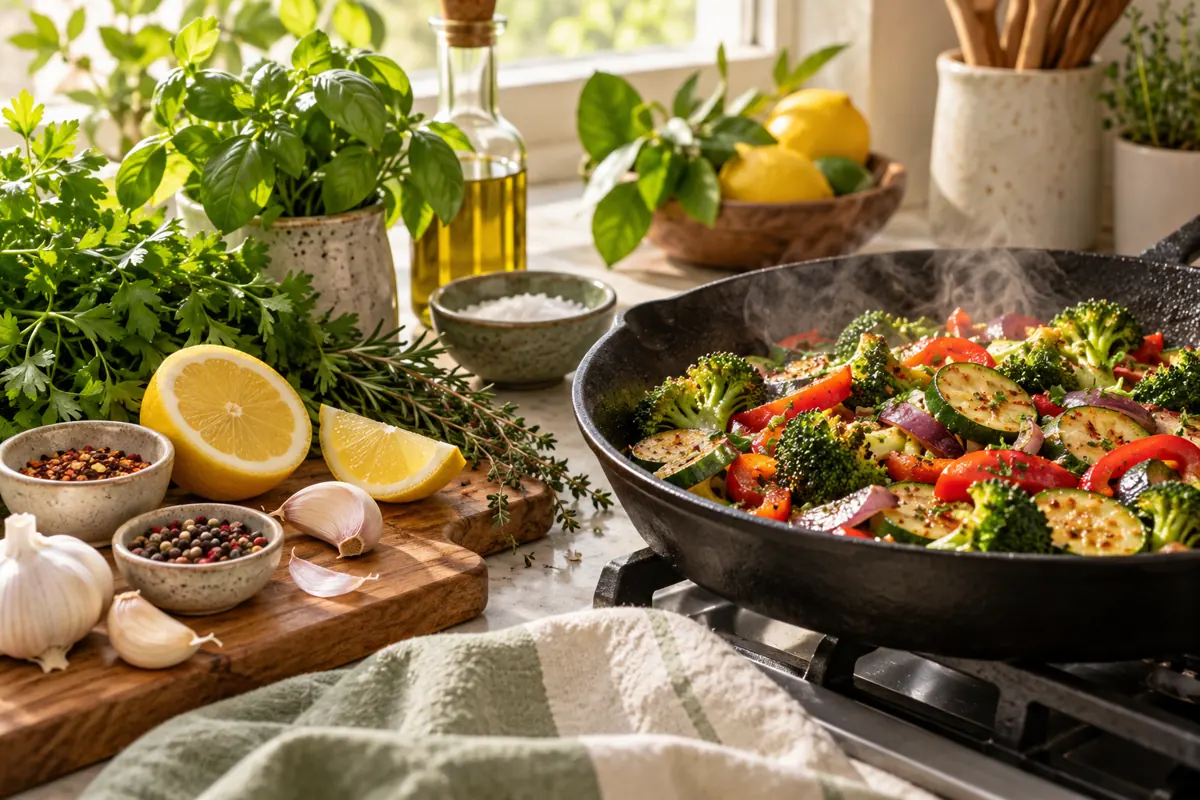
Fresh or dried: how to choose and store them
Fresh herbs are useful when their colour and final flavour are part of the dish. Dried herbs and spices are convenient when shopping time, storage space or budget is limited. Buy small amounts of unfamiliar spices so you can try them in a few dishes before committing to a large jar. A dried blend can be especially useful, but read its ingredients if you are reducing salt: garlic powder is different from garlic salt, and some mixed seasonings include salt.
Follow the package instructions for storage. Keep dry spices closed and away from steam. Fresh herbs are perishable; refrigerate them as appropriate, use clean utensils and discard them if spoiled. Wash fresh produce under running water before preparing it, and keep it separate from raw meat and its juices. The CDC: Food safety and produce covers washing and preventing cross-contamination.
If you make an herb dressing or a sauce with yoghurt, garlic or other perishable ingredients, prepare what you can use promptly. Refrigerate leftovers promptly and follow your local food-safety guidance. The UK Food Standards Agency recommends cooling and refrigerating or freezing leftovers within one to two hours and eating refrigerated leftovers within 48 hours; rice has additional precautions. Food Standards Agency: leftovers. Do not leave homemade garlic-in-oil mixtures at room temperature for later use.
Five practical flavour fixes
- For a flat soup: spoon a little into a bowl and add a few drops of lemon. If you prefer it, season the rest in small steps and finish with herbs.
- For bland roasted vegetables: add smoked paprika before roasting, then finish with parsley and a splash of vinegar. Add a little oil if needed for the cooking method and flavour.
- For a repetitive grain bowl: use the same rice and beans with cumin and lime one day, then oregano, tomato and parsley the next. The base stays convenient while the meal tastes different.
- For a rich sauce: try a little citrus or vinegar for contrast. Add gradually and taste; some creamy mixtures can split if heated hard after an acidic ingredient is added.
- For breakfast: cinnamon on oats or fruit adds a warm flavour without relying on a salty topping. Use the amount you enjoy, not a supplement-sized dose.
A five-minute example: lemony beans on toast
Drain and rinse a can of beans, then warm the portion you need with a little olive oil, chopped garlic and a pinch of cumin. Serve on toast with chopped tomato or cucumber, a squeeze of lemon and parsley. If you like heat, add chilli flakes. Use a lower-sodium or no-added-salt can if available and appropriate for you. The American Heart Association suggests rinsing canned beans and choosing lower-sodium options.
For a different version, skip the cumin and use oregano and black pepper; add yoghurt or a soft-boiled egg if that suits you. The amounts do not need to be exact for the dish to work. The important part is tasting as you go and using a combination you enjoy.
Will spices replace salt completely?
Not necessarily. Herbs, citrus and spices have their own flavours rather than tasting exactly like salt. You might prefer to use them alongside a smaller amount of salt or a favourite sauce. A gradual change can make a recipe easier to adapt to your taste. If you use a salt substitute, note that some contain potassium; people with kidney disease or those taking certain medicines may need to avoid them. Ask a clinician or dietitian before using one if you have been advised to manage potassium. Cambridge University Hospitals: potassium and salt substitutes.
Caloza can help you record the finished meal and check its estimated nutrients. If a dressing, oil or sauce is hidden in the photograph, add it in your notes and review the ingredients and portions. A photo cannot establish the exact salt content of a seasoning blend; the package is the better source for that detail. Use the estimate to learn about a meal, not to decide whether a pinch of seasoning has made it good or bad.
Keep a flexible flavour kit
For a modest pantry, choose one dried herb, one warm spice, a chilli or pepper if you like it, and a vinegar or citrus fruit. None has to be expensive or specific to one cuisine. Combine them differently with beans, eggs, potatoes, tofu, vegetables or a grain you already buy. If you are cooking for someone else, put strong heat on the table separately so everyone can add their own.
Take a minute after cooking to notice which combination you liked. A short note such as “lemon, cumin, parsley on carrots” is more useful than trying to remember a complicated recipe. The next time you use the same ingredients, change one element and keep the rest familiar.
Make one pot of food taste different through the week
Cook a batch of beans, lentils or vegetables using a method and storage plan that suit you. For one portion, add lemon and parsley; for another, warm cumin and coriander gently before stirring them through. A third portion could become a tomato-based dish with oregano. Keep the additions separate until serving, so you can tailor heat, acidity and allergens to each person.
Changing the seasonings does not turn a single batch into a guaranteed source of a particular nutrient, and the total amount of salt depends on every component. If you use canned beans, a salty stock and a bottled sauce together, check their labels if sodium matters to you. Rinsing suitable canned beans and using an unsalted spice blend are simple options, but the final flavour is still yours to adjust.
Keep leftovers in clean, covered containers and refrigerate promptly. Use the safe storage guidance linked above and be especially careful with cooked rice, which needs faster cooling and has a shorter recommended fridge storage period. Reheat food thoroughly when reheating, and do not judge food safety solely by its smell. A practical cooking routine should leave room for both flavour and safe handling.
How to introduce a spice you do not know
Put a small amount in one portion first. Smell it, add a pinch to warm food, then taste with the other ingredients. Paprika can be sweet, smoked or hot; a blend labelled curry powder can vary in ingredients and heat; chilli flakes vary too. The label or ingredient list is more informative than assuming that every jar with the same general name tastes alike.
If the new spice is not enjoyable, keep the rest of the meal familiar. You might prefer a milder blend, a different herb or simply a squeeze of citrus. There is no need to use a long list of seasonings or a particular cuisine's ingredients to make a meal worthwhile. The goal is to discover combinations that make the food you already cook easier to enjoy.