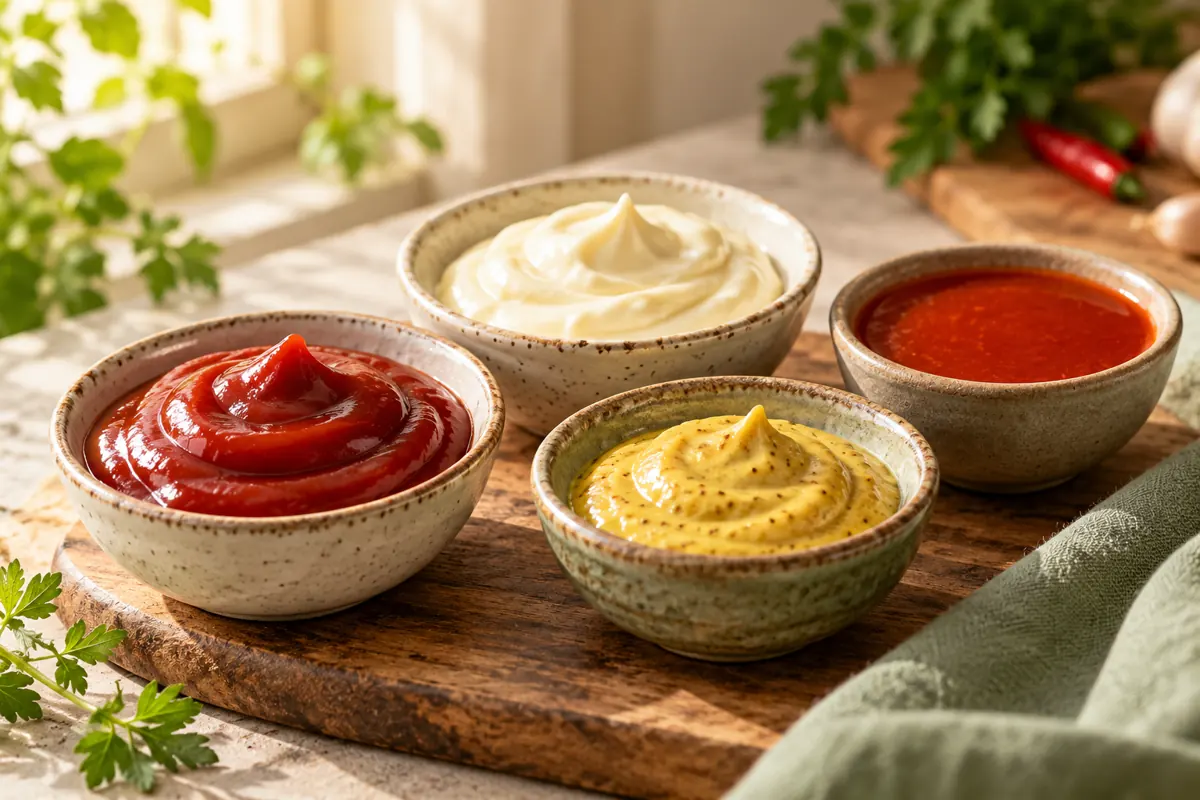
Condiments add a lot of enjoyment to a meal, and the right question is rarely “Which sauce is forbidden?” It is “Which flavour do I want, how much do I use, and what is in this particular bottle?”
Start with the label and your usual portion
Compare sodium or salt, added sugar where listed, and saturated fat. Use the same amount for both products: a label serving of one tablespoon is not directly comparable with one of two tablespoons. The NHS recommends comparing values per 100 g or 100 ml, while US Nutrition Facts labels show values per serving. [1] [2]
Then consider your real serving. If you eat twice the listed amount, you get twice the listed nutrients. If you only use a small dab, a per-100 g comparison alone can exaggerate what you actually consume.
What tends to matter for each sauce?
- Ketchup: commonly contains added sugar and salt. Compare bottles if you use it often; no-added-sugar or reduced-salt options may be available. [3]
- Mayonnaise: recipes vary by oil and serving. Check energy and saturated fat, especially if you use a generous amount. A small amount can add richness to a sandwich.
- Mustard: strong flavour means a little can go a long way, but check the sodium or salt: formulas differ. [4]
- Hot sauce: heat can make a few drops satisfying, yet some versions contain considerable sodium. Fresh chilli or chilli flakes can add heat too. [3]
Four easy ways to keep the flavour
- Mix a little mayo with plain yoghurt, lemon and pepper for a creamy sandwich spread.
- Combine ketchup with chopped tomato and smoked paprika for a chunkier topping.
- Use mustard with vinegar, olive oil and water for a sharp dressing.
- Add fresh chilli, lime or smoked paprika to a smaller amount of hot sauce.
These are options, not rules. If you have an allergy, check each ingredient and label. If you need to restrict sodium for a medical condition, ask your clinician or dietitian about your individual needs.
What a food photo misses
A sauce hidden inside a wrap is easy to miss, and appearance alone cannot establish its salt or sugar content. With Caloza, add the sauce and an approximate amount to your notes and review the detected ingredients. A photo-based estimate is not a substitute for checking the actual label when accuracy matters.
Why comparing the amount matters
A tablespoon of one sauce and a teaspoon of another may have very different uses. If your question is which bottle contains less sodium in the amount you normally eat, compare that amount rather than only the largest number on the label. If your question is which recipe is more concentrated, compare per 100 g when that information is available. Both comparisons are useful, but they answer different questions.
Imagine a hot sauce that lists 100 mg sodium per teaspoon and a dressing that lists 180 mg per tablespoon. Three teaspoons make one tablespoon, so the example hot sauce would contain 300 mg per tablespoon if its values scaled in that way. You might still use far less hot sauce than dressing. The example is illustrative; brands and recipes vary. The MedlinePlus food-label guide explains serving sizes and why portions can differ from the amount a person eats.
On UK labels, salt may be listed instead of sodium. Do not compare a salt value from one label directly to a sodium value from another as if they were the same measure. Use a consistent unit and the information supplied in your country. The NHS guide explains UK nutrition labels and per-100-g comparisons.
Ketchup: sweetness, acidity and tomato
Ketchup can add sweetness and tang to potatoes, eggs or a sandwich. Depending on the recipe, sugar and salt may be worth comparing, particularly if it is a sauce you use frequently. A reduced-sugar or reduced-salt bottle can be useful, but taste it before assuming it is a direct substitute for your usual one. The NHS notes that some sauces and condiments contain more sugar than people expect. NHS: reducing sugar.
For a homemade-style shortcut, mix a small spoonful of ketchup with chopped tomato, a little vinegar and smoked paprika. The result tastes different from bottled ketchup; add the extras because you like them, not because you must stop using the original. For a burger, spoon it on one side of the bun rather than automatically coating both sides, then add pickles or fresh vegetables for texture.
Mayonnaise: richness and texture
Mayonnaise supplies a rich texture that works in a sandwich, slaw or dip. Ingredients and nutrition vary among regular, reduced-fat, egg-free and other versions. If fat type is relevant to you, compare the oils and saturated fat on the product label; reduced-fat versions can have a different taste or composition. Choose pasteurised commercial mayonnaise or follow a trusted food-safety recipe if preparing a version with eggs, especially for people at greater risk of foodborne illness. CDC: Safer food choices.
To make a familiar spread go further, mix a spoonful of mayonnaise with plain yoghurt, lemon and herbs. Use a dairy-free alternative if appropriate, checking its ingredients. The mix will be tangier and its nutritional values depend on both products and the proportions used. Avoid promising a particular calorie reduction unless you calculate it from the actual labels and amounts.
Mustard: a little can be plenty
Mustards range from mild and sweet to sharp and hot. Some contain added sugars; many contain salt. Use a small amount if the flavour is strong enough for you, or whisk it into a dressing with oil, acid and water. If you want to reduce sodium, compare actual products and account for the amount you add; a teaspoon used in a shared batch is not the same as a tablespoon on one plate.
Mustard is also an allergen for some people. Do not substitute it into a recipe without checking the needs of the person eating it. If mustard is not suitable, lemon, vinegar, herbs or roasted garlic can offer a different kind of flavour; they will not taste identical.
Hot sauce: heat with a label worth checking
Some hot sauces are mostly peppers and vinegar; others include substantial salt or sweeteners. A few drops can make a meal more exciting, but several generous pours add up differently from a few drops. Compare brands using the same amount and choose a heat level you enjoy.
For a fresh alternative, add sliced chilli, chilli flakes or lime alongside a smaller amount of sauce. Check whether a chilli blend contains salt. Start gently: it is easy to add more heat but difficult to remove it. If a dish becomes too hot, add more unsauced ingredients or serve a suitable cooling accompaniment such as yoghurt; these are flavour fixes, not treatment for an allergic reaction.
What to ask at restaurants and what to record
If you want to understand the sauce in a wrap or takeout meal, ask what it contains and whether it can be served on the side. This gives you more control over taste and amount. When allergy safety matters, ask the restaurant directly about ingredients and cross-contact; a nutrition app or photograph cannot verify safety.
For a meal record, note the sauce and approximate amount, especially when it is hidden under other ingredients. Caloza can show an editable estimate of the meal, but visual appearance cannot reveal the brand, exact recipe or sodium. Use the package or restaurant's information for product-specific detail and treat the photo result as a starting point.
Four everyday combinations
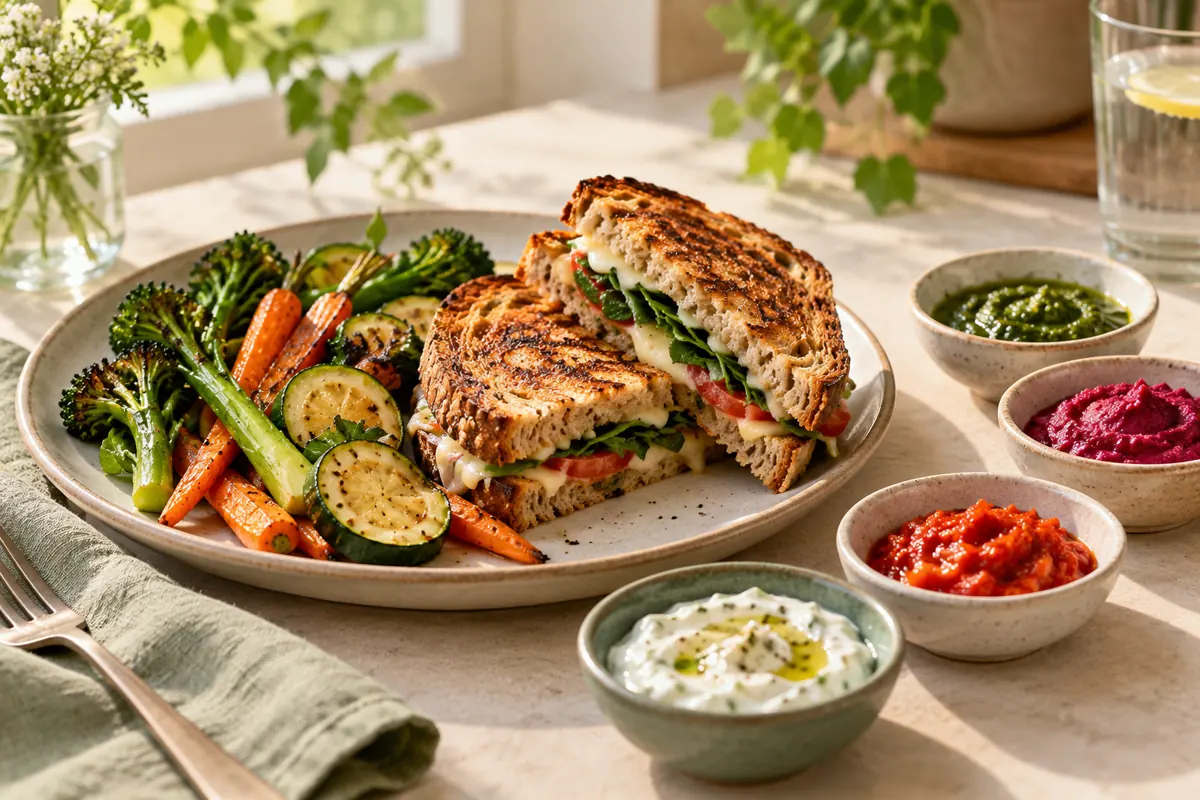
Sandwich: Spread a little mayonnaise or a yoghurt-mayo mix, add a protein filling you like, then use mustard for sharpness if suitable. Crunchy cucumber or cabbage can add texture without requiring a second rich sauce. Ask about mustard and egg allergies when serving others.
Potatoes: Try ketchup with smoked paprika, yoghurt with herbs, or a small amount of hot sauce. Put sauces on the side so each person can choose. If salt is a concern, check the seasoning blend as well as the sauce.
Beans and rice: Add a few drops of hot sauce and lime, then taste. If you want more heat, add gradually. A lower-sodium canned bean and a strong seasoning can be a useful combination, but the label is the place to confirm sodium for the specific products.
Salad bowl: Whisk mustard into vinegar and oil, adding water to reach the consistency you like. A little mustard can season a shared batch, but sodium depends on the mustard and the serving. Refrigerate a perishable homemade dressing promptly.
Storage and serving
Follow the storage instructions on each bottle: some sauces are shelf-stable before opening but require refrigeration afterward. Use a clean spoon if transferring sauce from a jar, and avoid leaving perishable mixtures out for extended periods. The CDC food safety guide explains safe handling of perishables.
A family recipe, restaurant sauce and supermarket product can share a name yet have different ingredients. When allergies matter, never assume that the sauce is safe because a similar-looking one was safe before. Ask about ingredients and cross-contact, and consult the package or restaurant rather than a photo estimate.
How to choose a useful swap
Decide which feature you want to change before choosing the alternative. For less sodium, compare the salt or sodium values of the actual products at the amount you use. For a creamier texture, try mixing in yoghurt if it suits your dietary needs. For more heat, chilli or hot sauce can work, but their salt content and strength differ.
Then taste the meal as a whole. A small amount of a favourite sauce alongside fresh vegetables or herbs may be more appealing than a substitute you do not enjoy. Keep a note of the version that worked so the next meal is easy to repeat. If accuracy or allergy safety matters, use the product label or ask the restaurant: a photograph cannot establish a sauce's formulation.
For a shared meal, set out sauces with their original packaging when ingredient information is important. Keep separate utensils for each option. Someone with an allergy can then check the label and avoid relying on an appearance-based guess, while everyone else can add the amount they enjoy.