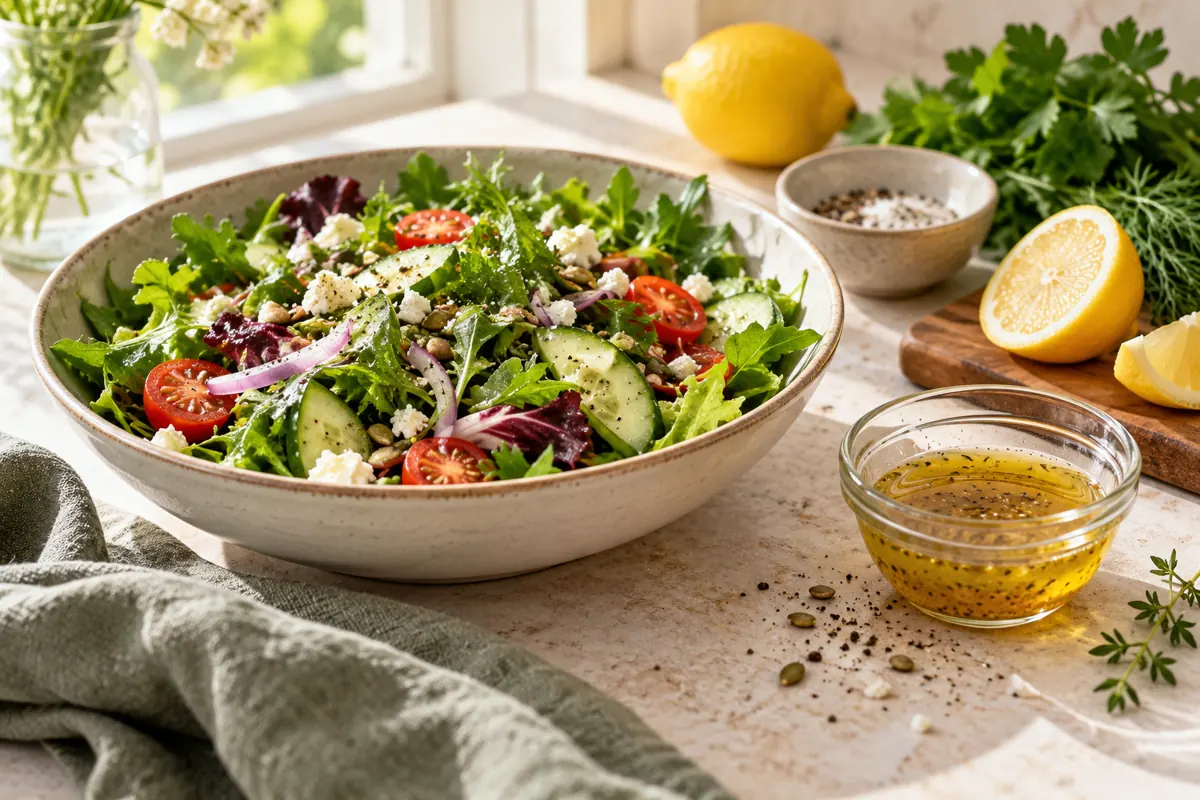
A dressing can make a bowl of vegetables something you actually want to eat. The best choice is one you enjoy that also works for your needs: that might mean checking sodium, choosing a source of unsaturated fat, or simply using an amount that tastes right.
How to compare bottles
- Check the serving size. If one label gives values for a tablespoon and another for two, adjust to the amount you usually use before comparing.
- Look at sodium or salt. Recipes vary considerably, including between light and regular versions. Compare products, rather than assuming one style is always lower. [1]
- Consider added sugar and saturated fat. Which matters most depends on the rest of your eating pattern. The NHS explains how to compare labels, including values per 100 g. [2]
- Choose a flavour you like. Oil-based and yoghurt-based dressings can both be useful; neither is automatically better than every bottled alternative.
Make a lemon-mustard dressing
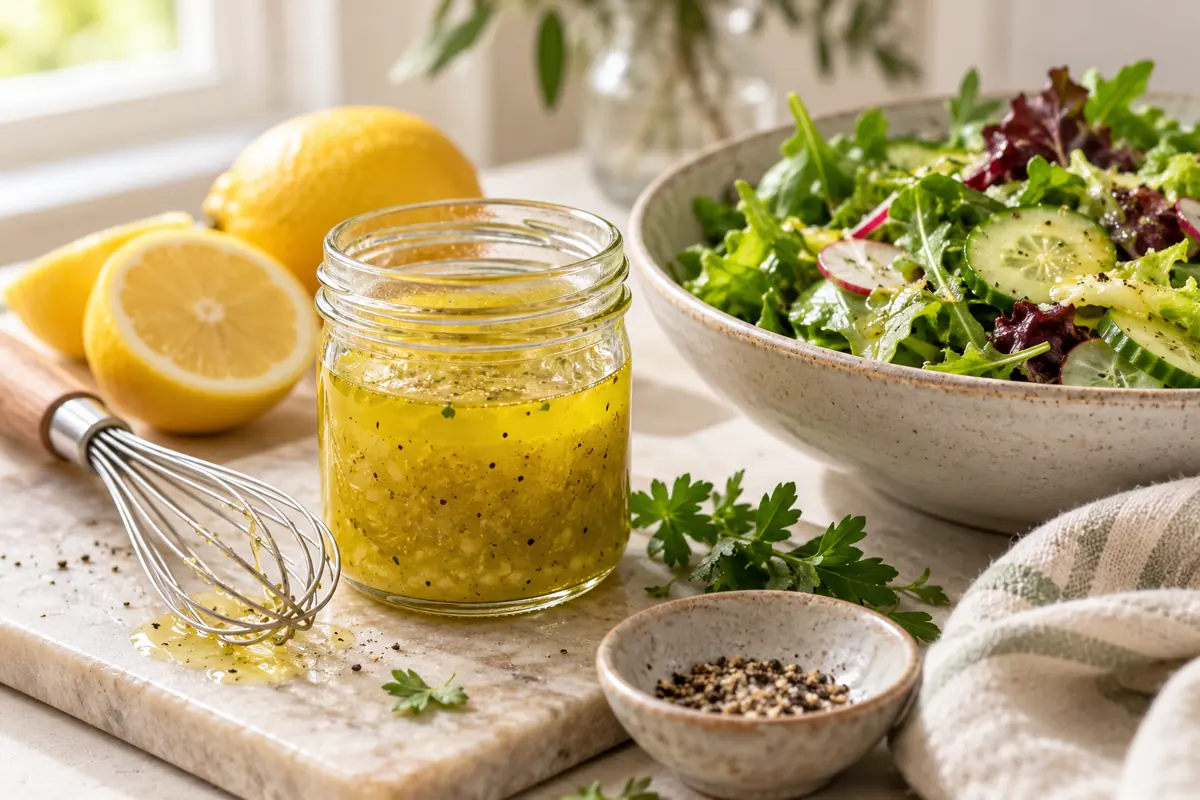
Whisk one tablespoon of olive oil, two teaspoons of lemon juice, half a teaspoon of mustard and a pinch of black pepper. Add a teaspoon of water if needed, then taste. This makes a small batch for roughly two salads; use more lemon for sharpness or a little more oil for a softer taste. Mustard can contain salt, so compare labels if you want to reduce sodium.
Prefer something creamy?
Stir two tablespoons of plain yoghurt with a teaspoon of lemon juice, chopped dill or parsley and a little water. Add garlic if you like. It works on a chopped salad, roasted potatoes or a grain bowl. For a dairy-free version, try an unsweetened plant yoghurt you enjoy; its nutritional profile may differ.
Make the salad satisfying
Try leaves or crunchy vegetables plus a protein such as beans, eggs, fish or tofu; add grains or potatoes if you want a more substantial meal. The NHS includes these foods as part of a varied, balanced diet. [3] Choose ingredients for flavour and appetite, not a rigid formula.
If you make extra dressing with yoghurt or other perishable ingredients, refrigerate it promptly. Follow the ingredients’ storage instructions; the UK Food Standards Agency recommends refrigerating leftovers within two hours and eating them within 48 hours or freezing them. [4]
When using Caloza, mention the dressing and its approximate amount in your meal notes. A photo may miss an ingredient or the amount underneath the salad; review the result rather than treating it as exact.
What makes a dressing enjoyable?
A good dressing balances richness, acidity and seasoning for the particular salad. Olive oil can add a round mouthfeel; lemon or vinegar brings sharpness; mustard, herbs, garlic and pepper supply other flavours. Neither a homemade nor a bottled dressing is automatically the right choice for everyone. Start by choosing a flavour you will enjoy eating with the vegetables you have.
Dressings behave differently on different ingredients. Crisp lettuce needs a lighter coating than a bowl of grains and beans. Sturdy cabbage can stand up to a punchier dressing; delicate herbs may need only a little lemon and oil. Add a small amount, toss, taste and add more if needed. Serve extra on the side if people at the table prefer different amounts.
Read a label without getting lost in the numbers
First find the serving size and the amount you expect to use. Then compare two bottles on a common basis, such as per tablespoon or per 100 g where provided. The MedlinePlus food-label guide explains that the serving on a US label is a reference amount rather than a recommended amount. The NHS food-label guide explains per-100-g comparisons used on UK labels.
Look at the nutrients that matter for your situation. If you are trying to reduce sodium, compare salt or sodium across similar quantities. If saturated fat or added sugar is the concern, compare those too. A reduced-fat dressing is not automatically lower in salt or sugar, and “light” does not tell you everything about a recipe. The ingredient list and nutrition panel help you judge the actual product.
For a simple example, imagine one bottle lists 150 mg sodium in one tablespoon and another lists 240 mg in two tablespoons. The second provides 120 mg per tablespoon if the values scale proportionally. If you use two tablespoons, double the first figure to 300 mg and compare it with 240 mg. These are illustrative numbers, not typical values or recommendations.
Four easy dressings for different meals
- Lemon and olive oil: whisk olive oil, lemon juice and pepper, then add mustard if you like. Use with beans, leafy greens or roasted vegetables. For a softer flavour, add a little water or more oil; for sharper dressing, add more lemon gradually.
- Herby yoghurt: mix plain yoghurt with chopped dill or parsley, lemon and water. Spoon over potatoes, cucumber or a grain bowl. Unsweetened plant yoghurt is an option, although its protein, fat and allergen profile can differ.
- Tahini and lemon: whisk tahini with lemon, then add water a little at a time. The mixture can initially thicken before loosening. Add cumin or garlic and serve with chickpeas or roasted cauliflower. Tahini contains sesame, a common allergen.
- Tomato and vinegar: stir finely chopped tomato, a little olive oil and vinegar with black pepper and herbs. Spoon over beans or bread. Choose a vinegar you enjoy and start with a small splash.
These are flexible cooking ideas, not required portion sizes. If a recipe is too sharp, mix in more of its main base; if too thick, add a little water; if too bland, try herbs or a little acid before adding more salt. Write down a version you enjoy so it is easy to repeat.
Make a salad that works as a meal
A salad can be more than leaves and a dressing. Add vegetables with different textures, a protein food such as beans, tofu, eggs or fish, and a grain or potato if you want a heartier plate. Add fruit, nuts or seeds for a different texture if you enjoy them and can eat them safely. The World Health Organization describes variety as a foundation of healthy dietary patterns.
For example, combine canned beans, cucumber, tomatoes and leftover cooked grains; add lemon dressing and chopped parsley. Another day, use roasted potatoes, greens, a protein you like and a yoghurt-herb sauce. Frozen or canned ingredients can help you make these meals quickly. Choose ingredients according to your appetite, budget and any allergy or medical requirements.
Storage, allergies and food safety
Read storage directions on bottled dressings: some need refrigeration after opening. For homemade dressings, use clean containers and refrigerate perishable ingredients promptly. The Food Standards Agency advises cooling and refrigerating or freezing leftovers within one to two hours and eating refrigerated leftovers within 48 hours. Prepare small batches when practical and do not leave yoghurt-based dressings out for a long meal.
Check labels for milk, egg, mustard, sesame, nuts or other ingredients relevant to your allergies. Homemade dressings can also contain allergens, even if they look similar to a familiar version. When dining out, ask about ingredients and preparation if allergy safety matters; a photo cannot reliably identify them.
What to record when the dressing is hard to see
A salad image might show leaves and tomatoes but hide dressing beneath the vegetables. Add a note describing the type and approximate amount, such as “lemon and olive-oil dressing, about one tablespoon used.” If the bowl is shared, say so. Caloza can provide an editable estimate and let you review the detected ingredients; it cannot determine exactly how much dressing you ate from the photo. For product-specific sodium or allergens, use the label or ask the restaurant.
Three situations, three different choices
A quick office lunch: Keep a shelf-stable bottle at work only if its label allows it; refrigerate after opening when directed. Pack the salad and dressing in suitable containers and follow food-safety advice for perishable ingredients. Add the dressing just before eating if you prefer crisp leaves.
A family dinner: Put a homemade lemon dressing and a yoghurt sauce on the table so people can choose. Label or separate sauces when allergies matter, and use clean spoons to avoid cross-contact. A separate serving also makes it easier to notice how much each person wants.
A restaurant salad: Ask what is in the dressing and whether it can come on the side. If you need exact allergen information, speak to staff rather than guessing from colour or texture. A creamy sauce might contain milk, egg, sesame or another ingredient that is not visible.
Is an oil-free dressing always the best choice?
Not automatically. Oil-free dressings can be a practical option for taste or a particular goal, while an olive-oil dressing provides a different flavour and fat profile. Either can contain varying amounts of salt or sugar. Compare actual products and portions; do not assume a single label claim tells you which is best for your circumstances.
If a dressing helps you enjoy vegetables, that is useful context when choosing it. Equally, you can make a bright dressing from lemon, herbs and other ingredients without oil if you prefer. The goal is a meal you enjoy and can fit into your overall eating pattern, not a test of whether your salad follows one formula.
Plan a quick dressing around what you have
Begin with a base that suits the meal: olive oil for a vinaigrette, yoghurt for a creamy sauce, or tahini if sesame is safe for everyone eating. Add lemon or vinegar a little at a time, then herbs, pepper or mustard if desired. Taste it on a piece of the vegetable you intend to dress; a sauce that tastes strong on a spoon may be pleasant once distributed across a bowl.
For a salad made ahead, store the dressing separately if you want leaves to stay crisp. Keep perishable ingredients chilled according to the package and the local food-safety advice linked above. Use a clean spoon and discard the dressing when it is beyond its safe storage period, even if it still looks appealing.
If you log the meal, describe what went into the dressing and whether it was shared. This gives Caloza more context than a photo of the dressed vegetables alone. The estimate will still depend on its assumptions, and a food label is the better source for a particular bottled product.
If the salad is shared, keep the dressing on the side and let each person add their own. This is useful when one person prefers a sharper flavour, another wants a creamy texture, or a guest needs to check an ingredient. Use separate clean spoons when allergies are a concern.